

Summaries were generated by AI. Generative AI is experimental.
Explore other styles:
For Miguel Escueta, music has always been more than a career. It’s therapy, a means of processing emotions, and a way to make sense of the world around him. After six years away from the music industry to focus on his family and business, the singer-songwriter has returned with a renewed perspective on what his music can mean not just to himself, but to the people who listen.
His recent songs, “Pangako ng Bukas” and “Stand in the Fire,” address two very different concerns: mental health and corruption. Yet both reflect the same impulse to turn personal feelings and observations into something that resonates beyond himself.
“I think it’s more of timing and what’s happening today,” he says of his decision to engage with social issues through music.
For Escueta, songwriting offers a way to participate in conversations that matter, using an art form he knows can reach people emotionally.
When Music Speaks Up
“I believe it’s therapy,” Escueta says of music. “It talks to a person, I would say emotionally, in a way that other mediums cannot.”
Having experienced music as both a listener and a creator, he understands its ability to make difficult feelings more accessible. A song can articulate what someone struggles to express, offering comfort while encouraging a deeper understanding of experiences beyond their own.
Today, he sees that connection as an opportunity to address issues that deserve sustained attention, from emotional well-being to public accountability. “I think we all have the responsibility to use our platform to shed light on what’s important and what’s going on,” he says.
He does not believe every song needs to carry an explicit social message. Rather, he hopes artists will recognize the influence they have and use it honestly. For Escueta, advocacy can begin with something as simple as making someone feel seen or inspiring them to look more closely at an issue.
A Promise of Tomorrow
“Pangako ng Bukas”, also featuring Champ Lui Pio, main vocalist of HALE, began as a personal reminder. Escueta was navigating his own struggles when he wrote the song, turning to songwriting to process his emotions and encourage himself to keep going.
“I was going through my own personal struggles,” he recalls. “So I was writing to myself, reminding myself to just keep going.”
Its message eventually found a connection with conversations around mental health and wellness. Rather than attempting to offer definitive answers, the song emphasizes perseverance, the importance of having people who support you, and the courage to ask for help.
“I think it’s important for the youth in society today to, number one, acknowledge when you’re going through something. Number two, ask for help when you need it,” he says.
That message led to a partnership with Mental Health PH, helping amplify the importance of mental health awareness and reaching out for support. Escueta is quick to acknowledge that he is not a mental health expert; his contribution is to encourage openness and remind listeners that they do not have to navigate difficult experiences alone.
He hopes the song also encourages people to pay attention to those around them. Personal struggles are not always visible, and sometimes simply being present for someone can make a difference.
“We’re all so different, but at the end of the day, we go through the same stuff,” he says.
Standing in the Fire
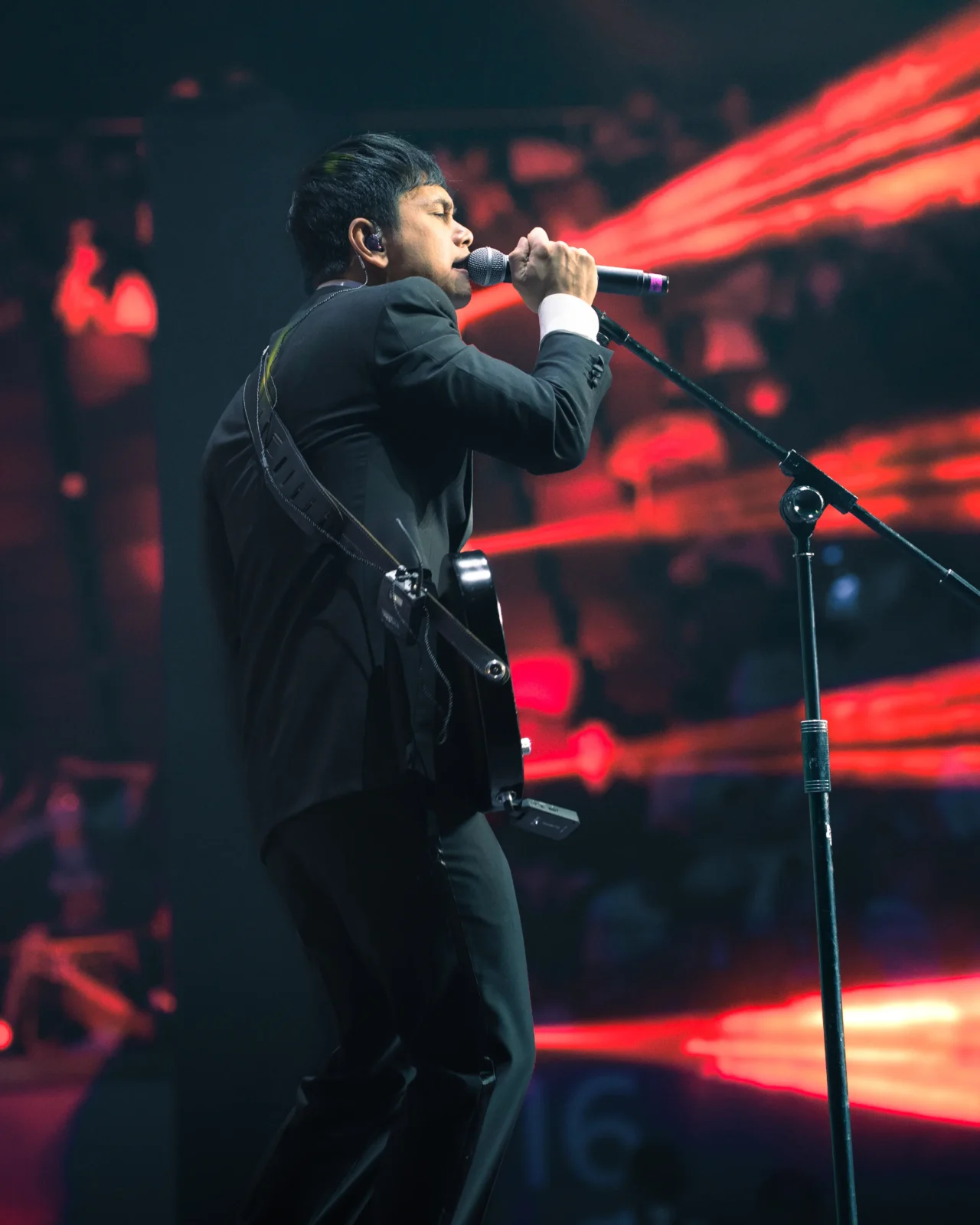
Where “Pangako ng Bukas” looks inward, “Stand in the Fire” confronts the wider social and political landscape. Fueled by frustration over corruption, the oil crisis, and the flood control scandal, the song reflects Escueta’s disappointment with issues that dominate public conversation but risk disappearing as the news cycle moves on.
While conceptualizing the music video, the oil crisis in the Philippines further sharpened his frustration over government priorities and the consequences of alleged corruption.
“If you guys didn’t steal the funding for that, then maybe you could help us and help Filipinos better today in this crisis,” he says, describing the sentiment behind the video’s concept.
For Escueta, the challenge is ensuring that public outrage does not fadeFadeA haircut in which hair gradually shortens from longer lengths on top to very short or bare skin at the sides and back. Fades come in low, mid, and highGo to Fade Glossary before meaningful accountability is pursued. “I believe this issue is too big for us to let it slide,” he says.
The song draws on music’s longstanding relationship with protest and collective action. Escueta believes artists can use their platforms to encourage people to remain engaged with issues affecting their communities rather than simply moving on to the next headline.
“If every artist is able to shed light in their own little way, then I think it will move a lot more people,” he says.
His approach is not about making every release political. It is about recognizing that music can give shape to collective frustration, bring people together, and keep important conversations alive.
Building Beyond the Stage
In 2019, Escueta stepped away from music to focus on his family and Frank and Dean Coffee. His daughter, Callie, had just turned one, and he decided to devote himself to building the business. For six years, coffee became his primary professional pursuit.
Then, in 2025, he found himself once again reaching for his guitar and sitting down at the piano. What began as a personal outlet eventually developed into an album and a return to the music industry.
“I thought I was done with it,” he says.
Instead, he discovered that being a musician and songwriter remained an essential part of his identity. He now sees music and entrepreneurship as complementary pursuits, both requiring creativity, patience, and dedication.
Frank and Dean Coffee’s slogan, “Coffee Driven,” reflects the company’s belief in people who are determined to pursue their goals, whatever their profession. For Escueta, coffee has fueled his own ambitions in much the same way music has. “Building a brand is the same creative inspiration as similar to writing music,” he says.
His two pursuits may look different, but both give him ways to express himself and build something meaningful. And beneath them is a motivation that has remained constant: his family.
“When you ask me about my why, at the end of the day, my why is my family and how I can be the best dad, the best husband, and the best provider,” he says.
Fatherhood has also shaped his understanding of responsibility. He wants his daughter to grow up in a world where mental health is taken seriously and people are willing to speak up for what is right. For him, those values begin with the example that adults set.

Making Music That Moves People
Escueta’s return to music has changed how he approaches success. Rather than focusing on touring, promotion, or reaching a particular milestone, he is more interested in creating songs that reflect what he genuinely feels and allowing them to find their audience.
“If it connects with just one or two people, great. Connects with thousands, great,” he says. “But it’s about creating based on what you’re feeling, and being honest about it, and just putting it out there.”
That perspective leaves room for music to make an impact in ways that cannot always be measured. A song might encourage someone to seek help, inspire another to pay attention to corruption, or simply offer comfort during a difficult moment.
For Escueta, the responsibility that comes with an audience begins with integrity: creating honestly and communicating messages that can bring people together rather than tear them apart.
He prefers to approach the future song by song, focusing on the present instead of trying to predict where he will be years from now. Between music, Frank and Dean Coffee, and family, he has found a way to embrace the different parts of his life without forcing them into a single definition of success.
Ultimately, his return is less about reclaiming his former identity than recognizing what has remained with him all along. Through music, he hopes to make people feel understood, encourage difficult conversations, and remind listeners that some things are worth standing up for.