Summaries were generated by AI. Generative AI is experimental.
Explore other styles:
On November 9, 2026, Skydance announced that James Gunn and Peter Safran would step away as DC Studios co-CEOs by the end of the month. Former Marvel executive Jeremy Latcham will take over.
For DC fans, the news landed with the familiar thud of another collapsing timeline. They have watched the studio announce new directions, assemble casts, change course, and ask everyone to get excited again. Nolan’s trilogy was an outlier; Snyder’s DCEU raced toward Justice League before finding its footing, followed by abandoned plans and competing versions. Gunn’s arrival in 2022 was supposed to end that cycle. Four years later, he is leaving the executive suite.
The studio calls it a return to creative work; insiders believed the pair were blindsided, though others disputed when they were told. But the handover raises a familiar question: who gets to decide DC’s future?
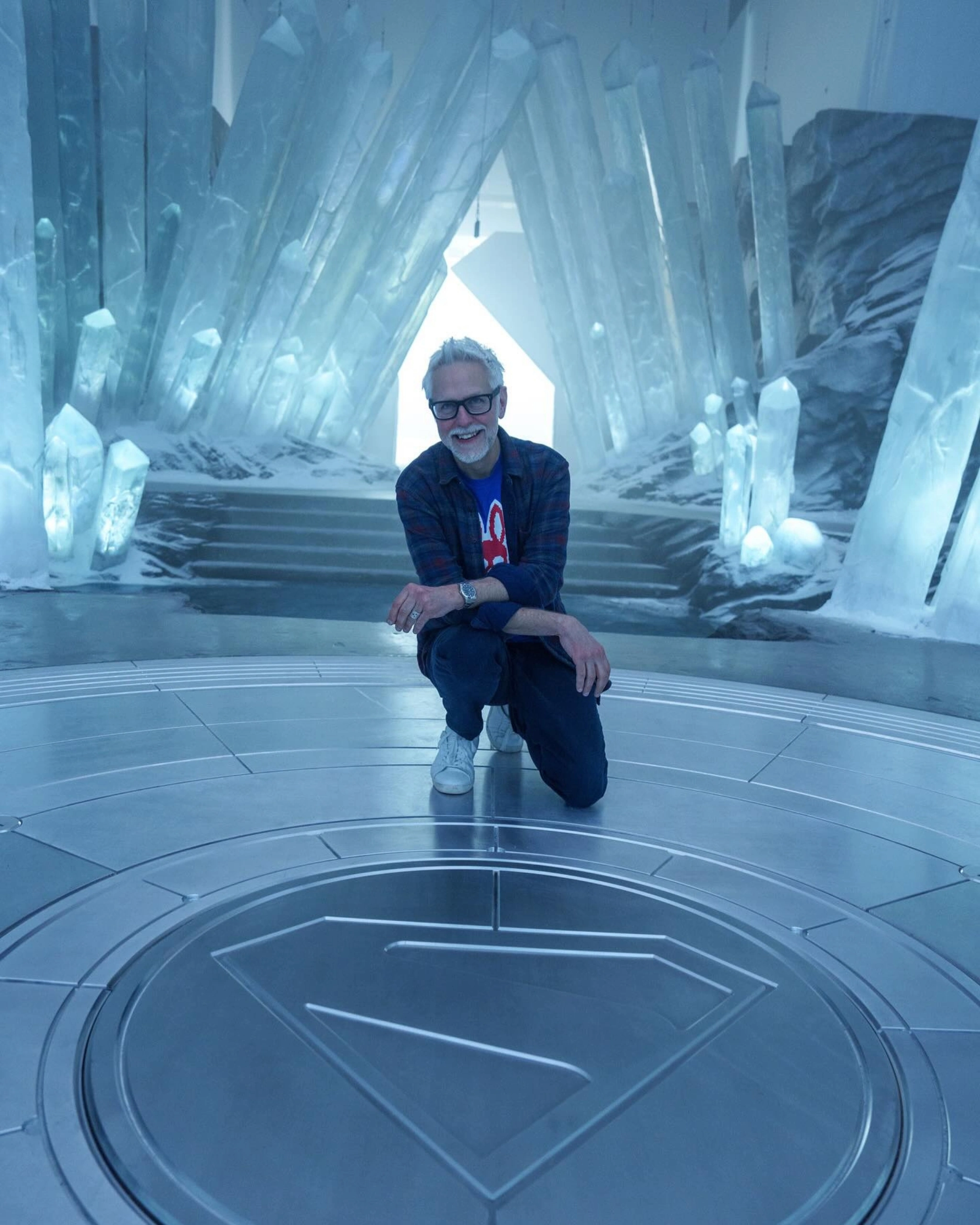
Gunn is an unusual studio boss. He came up through Troma, writing Tromeo & Juliet, then directed Slither before finding a global audience with Marvel’s Guardians of the Galaxy. His taste for misfits, irreverence, old songs, and sudden sentiment became a franchiseFranchiseA series of films, shows, or games built around shared characters and a shared universe, often spanning many sequels, spin-offs, and merchandise. Franchises dominate box offices and streaming, and theirGo to Franchise Glossary signature.
After The Suicide Squad and Peacemaker, DC gave him the keys to the kingdom alongside Safran. Their 2023 slate, “Gods and Monsters,” promised an interconnected universe across film and television, with Superman as its foundation and room for stranger corners of the comics.
There were reasons to believe it could work. Gunn had shown that an obscure talking tree or space outlaw could carry a blockbuster. Superman grossed about $619 million worldwide, while Creature Commandos, Peacemaker, Lanterns, and the body-horror gamble of Clayface gave the cinematic universe a distinct texture. The business was uneven, though, as Supergirl earned roughly $126 million against a reported $170 million production budget, and there were reported doubts about Clayface breaking even on its $109 million gross. Insiders cited spending and mixed audience response as factors in the shake-up.
Despite the success of a Superman film earning over half a billion dollars, and a Green Lantern series being the most-viewed DC show in history (averaging 22M viewers per episode), they apparently did not protect the people running the studio. Skydance inherits DC as superhero films lose their guaranteed box-office electricity.
Latcham brings the sort of credentials that should reassure a boardroom, having worked on Iron Man, The Avengers, and Guardians of the Galaxy, while also having collaborated with Gunn in the past. During his Marvel years, he often used the question of whether his grandmother would understand and enjoy a film as a shorthand for accessibility.
As he later clarified in interviews, the point was not to suggest that films should be made solely with that audience in mind, but that they should strike a balance, staying true to what longtime comic-book fans love while remaining accessible and enjoyable to a wider audience.
There is nothing inherently wrong with making movies accessible, but when accessibility becomes the guiding principle, creative ambition tends to suffer. DC has spent years trying to distinguish itself from Marvel, only to potentially hand its future to someone whose biggest professional successes came from helping build that very machine.
Gunn says he is relieved to return to filmmaking, describing the corporate side of the job as trying and executive duties as a strain on family life. He remains attached to Man of Tomorrow, due in July 2027, and says he is writing another DC project. His departure does not erase his fingerprints from the universe, but leaves its future in someone else’s hands.
Fans have responded with grief, frustration, calls to restore Snyder’s DC, and fears of another reboot. Their exhaustion is the real story. DC has extraordinary characters and a fan base that keeps showing up, but has struggled to provide continuity among decision-makers. A cinematic universe cannot build trust if every change in ownership brings a new map, a new architect, and another request for patience.
Superman can take a hit and get back up, but the audience has been doing that for years.
Frequently Asked Questions
Gunn is stepping down as co-CEO to return to filmmaking, citing the strain of executive responsibilities and their impact on his family life.
Former Marvel executive Jeremy Latcham will take over from Gunn and Peter Safran.
Gunn helped establish DC’s new cinematic universe, beginning with Superman, alongside projects such as Creature Commandos and Peacemaker.
Yes. Gunn remains attached to Man of Tomorrow, scheduled for release in July 2027, and has said he is writing another DC project.
Superman grossed about $619 million worldwide, while Supergirl earned roughly $126 million against a reported $170 million budget.

Gabriel Yap
Gab is GQ Philippines’ Associate Features Editor, where he writes about the people, places, and ideas shaping contemporary culture. When he isn’t at events or chasing a story, you’ll likely find him somewhere far from the city, drawn to rugged and remote terrain as a mountaineer and to community-driven journalism. Before GQ, he made his way through Vogue Philippines in various roles, starting as a copywriter before becoming Vogue Man’s Fashion Writer, an occasional stylist, and a culture writer.
- KEYWORDS
- James Gunn
- DC Studios