Summaries were generated by AI. Generative AI is experimental.
Explore other styles:
Let’s get something out of the way: Aaron Sorkin isn’t David Fincher, and The Social Reckoning isn’t The Social Network. The comparison isn’t unwarranted, though, so I completely understand it. Sorkin didn’t just write the Fincher film, but won an Oscar for it too (a well-deserved one, I might add), and the marketing for the new film, which he writes and directs, even had the nerve to use The Social Network’s popular Reznor-Ross score and imagery. So whatever comparisons The Social Reckoning draws with the 2010 masterpiece, Sorkin and his team definitely invited them.
But after catching an early preview of the film (it opens in cinemas across the Philippines today, October 7), I’m happy to report that The Social Reckoning is very much its own thing. Marketing campaign be damned. It’s also one of Sorkin’s best directorial efforts yet.
In the tradition of Alan J. Pakula’s All the President’s Men and Steven Spielberg’s The Post, The Social Reckoning stands on its own as a very good investigative journalism film. There’s something about watching people piece a story together that I’ve always found compelling, but thanks to Sorkin’s very smart script and sharp dialogue, quick pacing, and direct-to-the-point staging, it becomes a compelling piece of entertainment for adults. So much so that you really do forget that all you’re watching on screen is people talking in rooms for two hours.
Admittedly, the screenplay does become a little bit too Sorkin-y at times, with his tendency to write dialogue that can be overly conscious of its own rhythm and cadence, sometimes becoming too clever for its own good. Thankfully, the cast is talented enough to sell even the more Sorkin-y moments.

In the film, Mikey Madison plays real-life Facebook whistleblower and former employee Frances Haugen, who leaked documents (later known as the Facebook Papers) that revealed Facebook and Instagram’s algorithms amplified hate and misinformation. Madison, since winning the Best Actress Oscar in 2025, has been quite selective with her filmography, so expectations were quite high for her follow-up to her award-winning role. The choice was a smart one.
Her Haugen is a far departure from her work as the titular Anora; in fact, she is the exact opposite. Haugen is socially awkward, but also fiercely passionate, intelligent, and exacting in her actions—qualities Madison captures with naturalism and ease. It’s a remarkable showcase for her talent, and another reminder of why she is one of Hollywood’s most exciting young talents.
Sharing the screen with Madison for most of the runtime is Jeremy Allen White, who plays Jeff Horwitz, the Wall Street Journal reporter who writes the series of stories that expose Facebook. White is simply serviceable in the role, but it’s not really his fault. The character isn’t given much nuance or personality beyond a few small details, including a running gag that reveals he’s a big classic musical nerd. When will we get our big movie star moment from him? I’m waiting.
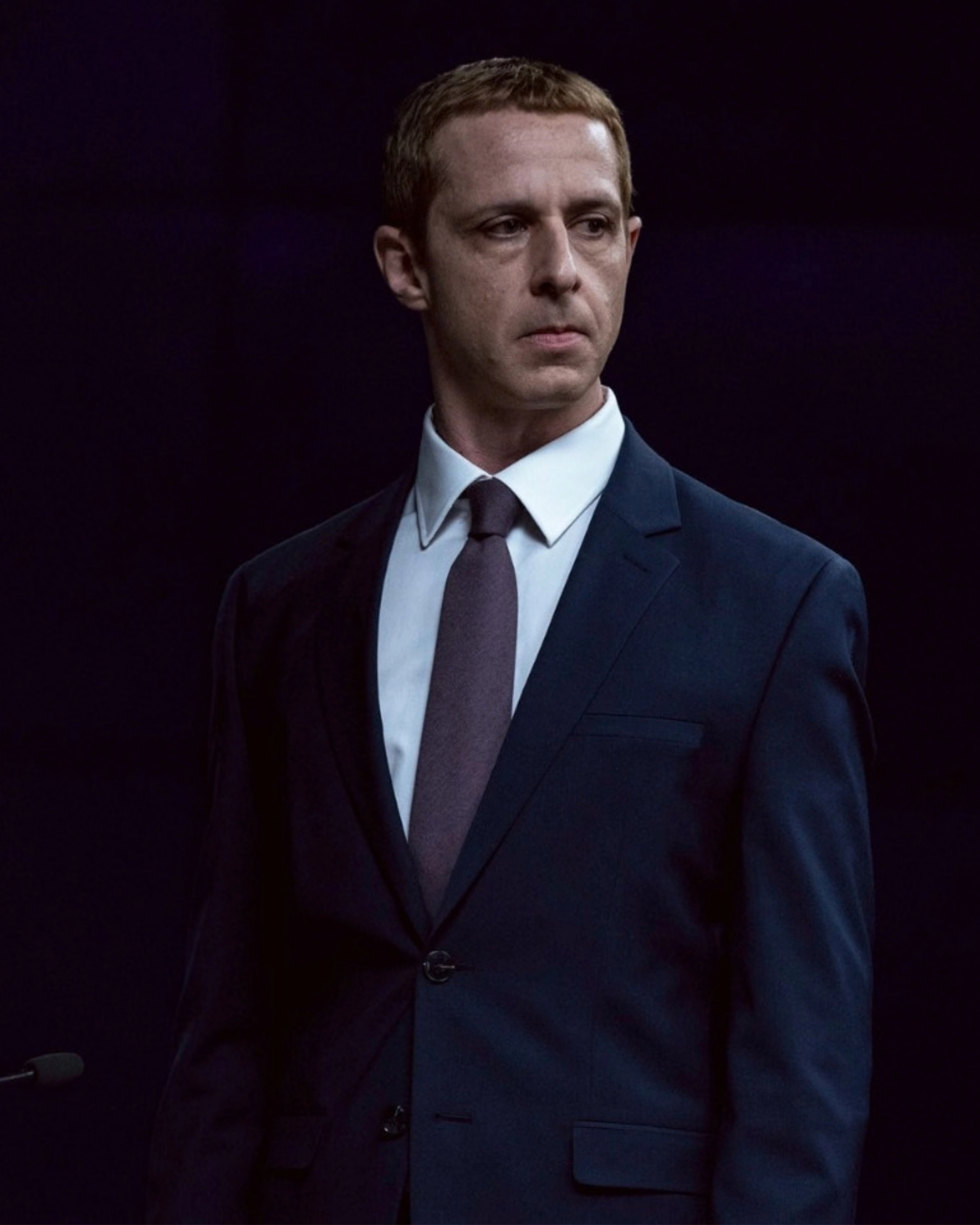
As Haugen and Horwitz’s investigation unfolds, the film jumps back and forth to Facebook founder Mark Zuckerberg, who, along with a large team of PR consultants (led by the very talented Wunmi Mosaku), is practicing how to handle questions at an upcoming court appearance. This section initially feels disconnected from the investigation, but it eventually becomes a window into Zuckerberg’s thinking and the way he runs the company.
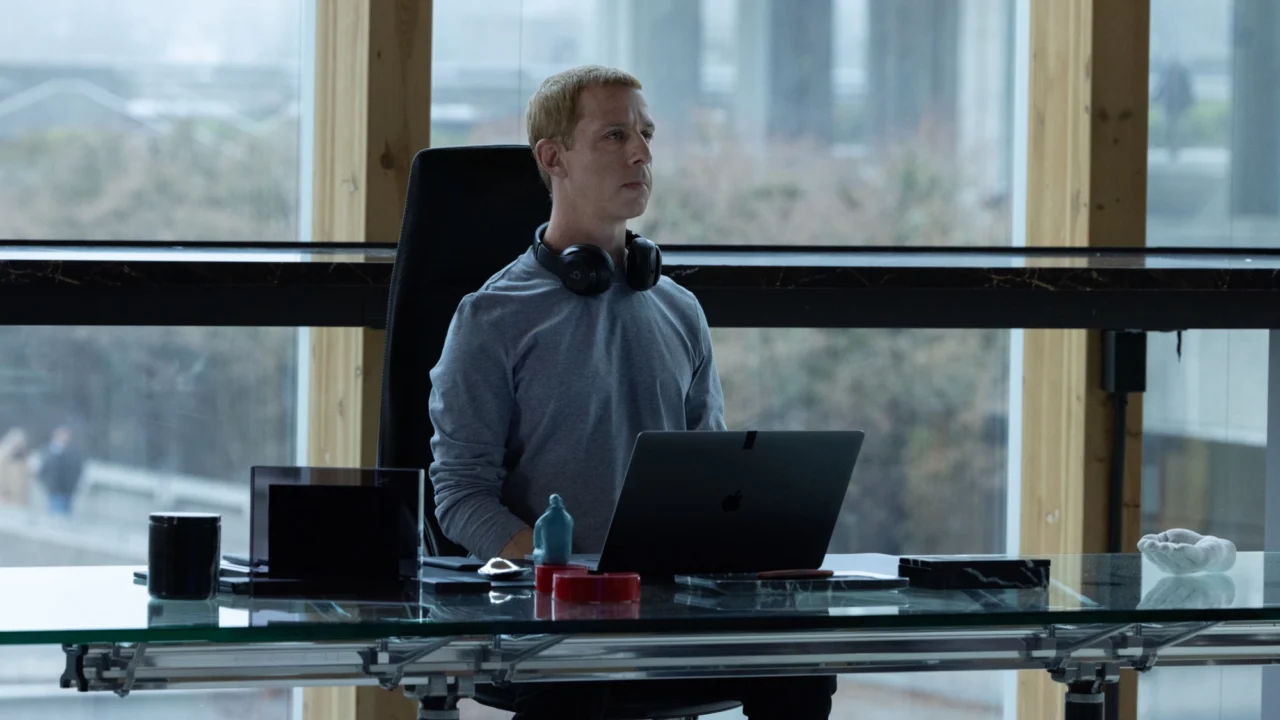
The portrayal is also considerably kinder to Zuckerberg than the one in the 2010 film. The problem is that, in making him more sympathetic, Sorkin gives the character surprisingly little complexity. He is mostly there to deliver cool Sorkin one-liners and blow his head off when people piss him off. The result is a portrayal that feels incomplete and, worse of all, very safe.
Still, Jeremy Strong knocks it out of the park, playing Zuckerberg without falling into the trap of simply imitating Jesse Eisenberg. Instead, he gives the tech giant an inner fire that is quite fascinating to watch despite the lack of material. He’s very good in the movie, as he always is—method-acting eccentricities and all. And honestly, I’m fine with Strong having a relatively small role. He’s clearly not the lead here (it’s Madison and White), and perhaps that is the biggest difference between The Social Reckoning and The Social Network: Sorkin is less interested in Zuckerberg himself and more interested in how what he built is finally affecting ordinary people.
Looking at Sorkin’s filmography, you quickly notice that the writer-turned-director isn’t quite the most talented guy at bringing his own scripts to life. But surprisingly, The Social Reckoning, while still having some of his obvious problems—most notably that air of Oscar-begging, some clunky dialogue, and a very sappy ending—is honestly very forgivable because the film is a solid effort and perhaps the best thing he’s done as a director.
What I’m most happy about, though, is that it’s different enough from The Social Network, both stylistically and as a narrative. Despite what the marketing tried to sell us, Sorkin is finally doing his own thing here. And at least it’s not a repeat of Being the Ricardos again.
The Social Reckoning opens in Philippine theaters on October 7, 2026.
Frequently Asked Questions
The Social Reckoning opens in Philippine cinemas on October 7.
The film follows Facebook whistleblower Frances Haugen and journalist Jeff Horwitz as they investigate Facebook’s impact on misinformation and hate.
The film stars Mikey Madison, Jeremy Allen White, and Jeremy Strong.