Summaries were generated by AI. Generative AI is experimental.
Explore other styles:
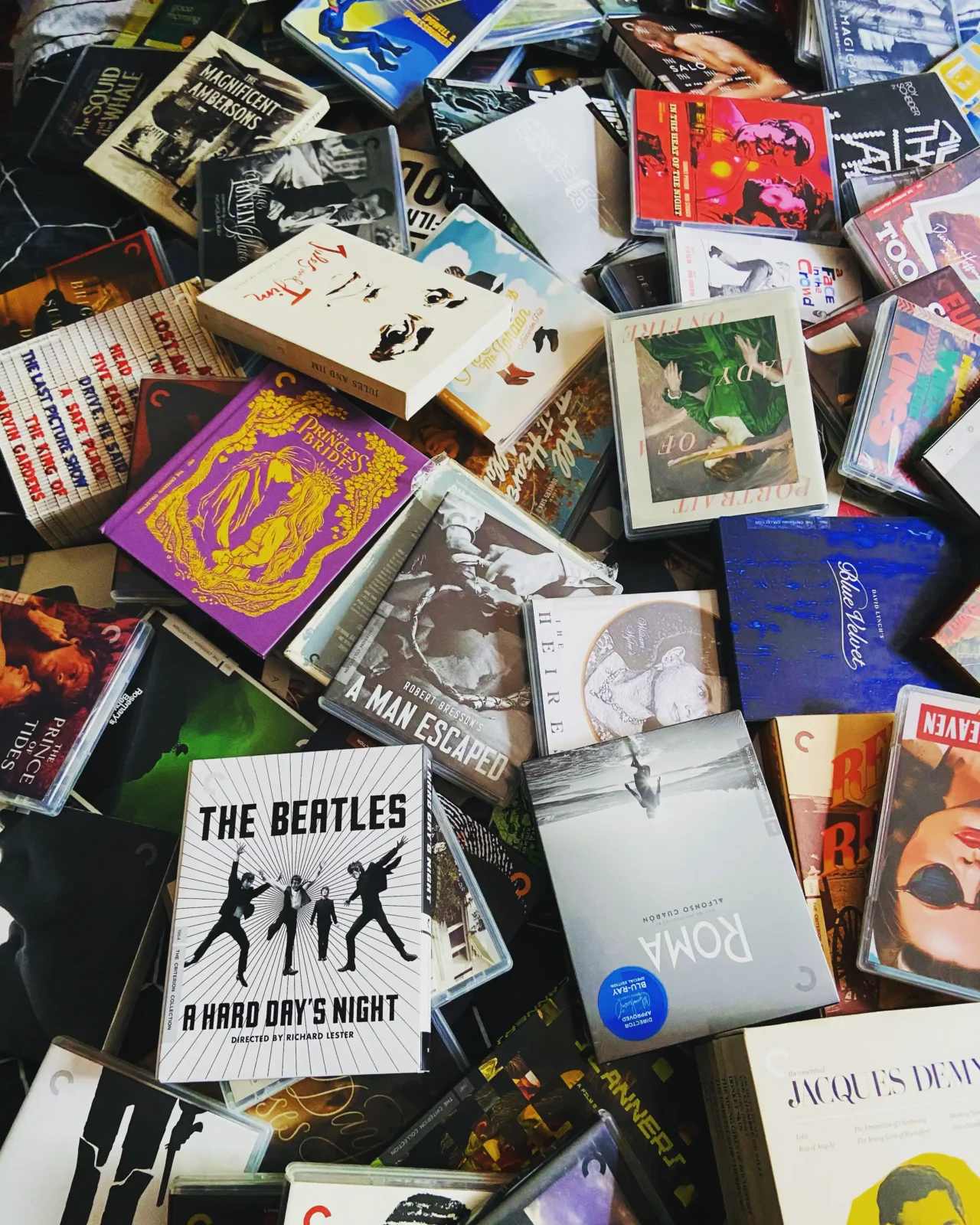
In the bedroom of John Villanueva, a young businessman living outside Metro Manila, the walls are lined with what can only be described as a film lover’s ultimate fantasy. Every single edition of the Criterion Collection—the gold standard of physical media—occupies almost every available shelf. Here sit the most obscure films of Federico Fellini, the complete works of Wong Kar-wai and Ingmar Bergman, and even the out-of-print AK 100 boxset, containing 25 masterpieces by Japanese auteur Akira Kurosawa.
The Criterions are presented like prized possessions, but he also owns editions from virtually every physical media label imaginable: hundreds upon hundreds of 4K discs, collector’s editions from Kino and Arrow Video, and stacks of old DVDs accumulated over a lifetime of loving movies. For John, the phrase “physical media is dead” means nothing.
In the city, far from John’s sacred cave of cinema, Victoria Atienza sits inside Ted Ellis, a haven for music lovers in Taguig. The store sells everything from vinyl records, CDs, and cassette tapes to official merchandise for every kind of fan imaginable.
As a store manager, Victoria’s role extends beyond sales figures and restocking the shelves. She and the rest of the Ted Ellis team see music as a mission. They’re there to share it. To guide people to make meaningful purchases. To befriend customers and support them as they embark on their own physical media pilgrimage.
In a way, they embody that famous Penny Lane line from Cameron Crowe’s masterpiece Almost Famous: “If you ever get lonely, just go to the record store and visit your friends.” Is physical media dead? Don’t ask Victoria, because the phrase is entirely meaningless.
To the outside world, collecting physical media may seem incredibly niche. And that’s completely understandable. I very much doubt that more than a few thousand people get excited about buying the complete works of Stanley Kubrick on Blu-ray or rushing to the store to pick up the latest Laufey album the moment it drops.
But for people like John and Victoria, a rare breed in today’s landscape, their lives are fueled by the art contained within these discs, records, and tapes. They belong to a community that is particularly uncommon in the Philippines, where obtaining physical media often requires patience, money, and persistence to hunt. Yet through their passion, they keep the art form of collecting alive in their own little ways…and they are definitely not alone.
Over the past few years, more young people have been buying vinyl records, CDs, DVDs, Blu-rays, and even cassette tapes. Which raises the question: Why? Why are young people spending on physical media again when streaming services (and piracy) are available at the tap of a screen? To find out, I turned to John and Victoria.
Physical Media in the Philippine Context
There are no definitive scholarly studies explaining why so many young people—particularly Gen Z—have begun buying physical media again. Before speaking with John and Victoria, the closest thing I had to research was a quick search on Google, where countless Reddit threads, think pieces, and industry reports all attempted to explain the phenomenon.
The theories were familiar enough. Streaming services are becoming increasingly expensive. Algorithms have made entertainment feel repetitive and impersonal. Young people are growing tired of being fed recommendations and are instead searching for more intentional ways to consume art. All of that made sense to me. But I couldn’t help wondering: does any of it actually apply to the Philippines? Before answering that question, it’s worth looking at how physical media evolved locally.
Like much of the world, the Philippines experienced its own physical media boom throughout the 1980s and 1990s. VHS tapes, LaserDiscs, and Betamax cassettes found popularity through rental chains such as ACA Video and Video City (our Blockbuster counterparts), where families and film buffs could borrow movies for a few days at a time. When DVDs arrived in the late 1990s, however, they were far from affordable. A single disc could cost a small fortune, which meant many Filipinos held on to VHS longer than consumers in other countries. Naturally, piracy filled the gap.
Bootleg DVDs quickly became fixtures in places like Quiapo, Riverbanks, Greenhills, and especially Metrowalk, where entire generations of movie lovers discovered films through questionable copies sold at suspiciously low prices. On the legal side, music and movie fans flocked to stores such as Astrovision, AstroPlus, Tower Records, and Odyssey, browsing aisles packed with CDs, DVDs, and cassette tapes. Eventually, the prices of original media would drop and become more affordable when more legitimate Asian manufacturers opened shop.
For more serious collectors, there was another world entirely. Communities like PinoyDVD.com became thriving marketplaces where enthusiasts bought, sold, traded, and debated everything from obscure international films to home theater setups. Throughout the 2000s and into the early 2010s, physical media culture remained relatively healthy. As a young collector myself, I could walk into a store, spend hours browsing shelves, and leave with a stack of discoveries.
Music followed a similar trajectory. While CDs remained dominant for years, vinyl records never completely disappeared. A passionate community of collectors continued importing records from abroad and supported specialty retailers such as Grey Market and Satchmi. Victoria later described these as the “OG music stores” of her generation, crediting them with keeping vinyl culture alive during the industry’s transition to streaming. But of course, we all know how the story goes.
By the mid-2010s, services like Netflix and Spotify were rapidly reshaping the way people consumed entertainment. The rise of streaming was impossible to ignore. According to Netflix, it generated roughly $1.2 billion in revenue in 2007. In 2020, that figure had ballooned to around $25 billion, illustrating just how dramatic consumer habits were changing and shifting away from physical to digital.
The effects could be seen elsewhere. Across the world, physical media retailers began disappearing. In the United States, Blockbuster closed its last corporate-owned store in 2014. A decade later, Best Buy stopped selling movies altogether.
The Philippines followed a similar path. One by one, the video and music stores that Gen X and millennials grew up visiting shut their doors. In 2017, Astrovision closed its Greenhills branch, marking the end of the country’s last major physical media chain. Then came the COVID-19 pandemic in 2020. With people stuck at home, it accelerated the world’s migration toward digital consumption. For many, physical media seemed destined for extinction.
Meet Mr. Criterion Collector
I first noticed John Villanueva during the pandemic. I was lucky enough to be living with my parents at the time, had my own small business, and wasn’t particularly worried about my financial situation (thanks, Mom and Dad). Bored out of my mind and with a little bit too much time on my hands, I decided to take my physical media collecting to the next level.
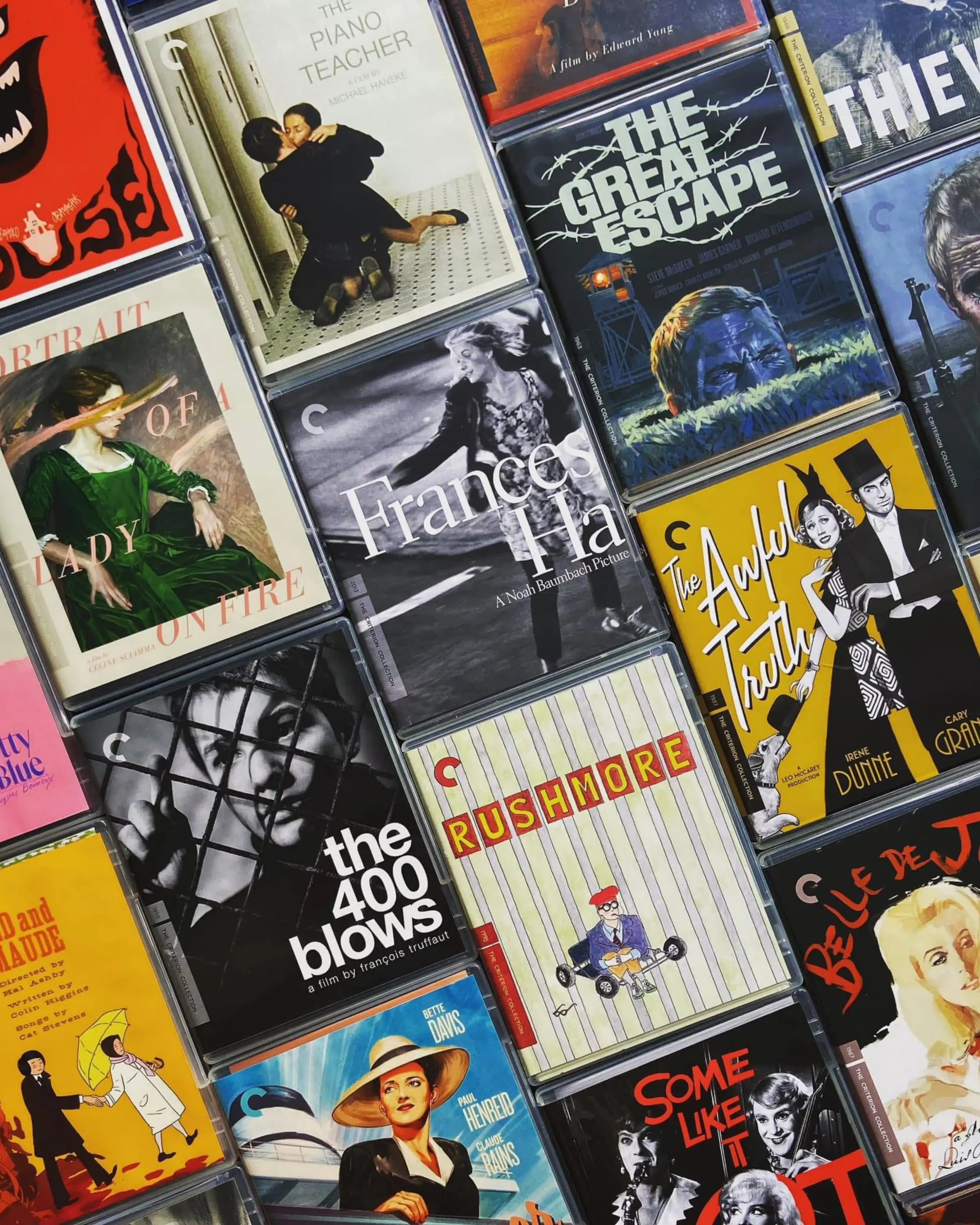
My focus became the Criterion Collection, an independent label revered for its meticulous work on film preservation—from its pristine restorations to the artwork adorning each physical media cover. Knowing there were probably other people like me looking for a cheaper alternative to importing discs from Amazon US, I decided to make a Facebook group called Criterion Collectors of the Philippines.
To my surprise, the group grew rapidly. Within the first day, it had amassed more than 500 members. Perhaps those stuck at home during lockdown, just like me, were also passing their time by sourcing physical copies of films they love. The group continued to grow over the years. Today, as of writing, we proudly have more than 2,600 fellow nerds discussing, buying, and selling movies on a daily basis.
The group’s most active member, both then and now, was John Villanueva. He first made waves when he posted a photograph of himself holding a Blu-ray of Bong Joon-Ho’s Parasite and announced to the world that he had finally accomplished what many collectors thought impossible: after more than a decade of collecting, he had acquired every single Criterion Collection release ever produced. After that, John became something of a small celebrity within our little community.
Over the next few years, what John did for physical media—and perhaps cinema in general—in the Philippines was truly important, if often thankless, work. While he isn’t part of any publication, he often acts like he is. On our Facebook group and on his personal social media accounts, he spreads news about the latest releases, what’s coming to theaters, and any film related announcements. Sometimes, he’s even faster than most official outlets.
But perhaps the greatest thing he does is serve as a missing resource for many local collectors. Not only does he buy and sell some of the most sought-after titles, but he also allows people to order physical media releases through him. He imports them from the US, shoulders the expenses, then charges only fair prices.
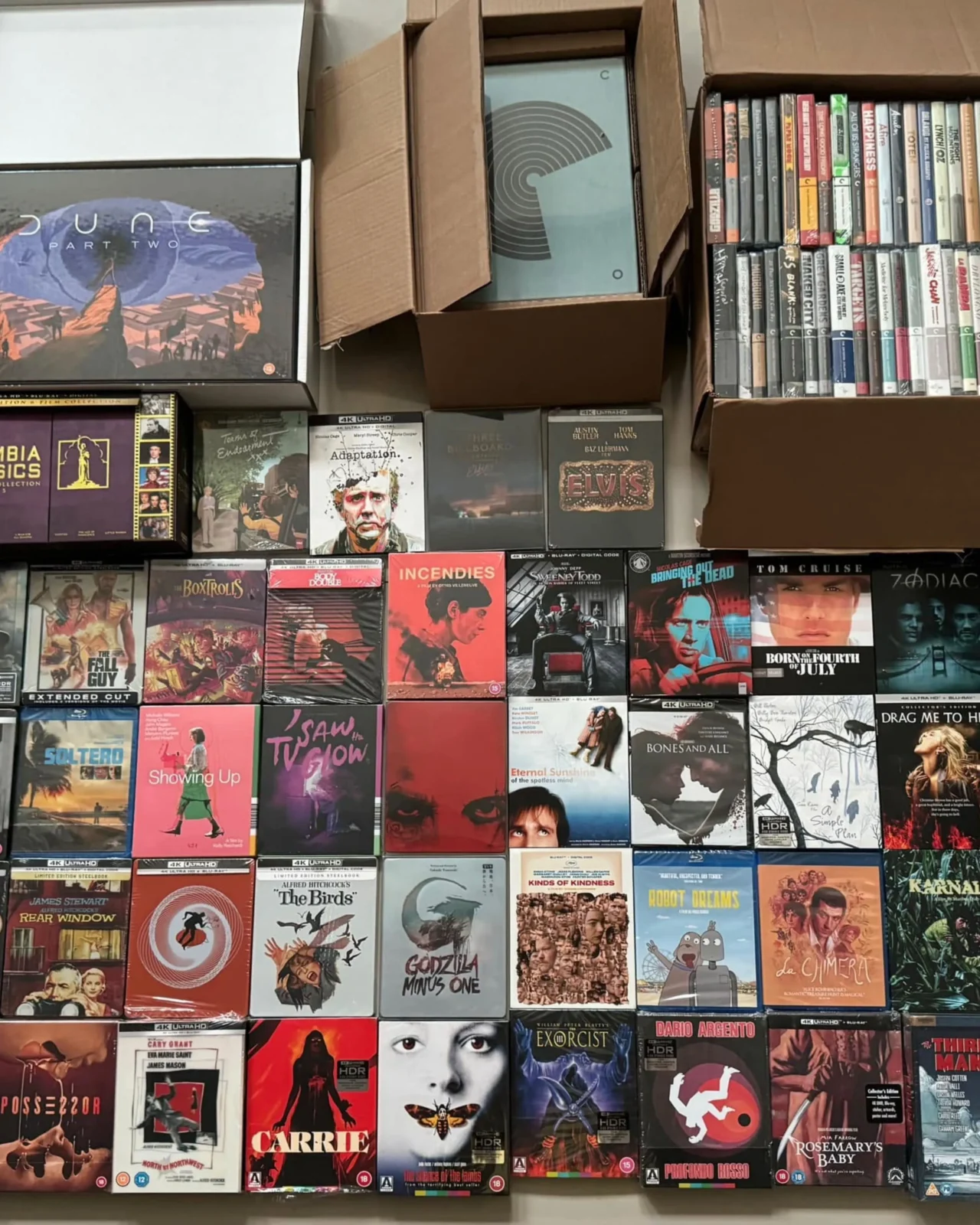
In our recent Zoom conversation, John told me that surprisingly, his most frequent customers these days are members of Gen Z. “Do you think that’s because they’re performative?” I asked him, wondering whether or not young people like to look cultured by participating in niche hobbies. John was shocked by my presumptuous question. “No,” he replied, “They’re really cinephiles. They have Letterboxd accounts. And anyway, with the prices and the economy right now, if you’re not a fan or a cinephile, you won’t be collecting Blu-rays or DVDs. That wouldn’t be your priority.” He had a point.
“Although I noticed,” he continued, “whenever they order from me, while I always recommend Blu-rays, they’re actually way more into DVDs. The first reason is probably because of the price. I get it; they are young and just starting out, and DVDs are not as expensive as Blu-rays. I started the same way too.”
John continued to explain that another reason why young people are specifically spending on DVDs instead is because there are no Blu-ray players being sold at local electronic stores. While it’s the same for DVD players, he notes that it’s easier for Gen Z to find them secondhand online, or to inherit old ones from family members who once owned them. Slowly, as I spoke to John, a clearer picture began to emerge—not of nostalgia-fueled collectors, but of young people working within the limits of what they can actually find and afford.
So, is the rise of physical media amongst young people simply because of an interest in cinema? John says yes. He points to the recent success of arthouse horror films Obsession and Backrooms as proof. Both were famously made by Gen Z filmmakers, and both dominated the global box office when they were released. When John watched them in the theaters last June, both screenings were fully booked and filled with Gen Z audiences. But the excitement in the theaters often ends the moment the credits roll, with little guarantee that audiences will see these films again.
That’s where physical media comes in. It becomes a portal into movies we love when they aren’t available anywhere else. Because of licensing, your favorite film might not be on Netflix all the time. And what young people these days, just starting out in their lives, can actually afford to subscribe to the endless number of streaming platforms offered to the public? In short, it’s nice to have our favorite films physically there and readily available for us whenever we choose to watch them.
John recites a famous Christopher Nolan quote from an interview with ICN from November of 2023 to make his point: “You buy a Blu-ray, it’s on your shelf, it’s yours. No company is going to break into your house and take it from you to repossess it. It’s yours and you own it. That’s never really the case with any form of digital distribution.”
Beyond new releases, John also encourages his customers to discover classic films on physical media. He suggests you start with the great American classics cited by the AFI Top 100. But when you’re ready for a larger selection of international works, the Criterion Collection is there for your cinematic education. As a brand celebrated for its careful curation of world cinema, it has become an authority for cinephiles looking for a place to start. “When Criterion adds a film to their collection, they’re telling their fans ‘this is a great film,’’ John says. “There’s trust in the brand.” And that’s why John loves it and why he continues to collect everything that they put out.
“People have asked me before: have you watched all of them?,” he says about his vast movie collection with a laugh. “I’ll be honest, I have not watched all of them, but I have seen a lot. And that’s okay. Most of them are blind buys, and it feels like you have a library in your house. So if you want to discover something new, it’s readily there and available. I can just go get it and put it in my player. I’ll keep watching. I’ll keep collecting.” He ends with a smile.
Come to the Record Store and Visit Your Friends
As you can already guess, like John, I am a major movie nerd. But it would not be fair to talk about physical media and its current boom without looking at other formats of entertainment. This is why I knew that I needed to talk to someone working in the vinyl industry. As a non-expert, I quickly turned to a collector friend, who suggested I speak to someone at Ted Ellis, a celebrated independent record store known for having a vast selection of not just music media, but also licensed merchandise.
I took a chance and messaged the store on Instagram, and to my surprise, they quickly replied. They pointed me toward Victoria Atienza, the store manager, who they felt would have great insights on the subject I was exploring, as her role requires her to be at the store every day and interact with clients. We hopped onto a Zoom call a few days later.
Born in 1997, Victoria belongs to the older half of the Gen Z generation. She joined the staff when she was just 19 years old in 2016, and has been with them since. Victoria told me that the store was founded by Ted Ellis right after graduating college in 2011 as a way to support his favorite artists by bringing their official merchandise to the Philippines. At the time, they operated only online, where they took pre-orders of merch and vinyl records. They opened a smaller headquarters some time later, but it closed down when the facilities was flooded, and the inventory was ruined.
Later, during the pandemic, they noticed that the demand for vinyl records started to get higher. “Why?” I asked Victoria. She was hesitant, but answered anyway: “Maybe because people were trying to find ways to cope with isolation?”
Ted Ellis followed that rising trend in sales and finally opened their existing brick-and-mortar store in 2023. “We wanted to give customers the experience of being in a record store,” Victoria explains. “But we also wanted to be different. So we made sure we employ people who are actually fans. We don’t want our customers to come to the store and feel like it’s only transactional. At Ted Ellis, we actually talk to our customers and get to know our customers. We want them to feel welcome here. We want to form a connection with them. We are a store for fans because we are also fans.”
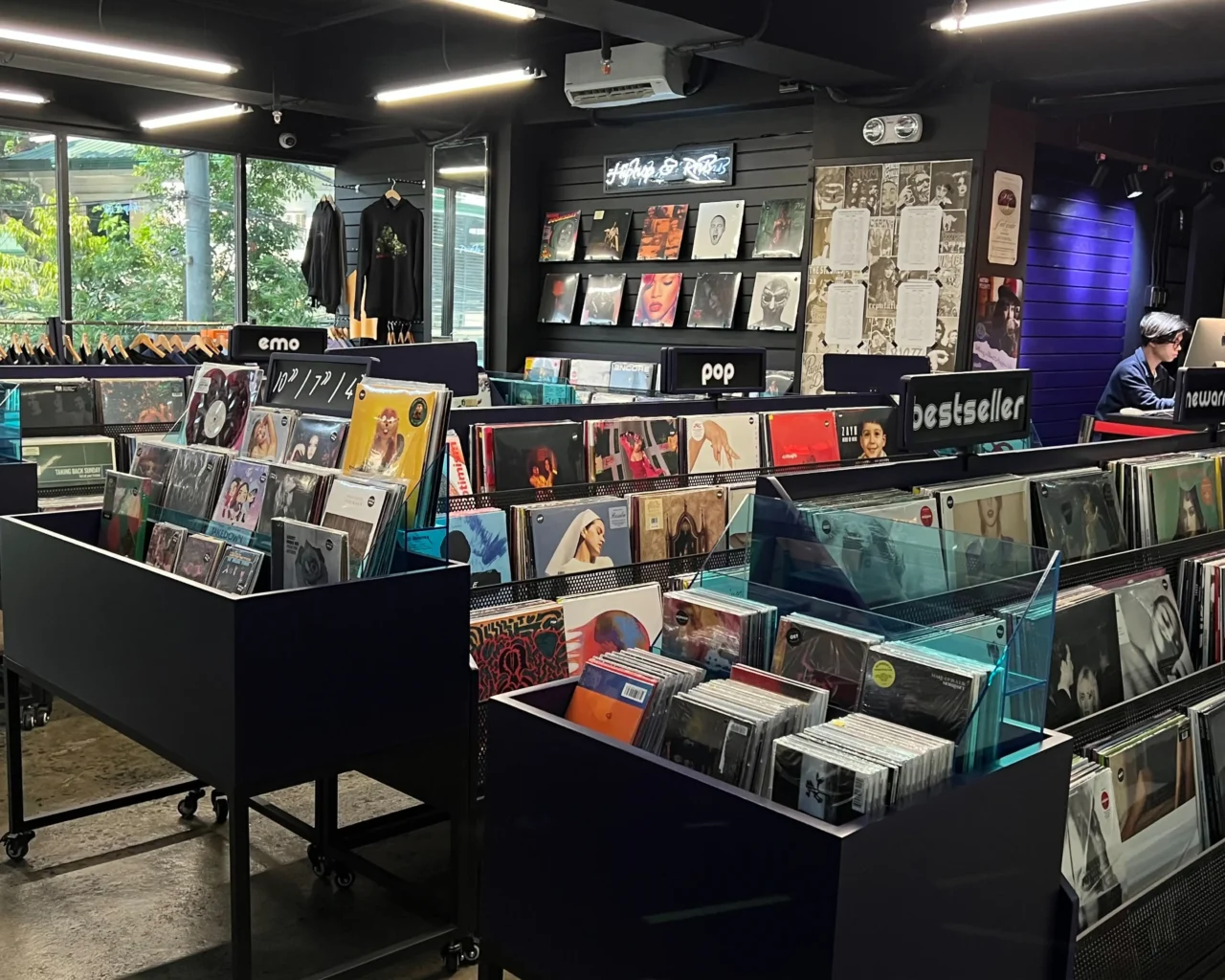
Naturally, my follow-up question became: what kind of fans actually come to Ted Ellis? Victoria replied that while their market consists of people from all types of age groups, it has been quite surprising to see many teenagers and early twenty-somethings coming to the store lately. She even laughs when she recounts a recent time when a child came into the store with their parents, who paid for their record. I instantly got a flashback to myself with my mother in AstroPlus.
“Well, vinyls are very expensive,” I said, thinking back to that kid. “Especially the newer releases from our famous pop girlies.” Victoria agreed, but said it doesn’t really matter when you’re a fan. If you love an artist that much, you probably wouldn’t mind the price tag. (Again, I thought of Almost Famous). Plus, you get so much more from a physical media release than what you can get off Spotify.
“When you buy a vinyl record, you’re buying the music first. That’s the number one reason,” she explains. “But also, you get the artwork, you get the inserts, you get the messages from the artist. And when you listen to vinyl, it’s like your world stops. When you listen to digital music, it’s so easy to skip to the next song. With vinyl, you have to sit with the music. You hear it the way the artist intended you to from start to finish.”
After she said that, I instantly thought of John, whom I had spoken to just that morning. It didn’t matter whether it was Criterion Blu-rays or vinyl records. The common thread between the two was clear: both were deeply connected to the art forms they loved.
And perhaps that is the bigger picture here. John is a millennial. Victoria is Gen Z. Yet despite belonging to different generations, they arrived at the same place. Yes, physical media offers beautiful packaging, the thrill of collecting, and a tangible connection to a favorite artist or filmmaker. But what both of them made clear to me is that people are buying these things because they are trying to form a deeper relationship with art itself.
The world today is dominated by algorithms, doomscrolling, and endless content designed to be consumed and forgotten, yet physical media asks something different of us. It asks us to slow down. To sit with music and to really listen to it. To watch and appreciate a film from beginning to end. To give an artist and their art our full attention. And perhaps that is why so many young people are returning to it.
There are many formats of physical media we did not discuss today. Books, video games, comic books, and countless others have all inspired the same kind of intense devotion. But if there is one thing I learned while speaking to John and Victoria, it is that collecting is rarely about ownership alone. More often than not, it is about a rare type of connection that in today’s world feels incredibly rare.
Frequently Asked Questions
Young Filipino collectors are turning to vinyl, Blu-rays, and DVDs as streaming grows more expensive and algorithm-driven. Collectors like John Villanueva and Victoria Atienza describe it as a way to form a deeper, more intentional connection with music and film than digital consumption allows.
John Villanueva is a Filipino collector who owns every release ever produced by the Criterion Collection, a film label known for its curated restorations of world cinema. He founded Criterion Collectors of the Philippines, a Facebook group that has grown to over 2,600 members.
Ted Ellis is an independent Manila record store founded in 2011, known for selling vinyl, CDs, cassette tapes, and official band merchandise. Store manager Victoria Atienza says the shop prioritizes building genuine relationships with customers rather than treating sales as purely transactional.
Physical media in the Philippines moved from VHS and Betamax rental chains in the 1980s-90s, to bootleg DVDs and stores like Astrovision and Tower Records in the 2000s, before streaming services like Netflix and Spotify drove most physical retailers to close by the mid-2010s.
According to collector John Villanueva, Gen Z customers lean toward DVDs mainly due to lower cost and easier access to secondhand or inherited DVD players, since Blu-ray players are no longer commonly sold in local Philippine electronics stores.