
Summaries were generated by AI. Generative AI is experimental.
Explore other styles:
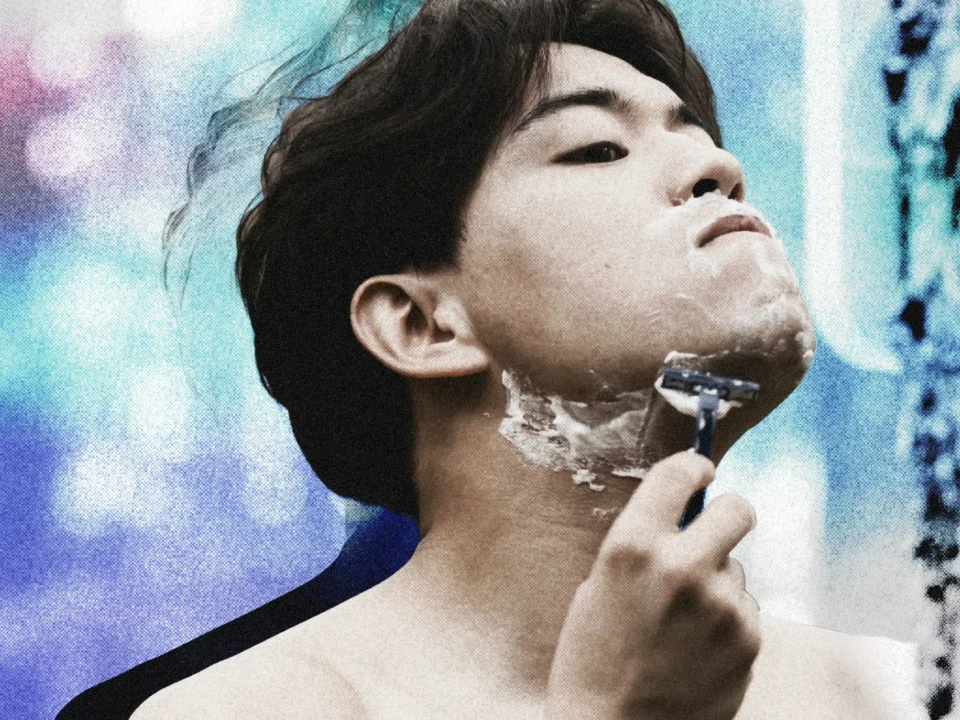
For generations, the bathroom mirrors of FilipinoFilipinoThe national language of the Philippines, widely used for communication, education, media, and culture.Go to Filipino Glossary men have been the stages for silent, tragic, and deeply delusional soliloquies. We stand there, tilting our chins at a 45-degree angle under unforgiving fluorescent light, staring at a patch of chin hair that looks less like a rugged lumberjack and more like the aftermath of kids at a carnival hurling Velcro patches onto a clown’s face. The clown, unfortunately, is you.
Let us be entirely honest with ourselves. The dream of the glorious, full-bodied FilipinoFilipinoThe national language of the Philippines, widely used for communication, education, media, and culture.Go to Filipino Glossary beard has existed somewhere between aspiration and reality, and for most of us, it is nothing more than a complete and total myth.
I learned this the hard way in my early twenties. Driven by the glossy pages of men’s magazines, I resolved to let nature take its course. Instead of emerging as a brooding, effortlessly cool protagonist, I caught my reflection one morning and realized the horrific truth: I had grown out a thin, coarse set of whiskers that clung weakly to my chin, creating a decrepit, sinister, and soul-drained look that resembled Shang Tsung, the villain from the 1992 Mortal Kombat video game. All I was missing was the (gorgeous, might I add) robe and the ability to shoot three flaming screaming skulls from my hands.
As a Filipino, the struggle to grow facial hair requires a level of structural engineering that defies our genetic baseline. The biggest obstacle remains biology, as Asian men generally have lower facial hair follicle density. For years, I nurtured a quiet, desperate hope rooted in a piece of family lore. My grandparents had always insisted that somewhere down the family tree, we carried proud Spanish blood. I clung to that ancestral fiction like a lifeline. Surely, I reasoned, even an iota of European lineage would eventually translate into a thick, beautiful, cinematic beard.
But after months of refusing to shave, the mirror delivered its brutal verdict. If those conquistador genes actually existed, they had surrendered entirely to a dominant lineage of smooth-chinned ancestors. My face hadn’t been conquered by Spain; it had been thoroughly pacified by generations of follicle deficiency. I could feel the spirit of Lapu-Lapu slapping his knee and laughing himself to tears at my rude facial awakening.
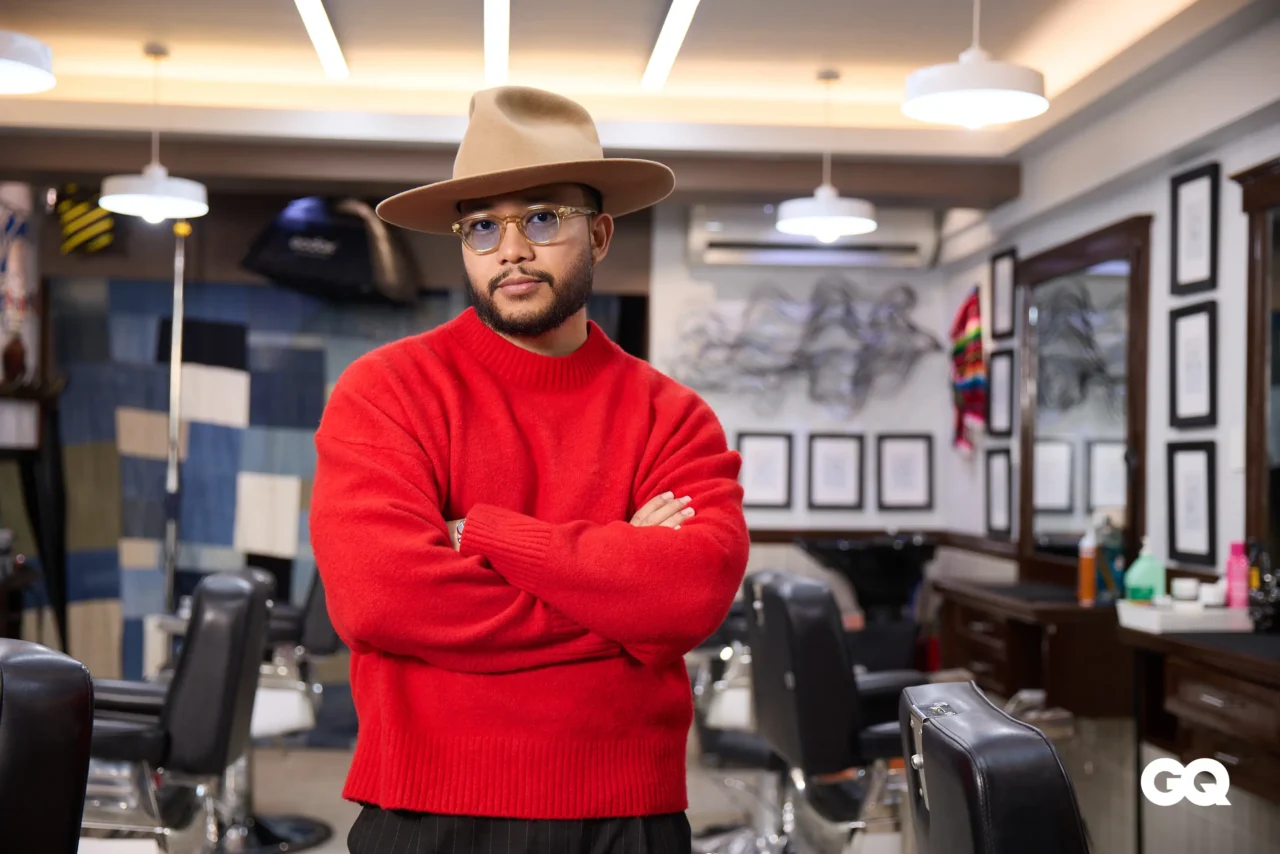
“Most Filipinos aren’t genetically predisposed to grow dense, full beards,” master barber Gum Cruz of Pomade Cartel admits bluntly. “Some can, but they’re the exception rather than the rule.”
Elephant Nook Barbershop proprietor Kenneth Pumarega agrees: “Having it naturally is [largely] something that is definitely determined by genetics. Luckily, Pinoys come from a multitude of ancestral backgrounds, including Austronesian, Chinese, Spanish, Indian, Malay, and others. So beard growth varies completely from person to person.”
Yet, the modern grooming industry continues to sell us a multi-billion-peso fantasy built on potions and magic. We slather our faces with growth serums, hoping to sprout a majestic mane, only to stumble through an obstacle course of internet hacks. When asked about viral remedies, Gum Cruz dismisses them instantly. “Everything from rubbing garlic and onions on their face to toothpaste. Those belong on the internet, not your skin.”
When it comes to real solutions, the consensus is clear. “From my experience, Minoxidil is the only product I’ve personally seen make a noticeable difference,” says Cruz. Pumarega notes that “Minoxidil and derma-rolling work on certain clients,” while evidence for supplements remains limited.
The spectrum of beard management in the Philippines has evolved dramatically over the years. “Beards are much more accepted today,” notes Cruz. “Years ago, especially in more corporate environments, they were often seen as untidy or unprofessional. I can relate because I tried to keep my beard even when I was working at a bank. Today, as long as it’s well-maintained, it’s become a legitimate style choice.”
Pumarega recalls how attitudes have come full circle: “When I was younger, I remember almost every uncle and friend of my father had some kind of beard or mustache style. That began to change in the 1990s with the rise of the clean-shaven trend. Today, however, the stigma around beards has largely faded, thanks in part to social media and the influence of public figures who now proudly wear facial hair.”

However, the acceptance of facial hair today doesn’t mean every beard works by default. Growing one is only half of the equation. Wearing it well comes down to maintenance.
If you are blessed with enough genetic luck to warrant a styling routine, technique becomes essential, especially because straight, coarse facial hair can create bulk instead of definition. “Control bulk instead of adding it,” Cruz says. “Trim with the hair’s natural growth direction and use products that keep the beard laying flatter.”
Pumarega focuses on proportion to avoid the dreaded puffiness: “Keep the length of the facial hairs on the cheeks and jaw shorter than the ones on the chin…to give it that clean tapered look rather than making it look like a chin helmet.”
Proper architectural lines are equally critical. “I generally keep the neckline around one to two finger widths above the Adam’s apple,” says Cruz. “Too high and it makes the jaw look weaker.” Pumarega advises: “Follow the natural upper edge of your growth. Define the neckline by shaving everything below two fingers above your Adam’s apple.”
For the rest of us stuck in patchy limbo, less is infinitely more. “Precision. A clean goatee or stubble with crisp proportions always beats a patchy full beard,” Cruz says. For uneven growth, he advises keeping “the mustache slightly fuller than the rest and defining its outline without making it overly sharp.” Pumarega adds, “Just don’t make it look like it’s the only thing that grew. Blend it perfectly to your style, balance it with the rest of your face, and make it look intentional.”
Both pros caution against forcing a trend that your follicles cannot support. Cruz flags the mistake of “trying to grow a full beard when the genetics clearly aren’t there instead of choosing a style that actually suits you,” while Pumarega singles out a specific facial hazard: “The soul patch—a small patch of hair beneath the lower lip—can easily throw off your overall appearance when it’s worn without supporting facial hair.”
You don’t need maximum density to win the grooming game. Pumarega points to stylish celebrities like Tony Labrusca, Derek Ramsey, Dingdong Dantes, Ian Veneracion, Piolo Pascual (when he decides to have his mustache), and the late Eddie Garcia as absolute testimony. Granted, these guys could roll out of bed still looking like movie stars, but they have officially mastered the art of maximizing the absolute bare minimum of follicle effort. Proof that sometimes, a whisper of a whisker speaks louder than a roar.
The tropical Philippine climate also forces us to rethink our strategy. “In our climate, lighter products win,” Cruz says. “Beard oil or a lightweight beard cream is usually enough. Heavy balms can feel greasy.” On the other hand, Pumarega recommends focusing on the skin underneath, using lightweight oils for medium lengths, and avoiding heavy buildup.
Even when you’ve done everything right, there comes a point when knowing when to stop becomes the most important grooming skill of all. “When adding more length no longer improves the shape,” Cruz explains, “If it only makes the beard wider, puffier, or less flattering, you’ve already reached the ideal length.”
Pumarega agrees. “There isn’t a single ‘peak beard moment.’ What actually happens is a stage where shape, density, and proportion come together. And beyond that point, additional length stops improving the look and instead begins to reduce its clarity.”
Ultimately, a good beard isn’t measured against a Hollywood leading man but against what your own genetics can realistically achieve. As Cruz puts it, “Be realistic, be patient, and build the best version of the beard your genetics allow. Not the beard someone else has.”
So, put down the onions, step away from the toothpaste, and look in the mirror with pride. As Pumarega reminds us: “Going through the process of growing a beard is an indication of your resilience. Having it well shaped and maintained is a testament to your consistency, discipline, and self-respect.”
Lolo, lola. You have some explaining to do.
A version of this story appears in the September 2026 issue with the title “Beard by Design”
Frequently Asked Questions
Barbers Gum Cruz and Kenneth Pumarega attribute patchy or thin beard growth mainly to genetics and generally lower facial hair follicle density among Asian men. Pumarega notes that beard growth varies widely due to the Philippines’ diverse ancestral backgrounds, including Austronesian, Chinese, Spanish, Indian, and Malay lineage.
According to barber Gum Cruz, Minoxidil is the product he’s personally seen make a noticeable difference in beard growth. Kenneth Pumarega adds that Minoxidil and derma-rolling can work for certain clients, while evidence for supplements and other remedies remains limited.
No. Barber Gum Cruz dismisses viral remedies like rubbing garlic, onions, or toothpaste on the face, saying those belong on the internet rather than on skin, and recommends proven options like Minoxidil instead.
For uneven growth, barbers recommend precision over volume — a clean goatee or well-defined stubble often looks better than a forced full beard. Keeping the mustache slightly fuller and blending patchy areas intentionally helps create a cohesive, deliberate look rather than an uneven one.
Barber Gum Cruz recommends lightweight products like beard oil or a light beard cream, since heavier balms can feel greasy in humid conditions. Kenneth Pumarega similarly suggests focusing on lightweight oils and skin care underneath rather than heavy product buildup.