Summaries were generated by AI. Generative AI is experimental.
Explore other styles:
Washing your hair squeaky clean twice a day apparently isn’t a sign of good grooming. According to board-certified dermatologist Dr. Francesca Sy-Alvarado, who specializes in treating hair, skin, and nail diseases, there should be a proper frequency and process for washing your hair, and it all depends on your hair type, scalp health, and lifestyle. Whether it’s thinning hair or a dandruff-prone scalp, this guide shows you how to get it back on track.
The Frequency Problem
“There is no universal washing schedule. It depends primarily on your scalp type, lifestyle, and how much you sweat,” Dr. Francesca Sy-Alvarado notes. “For men with oily scalps, daily washing is perfectly fine and often necessary. Daily commuting, pollution, and frequent sweating can contribute to oil and product buildup. If you work out or play sports regularly, washing after sweating is also a good practice,” she adds.
“For those with dry or sensitive scalps, washing every other day may be more comfortable, depending on their scalp condition. The important thing is to use a gentle shampoo that cleans the scalp without stripping it of its natural oils,” Dr. Sy-Alvarado notes.
Ultimately, the right wash frequency comes down to your scalp type and lifestyle. Just know that overwashing can backfire, triggering more oil production and irritation. Your scalp will tell you what it needs, so pay attention.
Routine for the Follically Challenged
“Hair thinning requires a comprehensive approach; we need to maintain a healthy scalp environment and address factors that affect hair growth,” Dr. Sy-Alvarado notes. “This includes eating a balanced, protein-rich diet, correcting nutritional deficiencies, getting adequate sleep, and managing stress.” She also adds, “Hair grooming practices matter, too. Avoid excessively tight hairstyles, repeated pulling, harsh chemical treatments, and excessive heat styling, as these can cause hair breakage or traction-related hair loss.”
While preemptive home treatments do work to a certain degree, Dr. Sy-Alvarado says hair loss and thinning can only be halted from progressing further through the right treatment: “Prescription medications or selected procedures such as platelet-rich plasma (PRP), growth factor injections, and other scalp-based treatments. Injectable treatments targeting hormonal pathways may also be considered in selected cases.”
Dr. Sy-Alvarado also advises men to stop using very hot water when washing their hair: “I also see patients who use very hot water, scratch their scalp aggressively, or apply too many hair products without properly cleansing their scalp.”
The most essential part of the routine, Dr. Sy-Alvarado adds, is to take extra care of your hair like a living, delicate entity: “Avoid aggressively rubbing your hair with a towel. Pat it dry instead,” she notes.
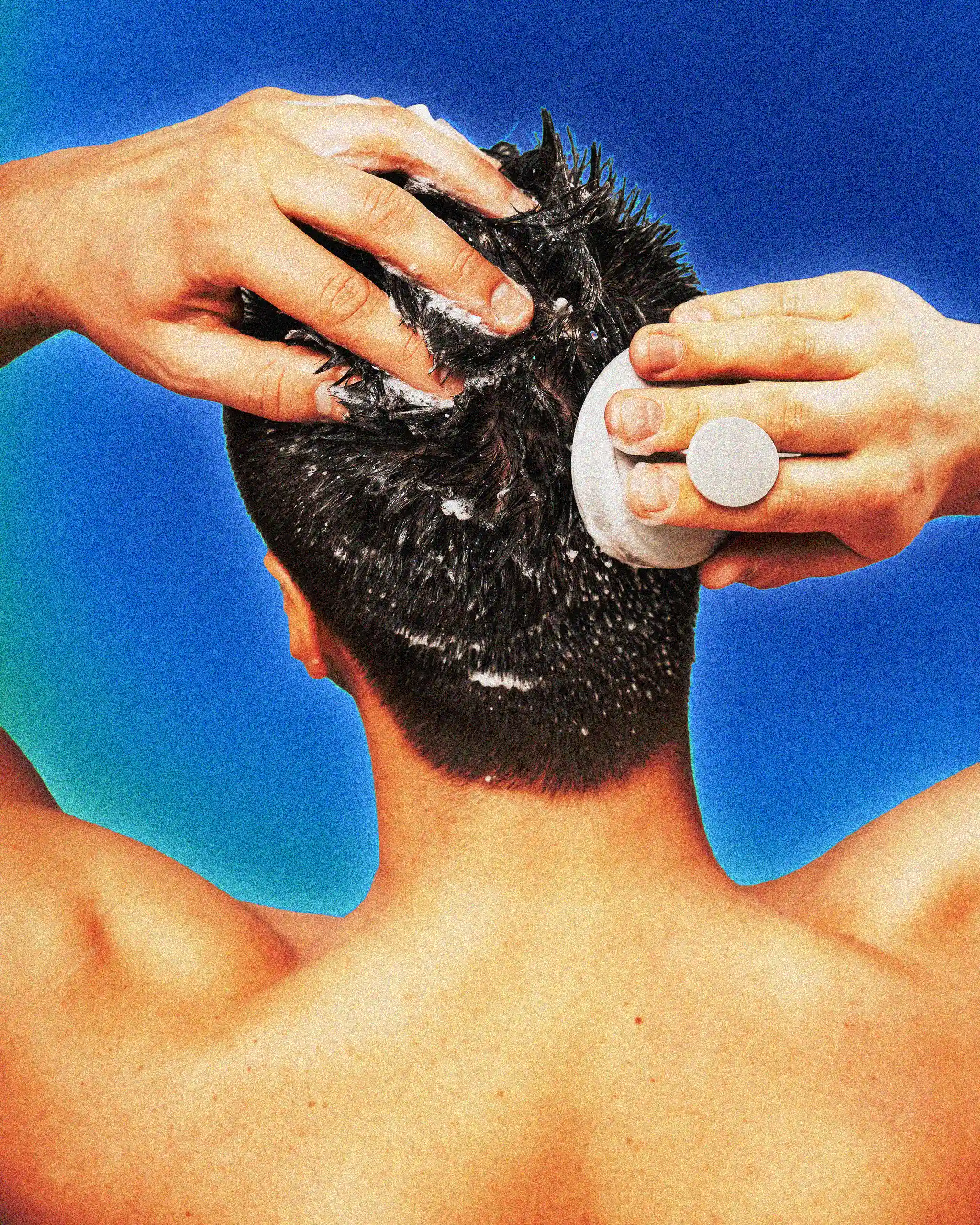
To properly take care of your hair, only wash it with lukewarm water and a low-pH clarifying shampoo, then apply conditioner. Dr. Sy-Alvarado also advises massaging the scalp gently with your fingertips as you clean your hair with shampoo, never your fingernails. Boringly effective yet surprisingly easy, it’s something many men overlook, which causes most of their hair challenges.
The Tailored Picks
Dandruff and seborrheic dermatitis need specific ingredients that combat yeast production. According to Dr. Sy-Alvarado, ingredients like ketoconazole “have antifungal properties” that keep the yeast tied to the condition in check. For maximum effectiveness, Dr. Sy-Alvarado explains, “Leave the product on the scalp for the contact time specified on its label or by your dermatologist, often around 5 minutes and sometimes longer depending on the formulation, before rinsing thoroughly.”
Most men should also pay attention to how frequently they wash their hair, especially if they’re active: “One common mistake is not washing the scalp frequently enough despite regular exposure to sweat, heat, pollution, and humidity. This can contribute to oil and product buildup and aggravate existing scalp conditions.”
In the thinning hair department, while hair serums can optimize scalp health, none can truly reverse the thinning process, as most hair growth serums on the market cannot undo genetic hair loss or bring back significantly thinning hair. As Dr. Sy-Alvarado explains, only a few medical treatments can actually stop the hair from progressively thinning: “Minoxidil is one of the better-established treatments for stimulating hair growth.”
“For scalp care,” Dr. Sy-Alvarado notes, “look for ingredients suited to your particular concern: ketoconazole or climbazole for antifungal, useful for managing dandruff and preventing yeast buildup. Salicylic acid removes excess scaling and buildup, and moisturizing ingredients such as panthenol, glycerin, and hyaluronic acidHyaluronic AcidA moisture-binding ingredient found in many serums and moisturizers that helps skin hold water and look plump and smooth. It suits all skin types, including oily skin, and works especiallyGo to Hyaluronic Acid Glossary help support scalp hydration.”
Dr. Sy-Alvarado also warns of shampoos and supplements promising rapid hair regrowth. “Biotin supplementation, in particular, is generally only necessary when there is a documented deficiency,” she adds.
The solution for healthy, luscious hair is much more holistic than expected. Keep the routine restorative, the diet hair-friendly, and the products honest. If something leaves your scalp itchy, dry, or red, it’s not working for you, no matter what the label promises. The best product fixes the problem without making a new one.
Frequently Asked Questions
It depends on scalp type and lifestyle. Men with oily scalps may wash daily, while those with dry or sensitive scalps may find washing every other day more comfortable.
Ketoconazole and climbazole help manage yeast associated with dandruff. Salicylic acid can also help remove excess scaling and buildup.
Minoxidil is one of the better-established treatments for stimulating hair growth. Other options include prescription medications and dermatologist-administered procedures such as platelet-rich plasma (PRP) therapy.
Not necessarily. For men with oily scalps, daily washing is fine and often necessary, though overwashing can trigger more oil and irritation.
Use lukewarm water and a low-pH clarifying shampoo, massage with your fingertips, not nails, apply conditioner, then pat dry instead of rubbing.

James Fergus Arevalo
James Fergus Arevalo is a writer for GQ Philippines, blending the rigorous mind of a data scientist with a passion for modern grooming, lifestyle, and culture. When he isn't writing, he spends his time meditating, painting, and exploring the deeper questions of life. He holds a degree in Biology from Ateneo de Naga University and has a deep curiosity about human potential. You can contact him at [email protected].