Summaries were generated by AI. Generative AI is experimental.
Explore other styles:
If you have ever gone looking for a casual Negroni on a random afternoon in Milan, only to find yourself suspended between finding faith and questioning your own, you might find redemption upon entering this newly reinvented retail space. Here, the great circus of luxury recalibrates itself with the world. “The Store Show” is the first collection to fully articulate Demna’s personal vision for Gucci, shaped by everything he has learned since his arrival. It was a bold statement from the house, immaculately dressed up in sleek glass cases and high-wattage leather.
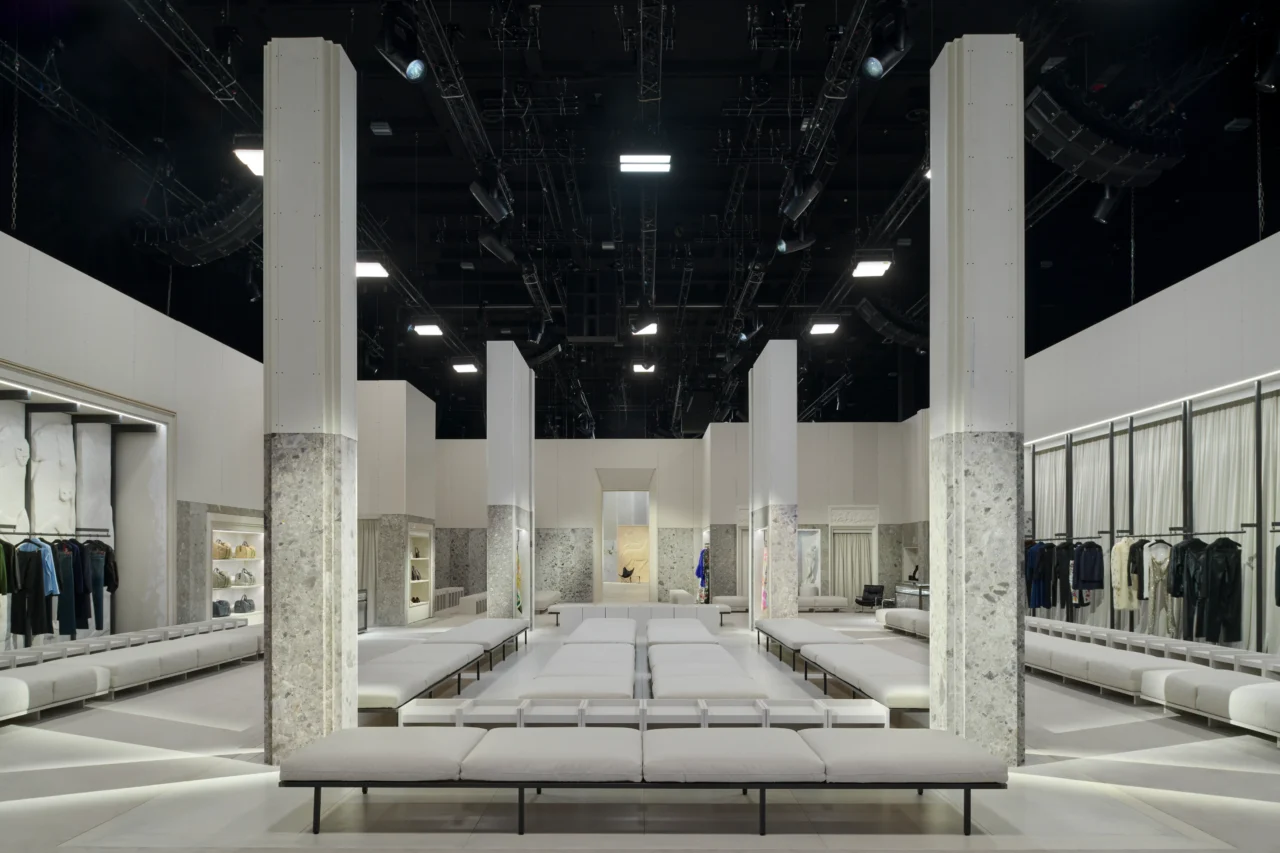
Welcome to “The Store Show”
Staged inside a venue engineered explicitly to mimic a retail boutique, “The Store Show” bypassed the cold, pretentious void of traditional runways. Instead, it served up a provocative preview of the Gucci boutiques of the future, turning the act of shopping itself into part of the spectacle.
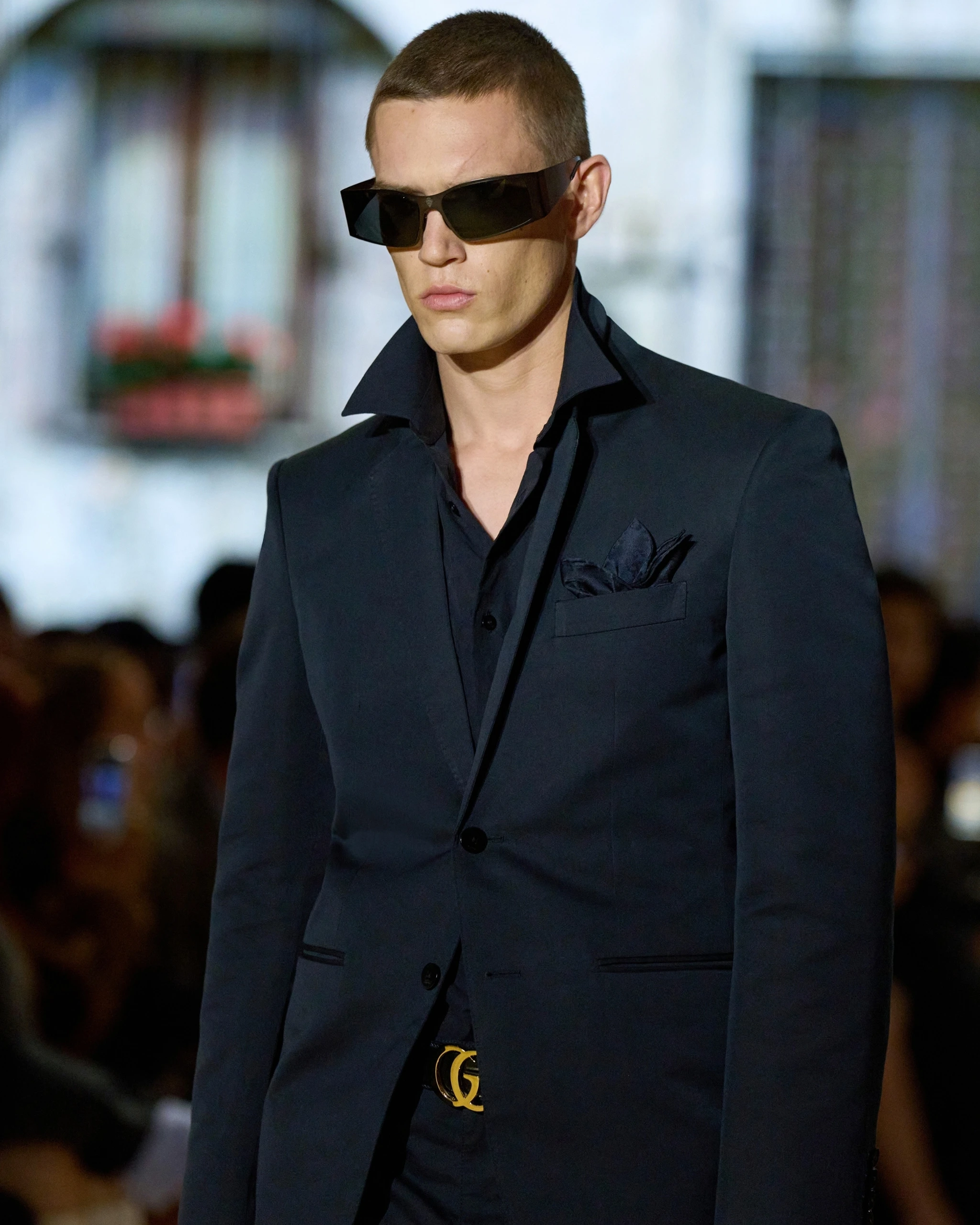
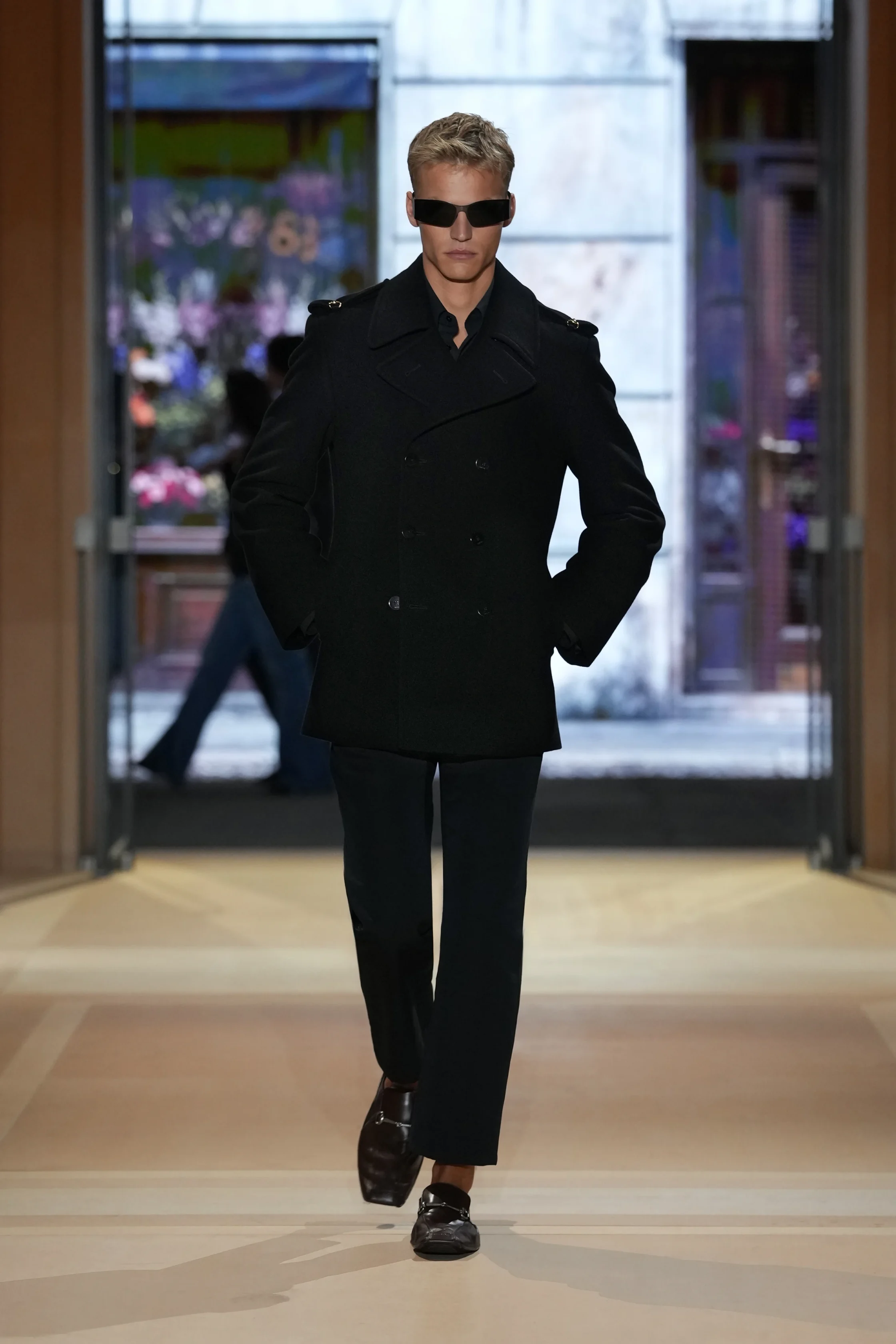
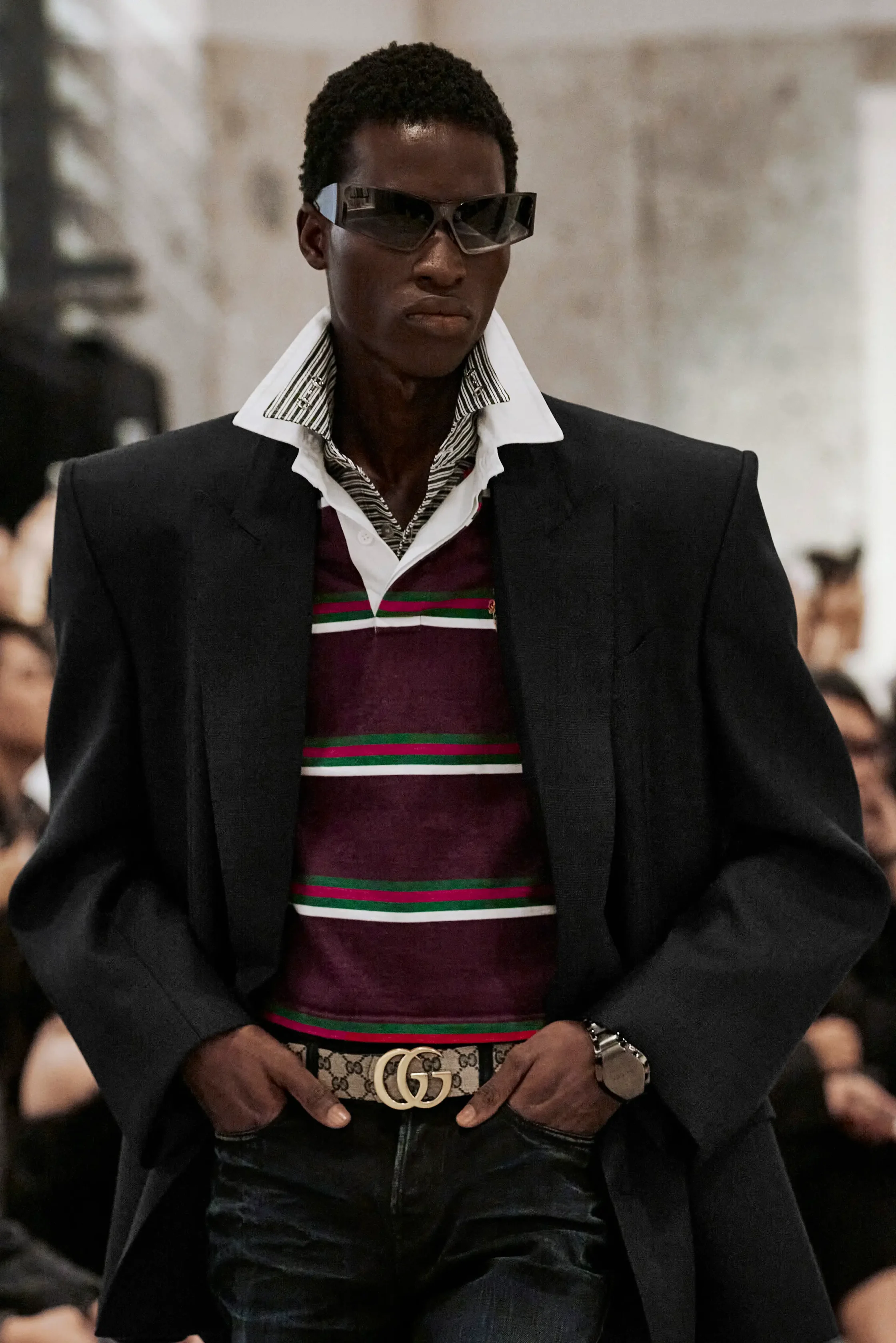
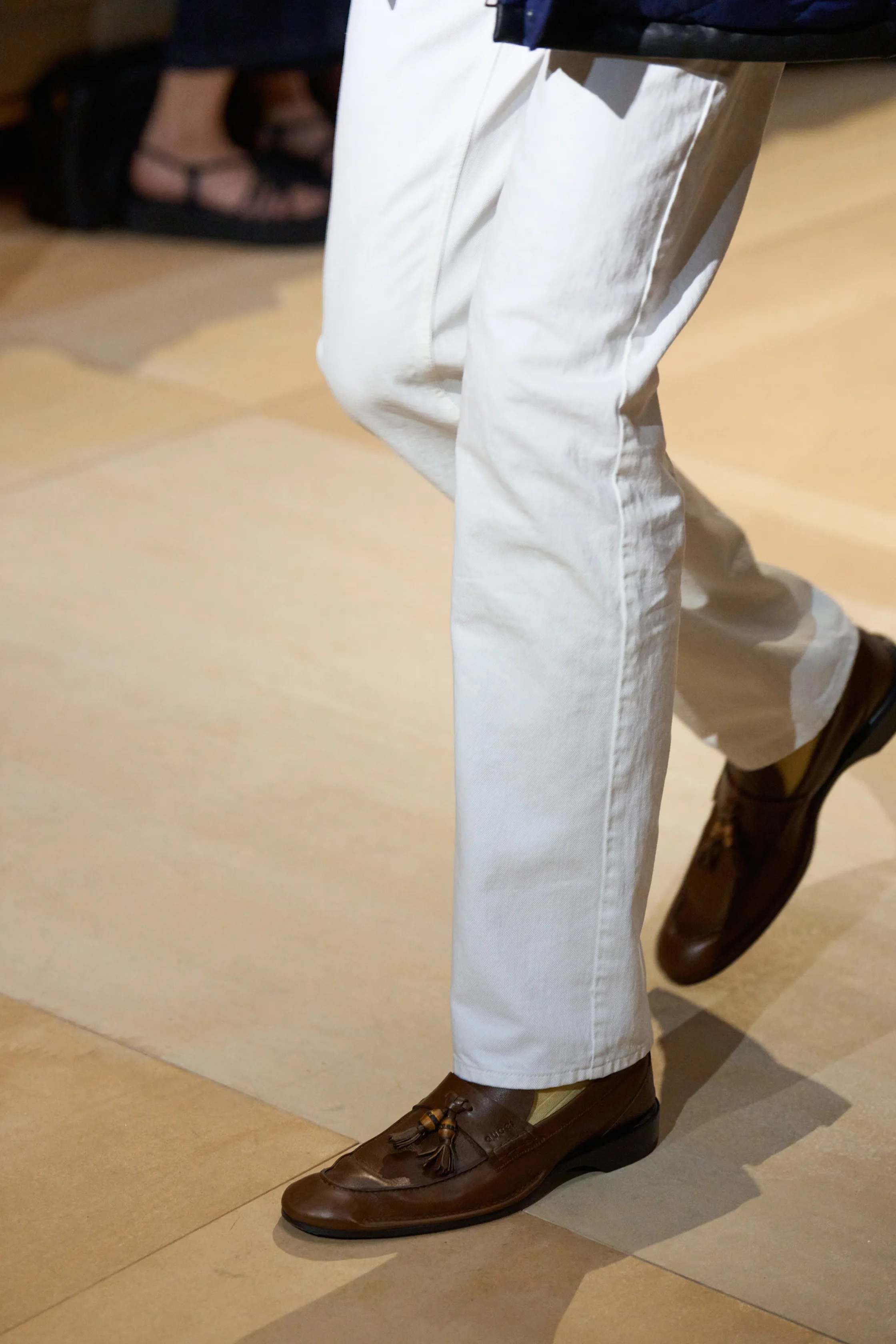
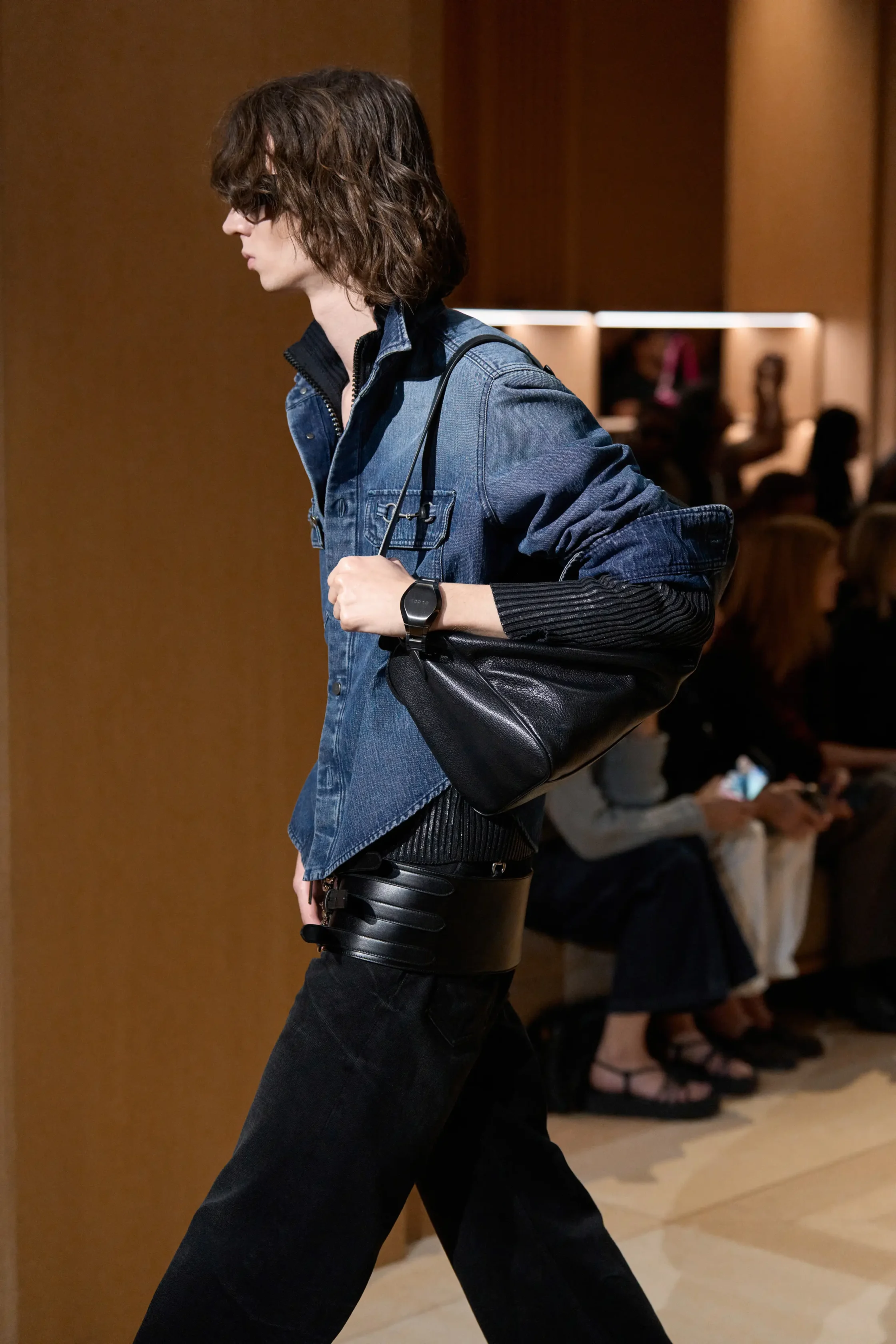
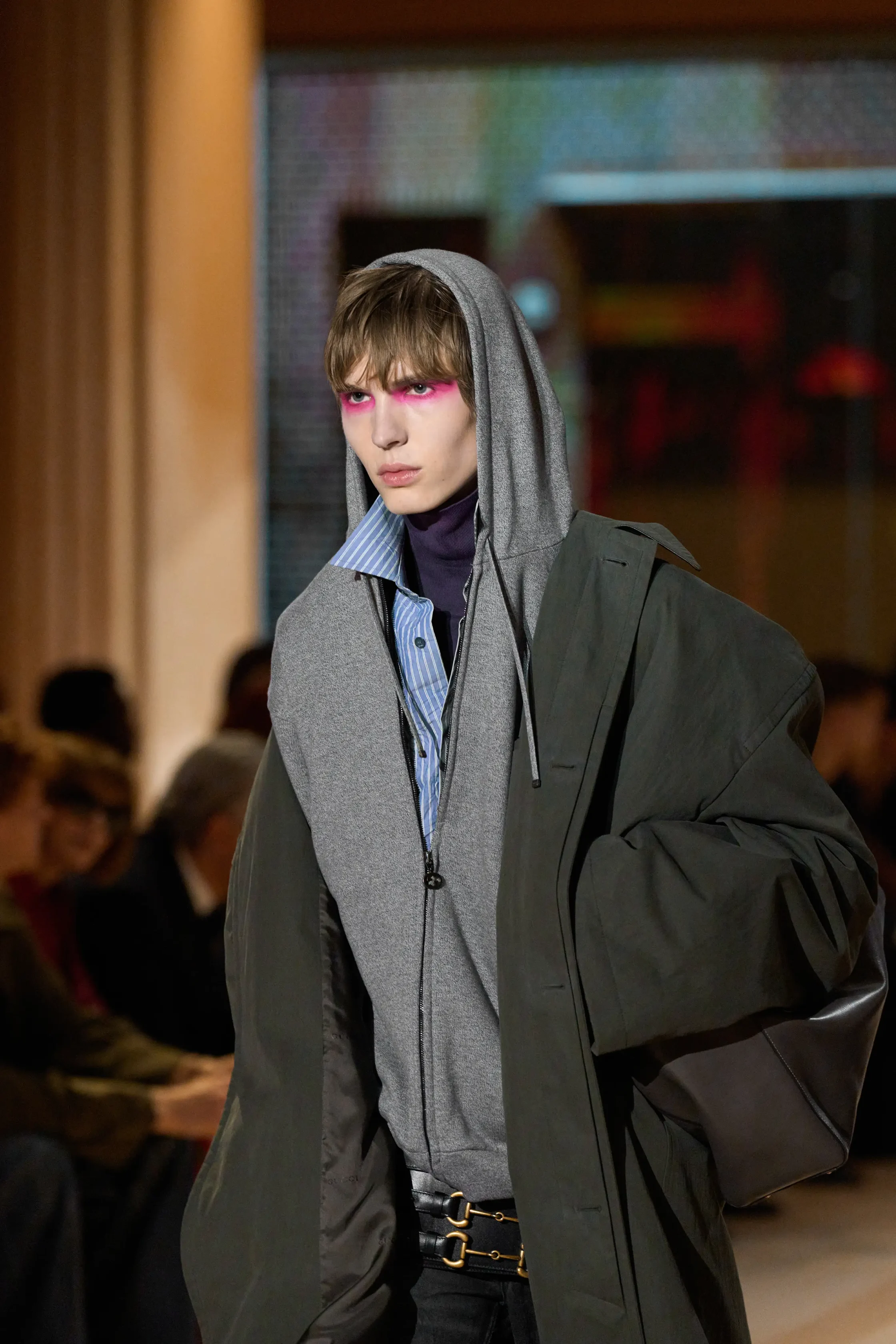
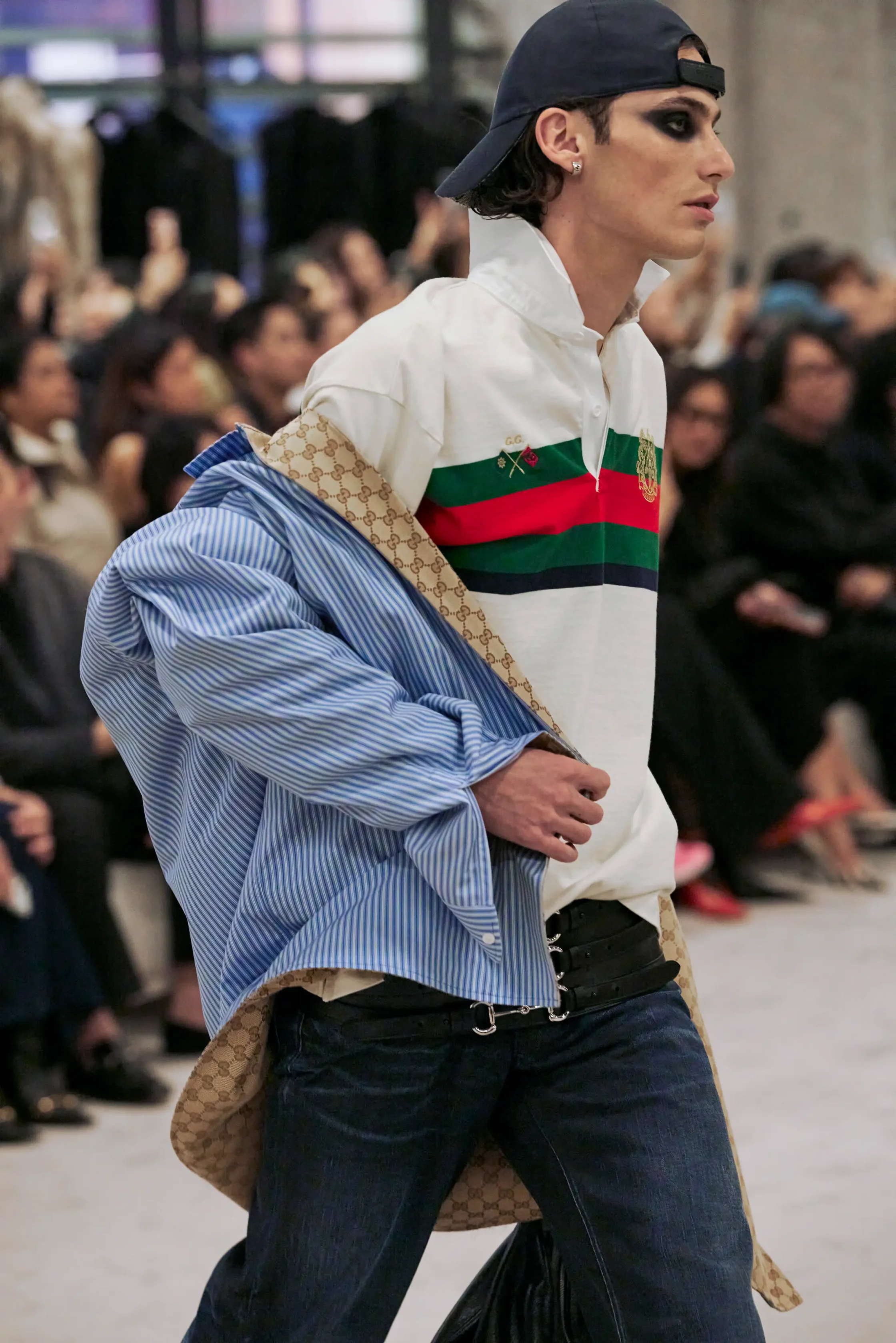
Equestrian references, Scottish tartans, bourgeois dress codes, and sockless loafersLoafersSlip-on leather shoes without laces, available in styles such as penny, tassel, and horsebit. Loafers combine comfort with polish, and they pair easily with tailored trousers or chinos, making themGo to Loafers Glossary all nod directly to the house’s heritage. The subversion lies in the proportions. Demna introduced exaggerated pagoda shoulders, cropped puff outerwear layered over slouchy denim, and stonewashed tailoring.
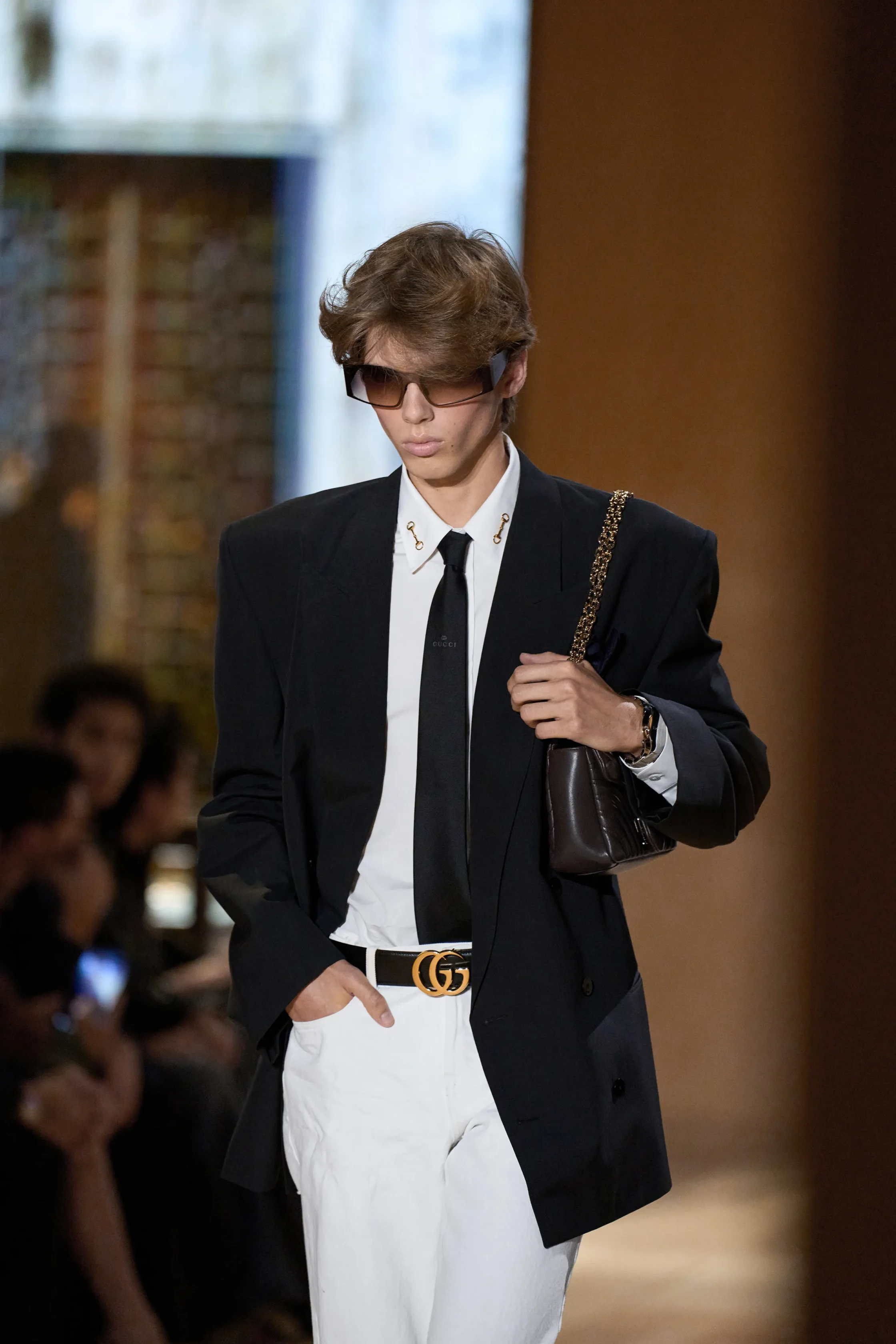
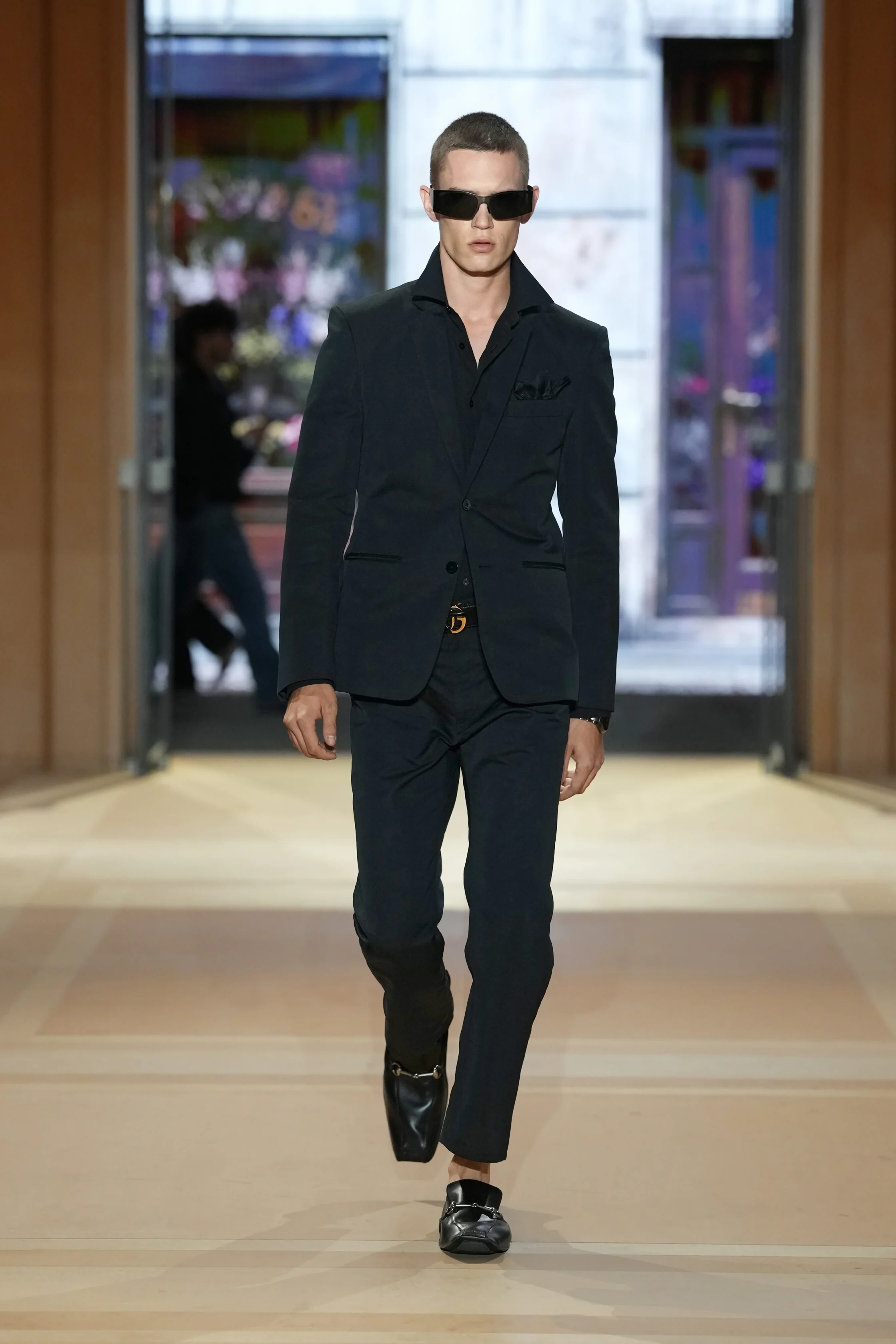
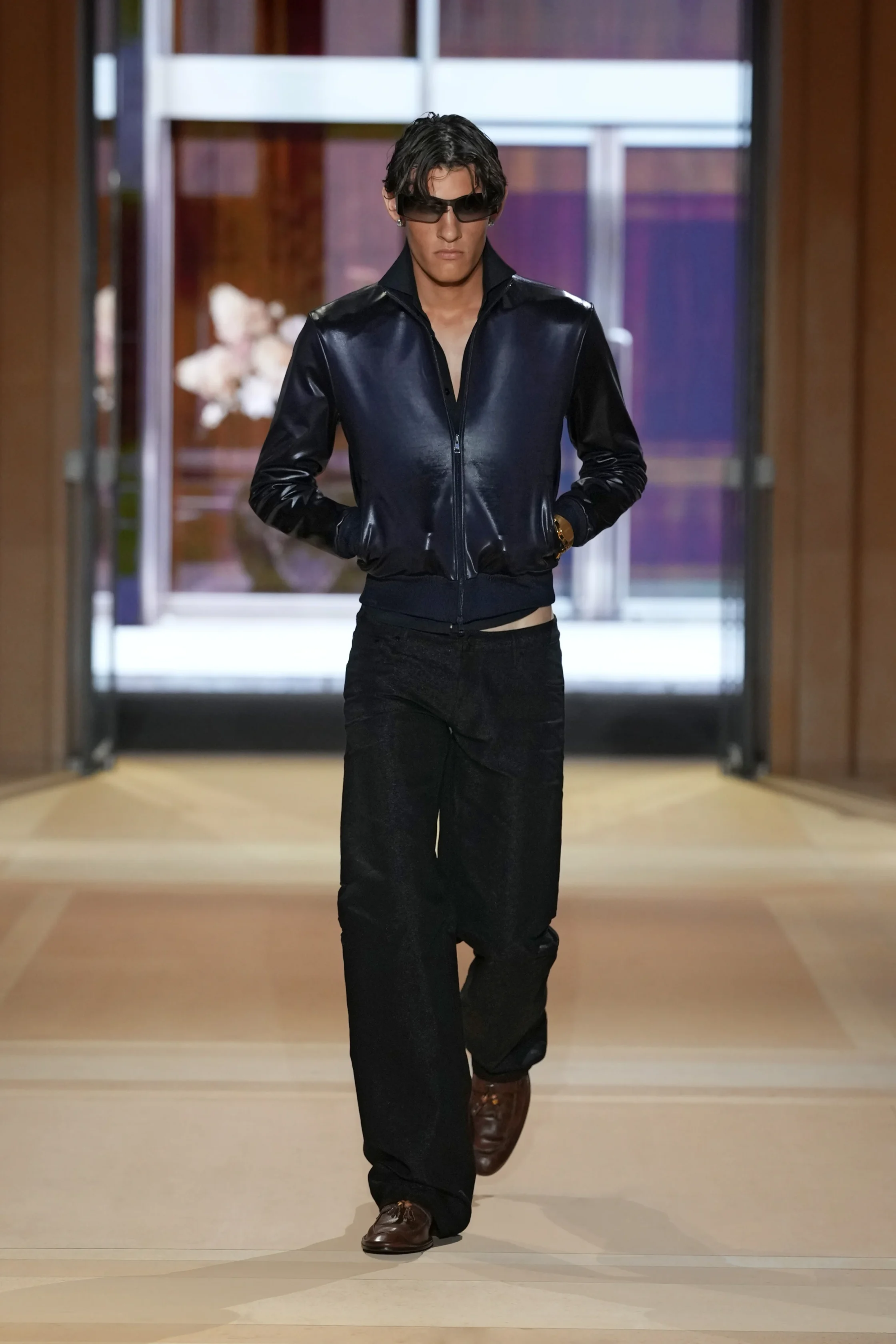
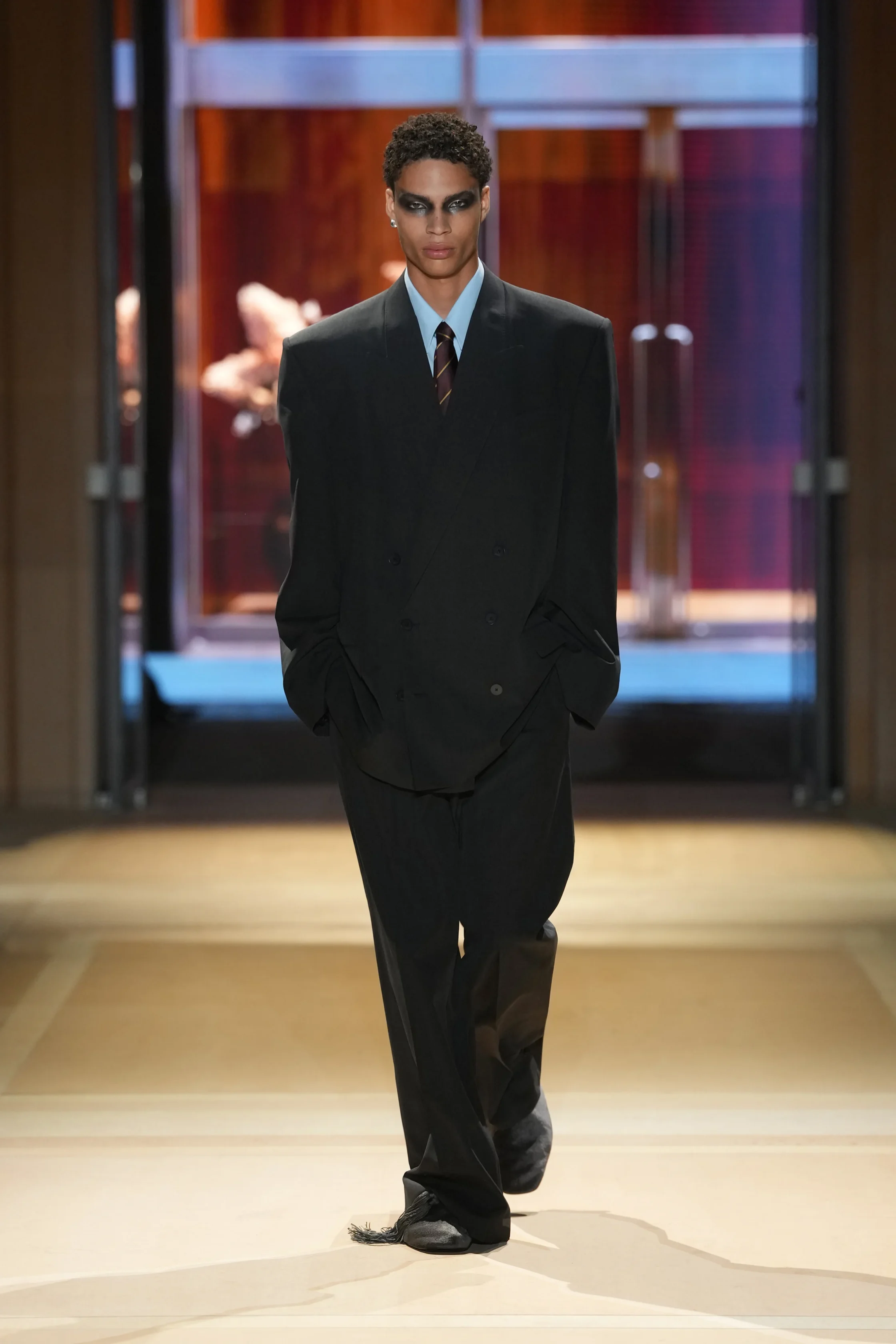
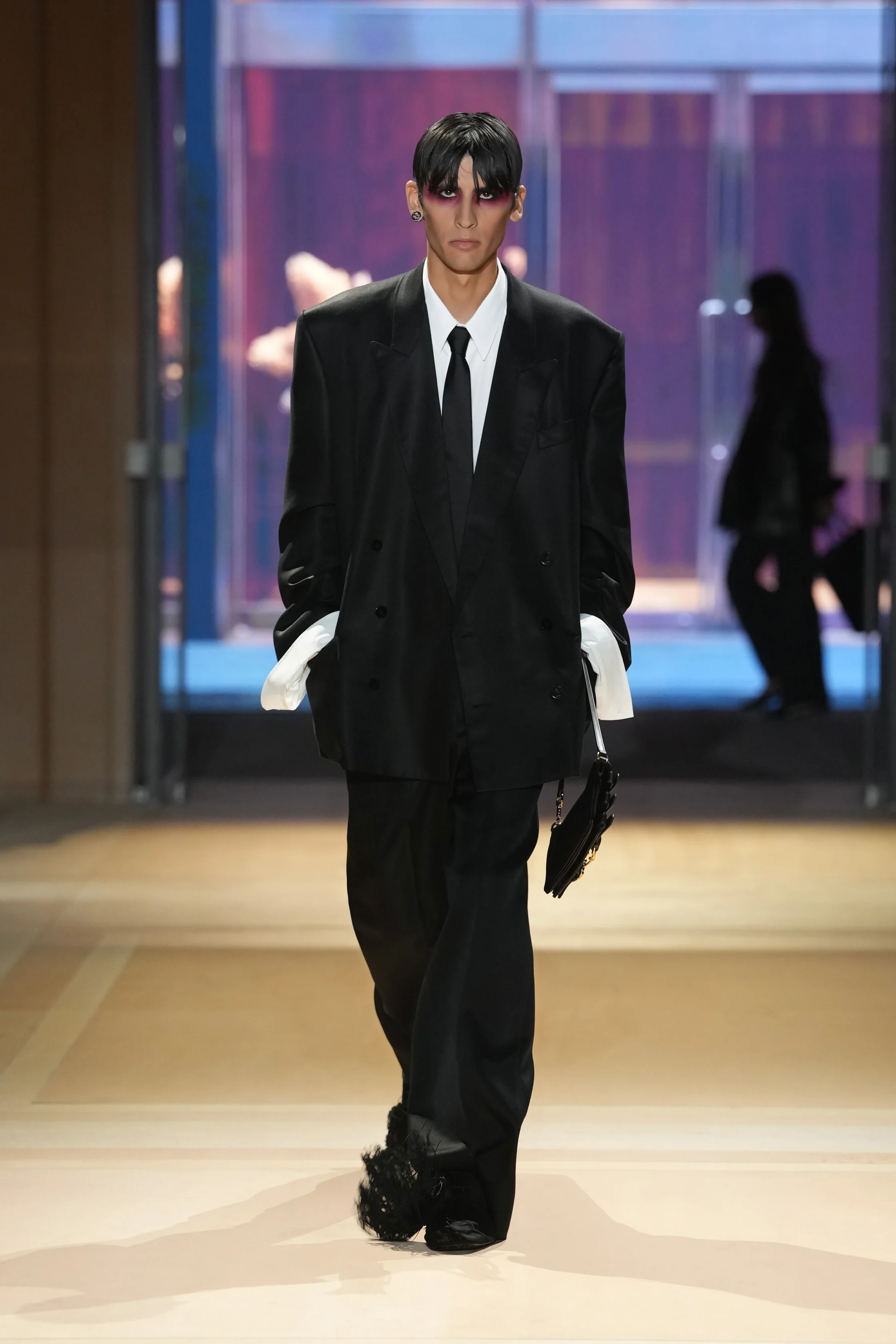
The presentation mirrored the exact cadence of commercial desire. MenswearMenswearClothing, footwear, and accessories designed for men, spanning tailoring, casual wear, streetwear, and everything in between. Menswear has grown more expressive and experimental in recent years, and it blends classicGo to Menswear Glossary and womenswear came together as a singular narrative, unfolding in succession as two collections within one show, just as they are presented in store. The format captured the complicated dynamic between power and temptation—and how that tension manifests in the commercial reality of luxury consumption.
Three Characters, One Gucci
Demna categorizes his new Gucci universe through three distinct personas: The Rebellious Aristocrat, The Snob, and The Eccentric. It is a sharp taxonomy of modern vanity. We have all adopted these archetypes depending on exactly whom we are trying to impress. Demna reminds us that the whole world is a stage, and we are simply playing the roles we’ve grown accustomed to.
The menswear opened with a quintessentially Italian stylistic attitude: cropped trousers and loafers worn without socks, setting an initial tone of effortless, sun-baked disdain. Then, the mood sharpened. Precision tailoring arrived via pagoda-shouldered silhouettes executed in stonewashed textiles—a razor-sharp look that read like old-world aristocracy. Next came the core menswear proposition: cropped, voluminous puff outerwear sitting atop slender, slouchy denim in authentic, precious fabrications. It evoked a tech mogul trying to look dangerous in a dive bar. It shouldn’t have worked, but it absolutely did.
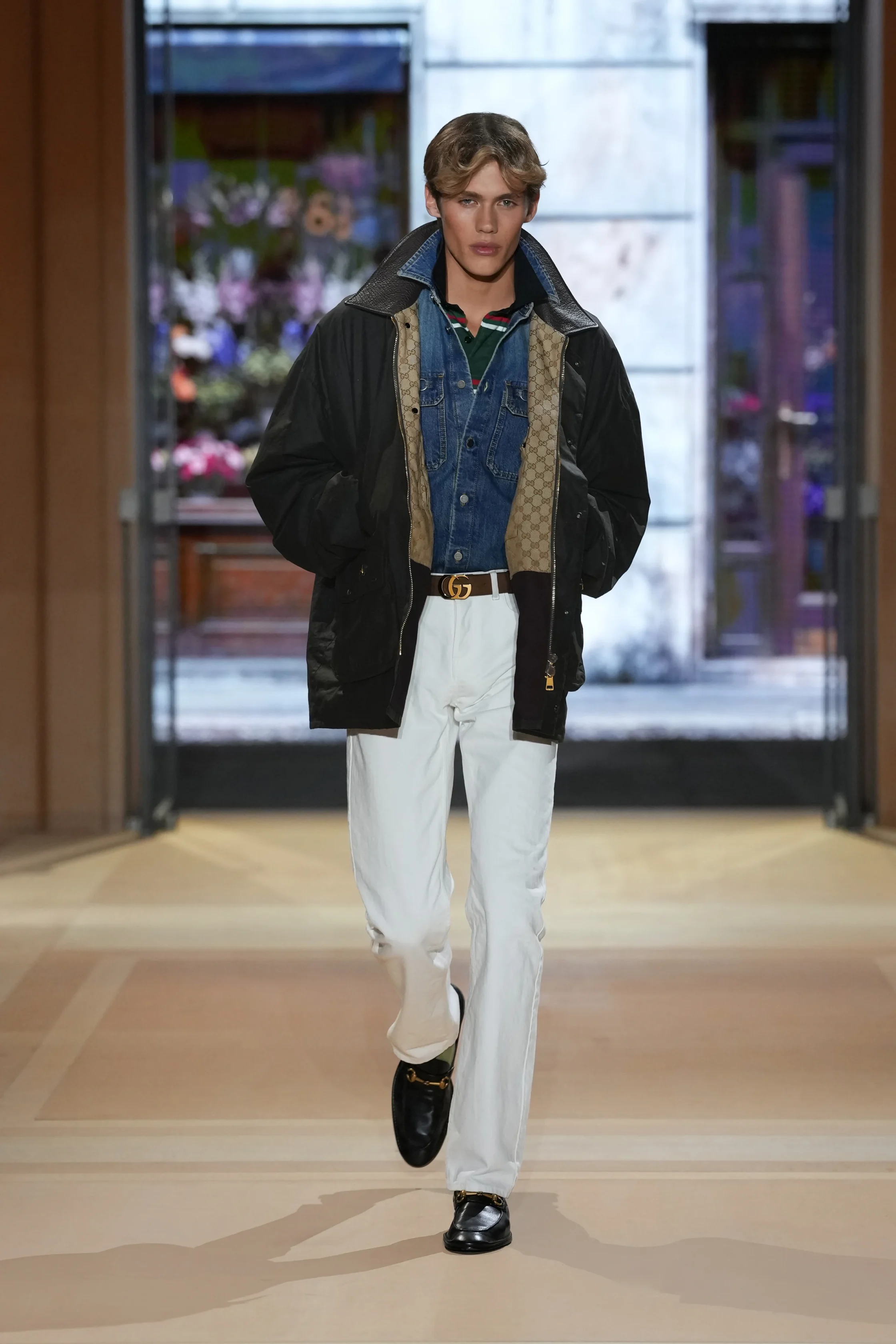
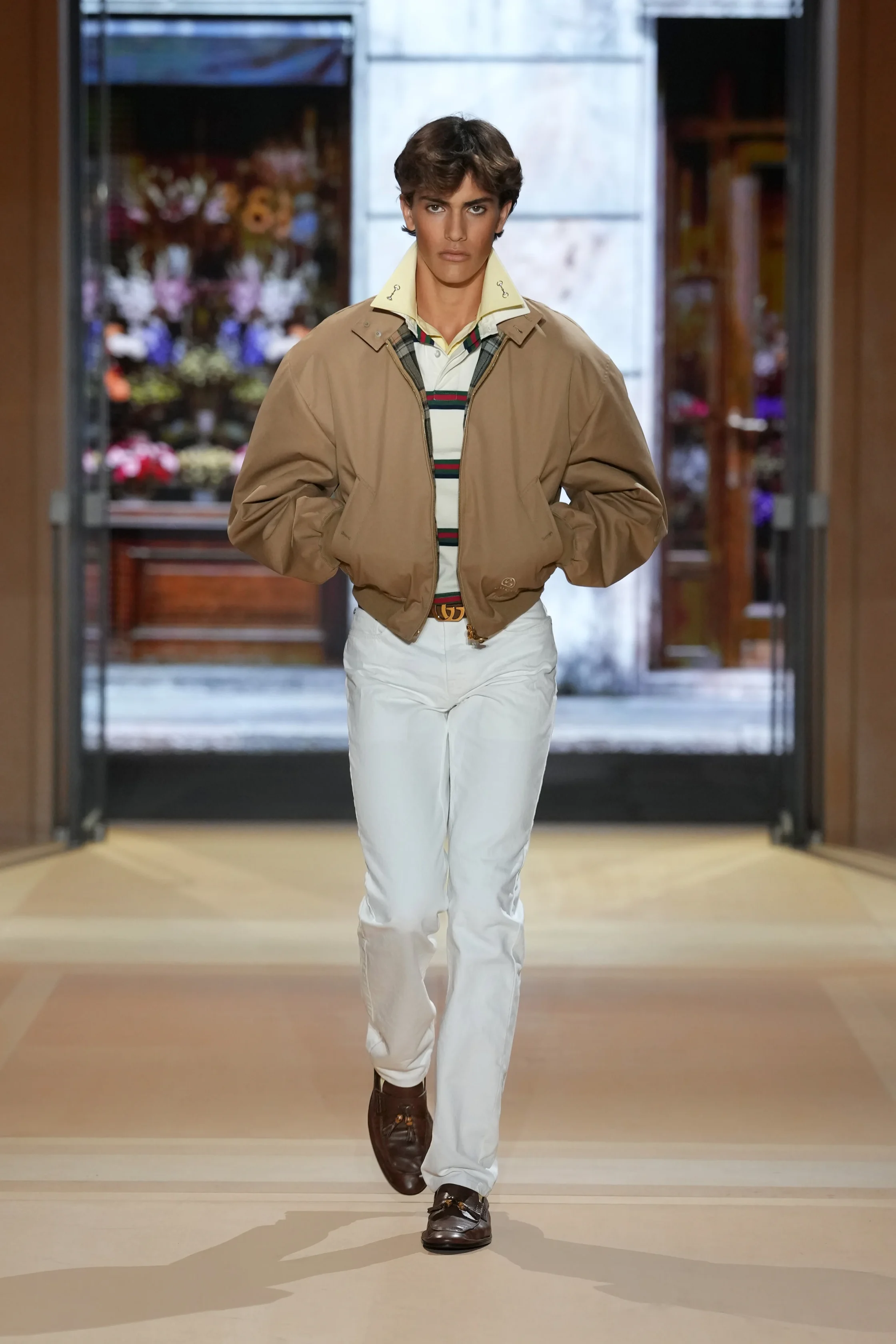
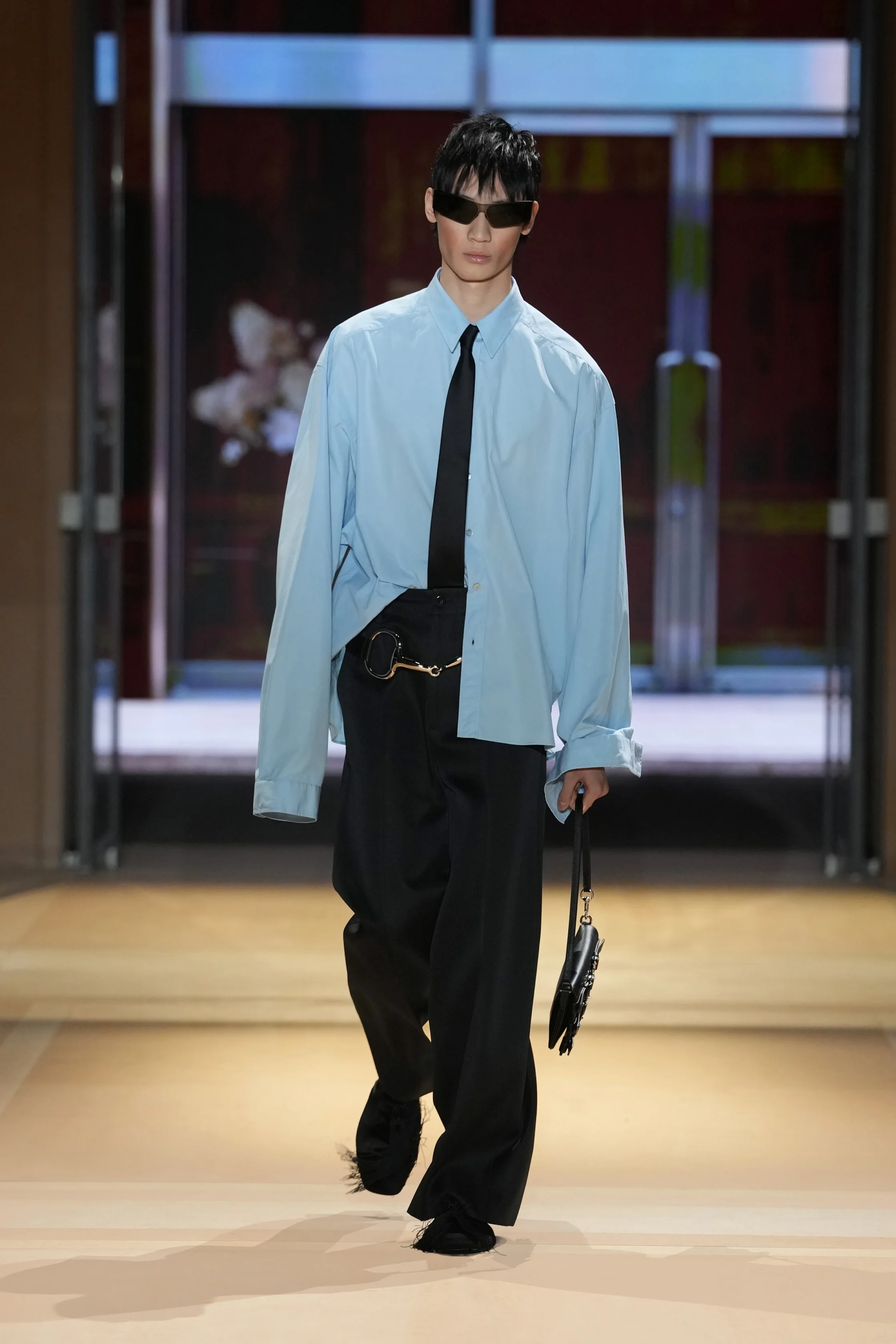
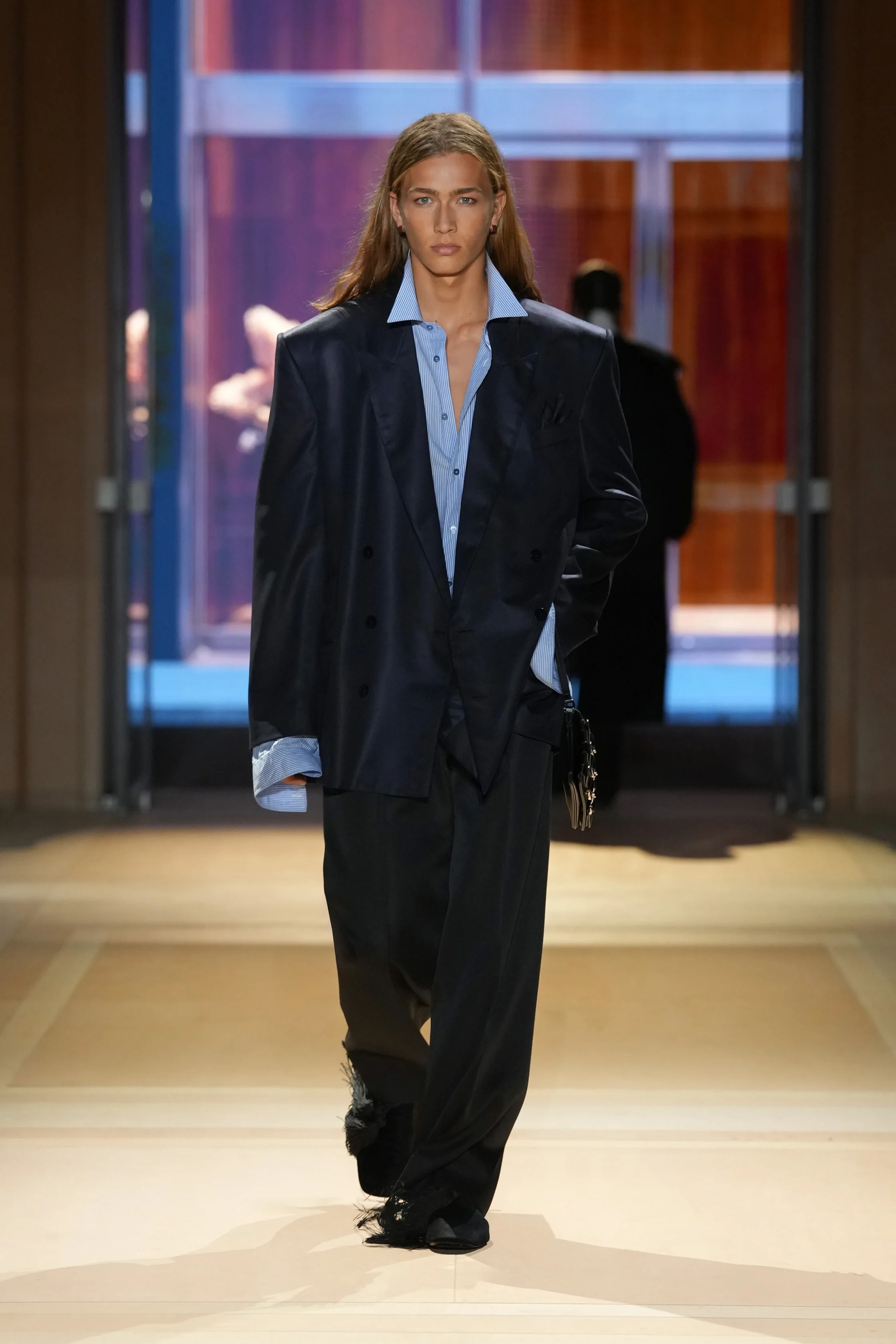
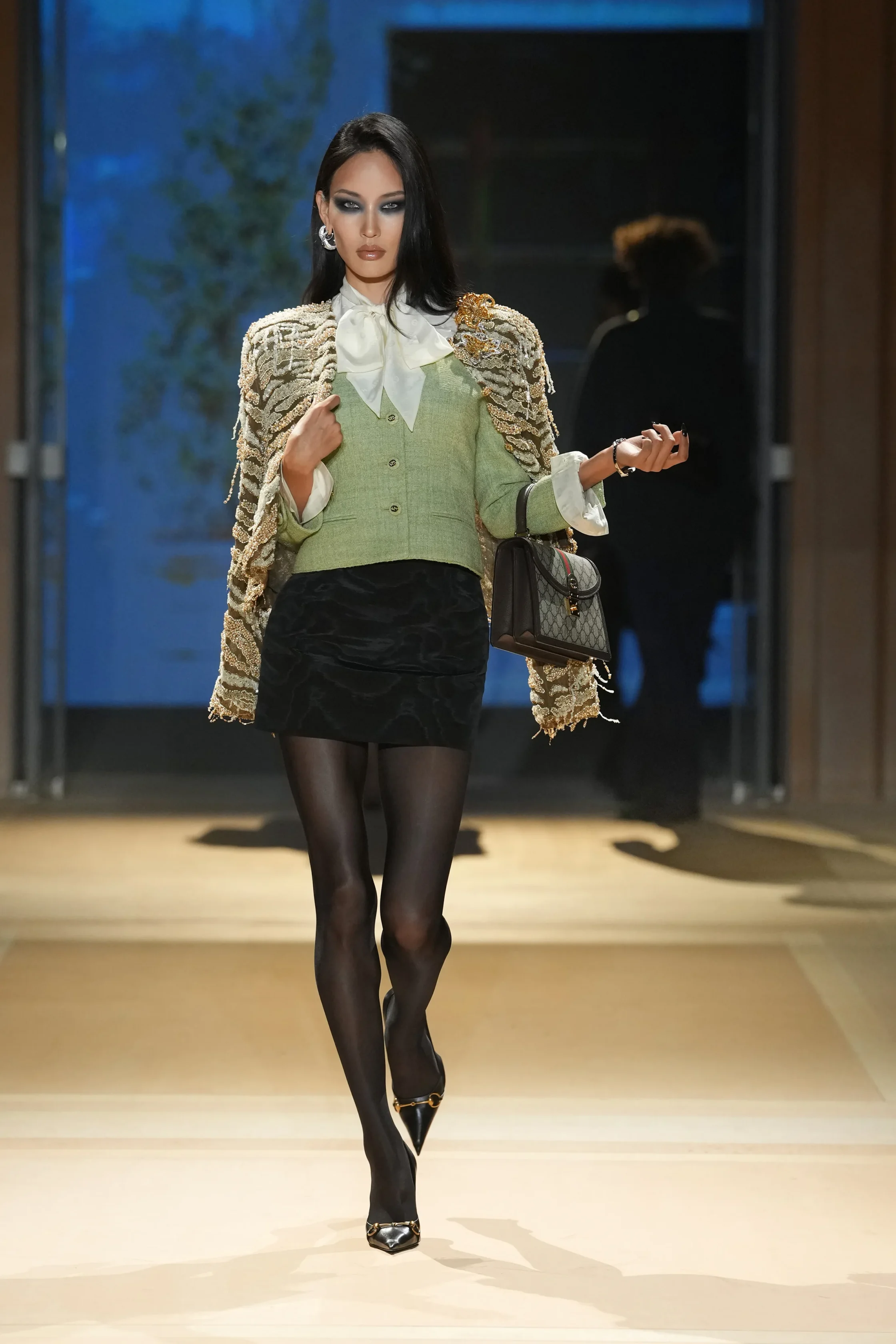
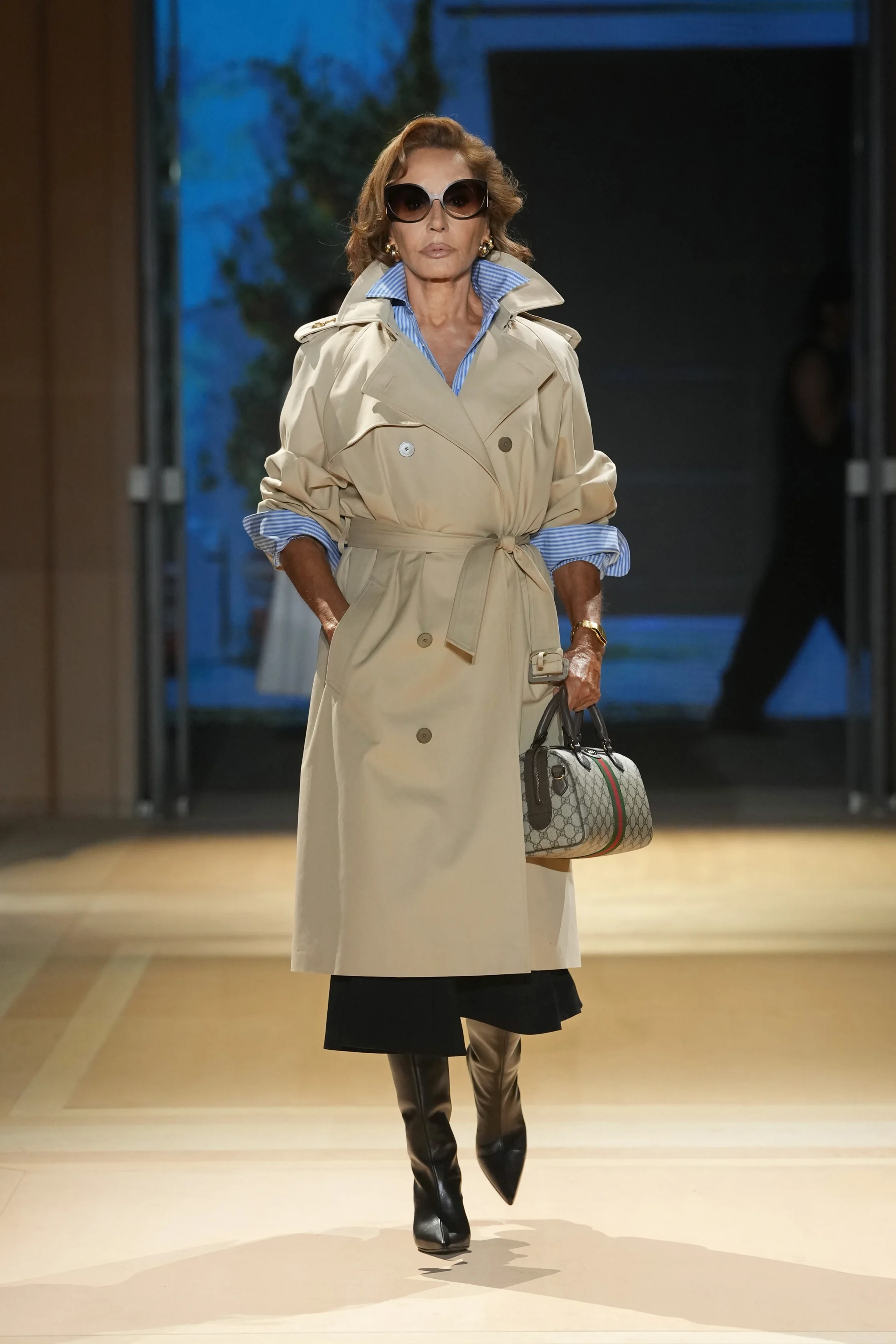
The womenswear countered with traditional bourgeois dress codes tinged with an equestrian sensibility, which quickly gave way to sharply tailored pantsuits and skirt suits boasting a distinct metropolitan undertone. Severe, unpadded pagoda-shouldered pieces offered an unexpected lightness, leading into puff-shaped jackets worn over masculine shirting, rugby tops, and pleated A-line skirts cut from genuine Scottish tartans, heavy leather, and checked wool.
The Horsebit Gets a New Look
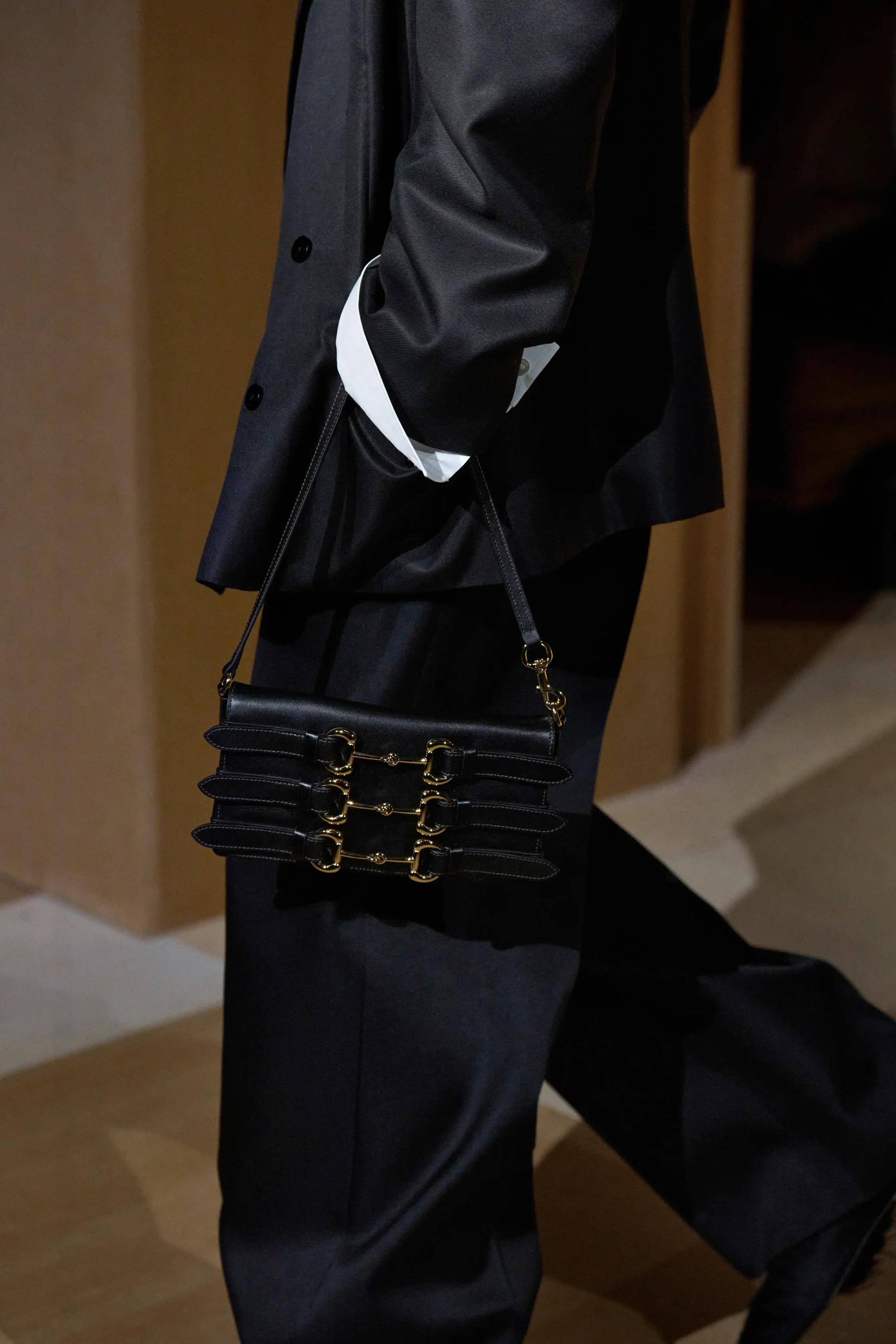
The house’s iconic Horsebit underscored the entire collection, blown up to oversized dimensions or shrunk to miniatures. A 3X cummerbund belt cinched sharp-shouldered blouses into “New Romantic” proportions, paired seamlessly with drainpipe trousers and heavily layered jewelry. Delicate lingerie lent a nocturnal, seductive glamour to voluminous shearling, before the eveningwear culminated in a slinky, gravity-defying gown secured by a single, hanging teardrop weight.
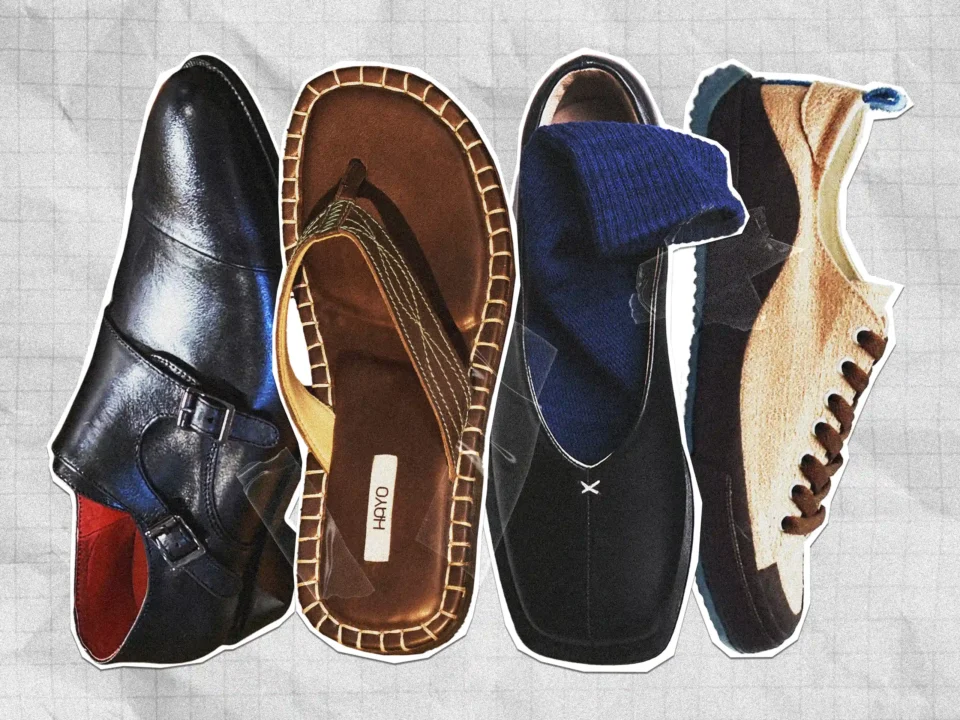
The footwear carried the collection’s defiant attitude. A driver-soled loafer with an angular toe marked Demna’s first real take on a modernized Gucci loafer. A slim slipper trailed overlong fabric tassels, while metal-heeled stilettos looked downright dangerous. Meanwhile, an “uptown” Horsebit tote concealed a meticulously organized multi-compartment interior, and leather “bamboo” handles accented structured bags and messengers. The GG Marmont and Ophidia lines reasserted their place in the house’s bourgeois heritage.
Ultimately, the collection returned Gucci to its historic roots at The Savoy Hotel in London. The hotel originally served as a meeting place for people from entirely different worlds, and Demna turned the modern boutique into a space of possibility. It became a venue where those who seemingly had nothing in common could meet, connect, and inspire one another. After all, fashion wasn’t about fitting in. It was about having the nerve to become whoever you chose, every single time you walked through the door.
Frequently Asked Questions
“The Store Show” is Gucci’s latest collection and the first to fully express Demna’s personal vision for the house.
“The Store Show” was presented during Milan Fashion Week.
They are The Rebellious Aristocrat, The Snob, and The Eccentric.