Summaries were generated by AI. Generative AI is experimental.
Explore other styles:
Believe it or not, Lou Diamond Phillips’ real name is actually Lou Diamond Phillips. In Hollywood, that’s almost unusual. For generations, actors have reinvented themselves with names built for the bright lights of the marquee. Cary Grant was born Archibald Leach. John Wayne was Marion Robert Morrison. Tom Cruise was Thomas Mapother. Phillips never changed his, at least not in the way we’d all expect.
He was born Lou Diamond Upchurch, named after the decorated U.S. Marine Leland “Lou” Diamond. Upchurch came from his biological father, an American Marine based in Subic who died when the actor was only an infant. He would later adopt the surname Phillips from his stepfather after his Filipina mother remarried. The name Lou Diamond Phillips has been his for more than six decades, and for nearly four of them, it has been known around the world.
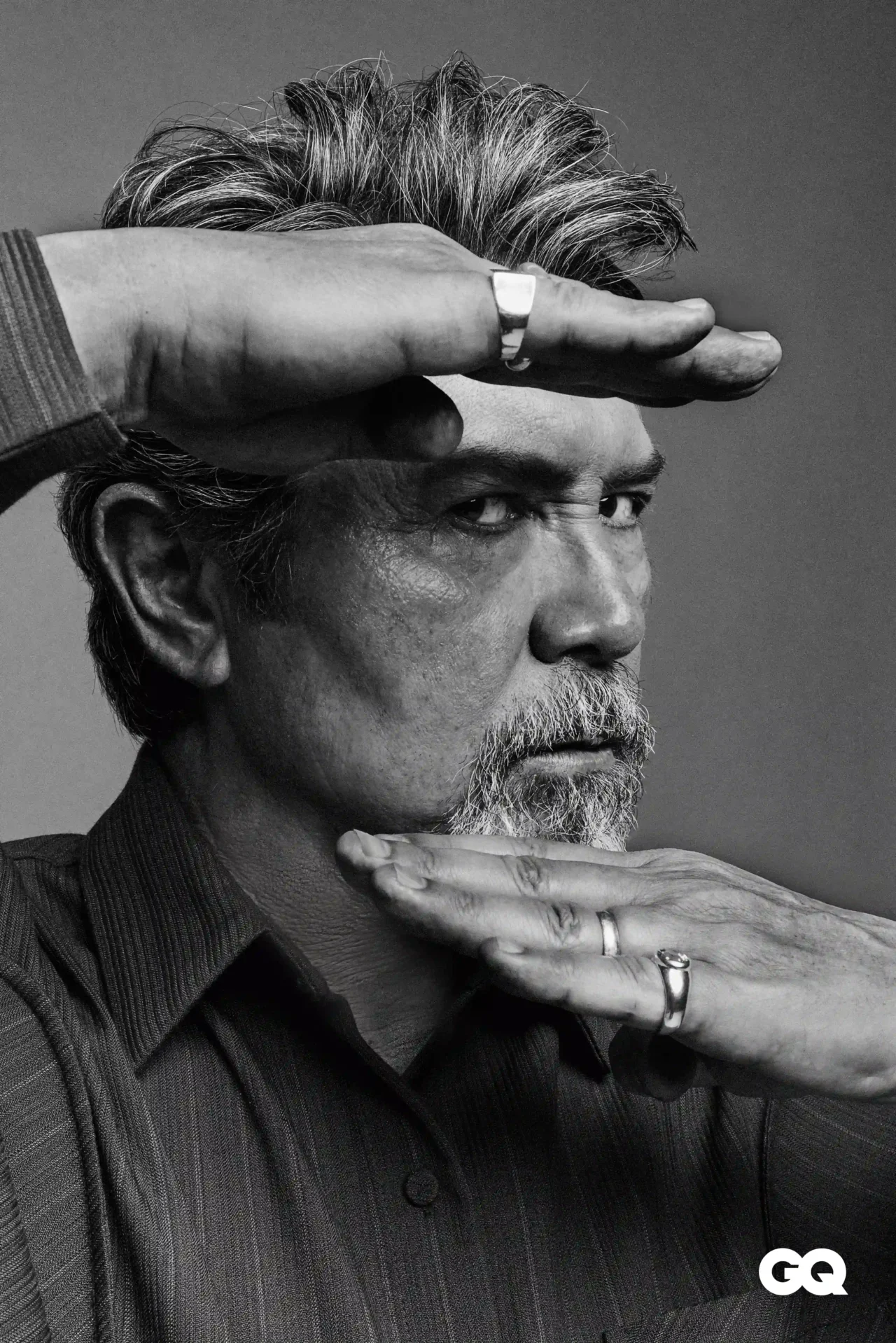
Phillips became a movie star in 1987 with the release of the critically acclaimed box-office hit La Bamba, in which he portrayed the doomed rock-and-roll pioneer Ritchie Valens, cementing both of their names in popular culture. In the decades since, Phillips has built an expansive body of work that has stretched across film, television, theater, and literature. True to his middle name, his career has continued to shine long after its first sparkle. And as cliché as it sounds, perhaps “Diamond” was never just a coincidence.
A Filipino American Star Is Born
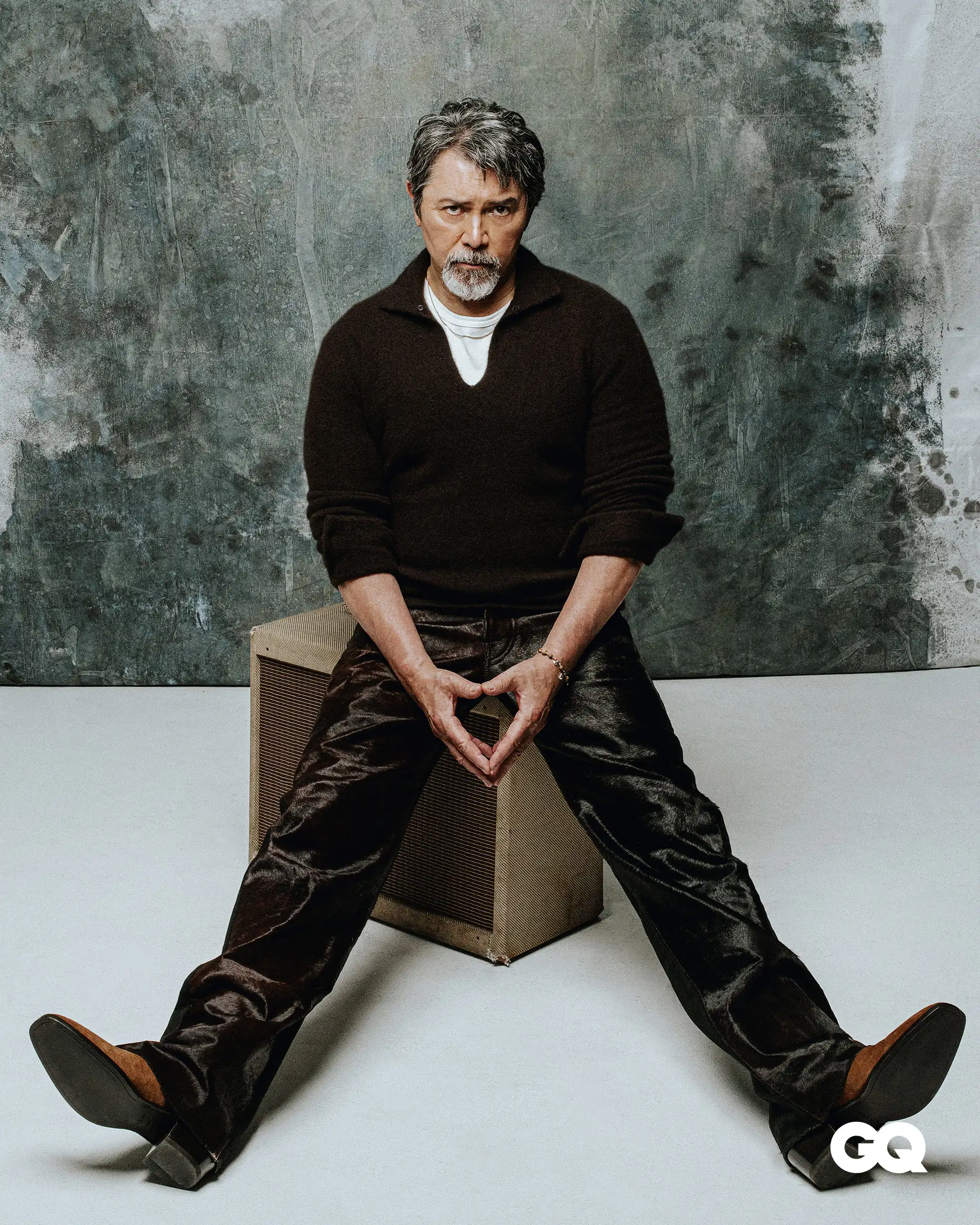
It was a quiet morning in New York City when Lou Diamond Phillips took a video call from GQ Philippines. He sat in his dimly lit apartment, looking cool with a full beard and a black T-shirt. Perched atop his head was an Oscars-branded cap, a subtle nod to his work as vice president and chair of the Equity and Inclusion Committee for the Academy’s Actors Branch, a division that supports greater representation and fair opportunity in the entertainment industry. The role seems profoundly apt for Phillips, a veteran actor who has experienced nearly every facet of Tinseltown, after building a career as a FilipinoFilipinoThe national language of the Philippines, widely used for communication, education, media, and culture.Go to Filipino Glossary American at a time when opportunities for performers of color were even more limited than they are today.
Still, Phillips found stardom anyway, landing the lead role of rock star Ritchie Valens when he was only 24 years old. “I was discovered in a national talent search,” Phillips says of his breakout moment. “About 600 people read for the role. You know, everyone in L.A., Chicago, New York, and Miami. They eventually came to Dallas, Texas [where he lived], where I was put on videotape and then flown out a couple of weeks later to get a screen test. I was incredibly, incredibly lucky.”
Luck may have helped him land the role. After all, he wasn’t Mexican American like Ritchie Valens, but the fresh-faced Filipino American actor looked the part. More importantly, it’s what he did with the opportunity that truly counts. Phillips plays the teenage Valens with equal parts rock-star charisma and boyish charm, without ever losing sight of the complexities and heartbreak of his character’s family life. Under the brilliant direction of Luis Valdez and with the full support of the Valens family, Phillips became Ritchie, and it hardly mattered that he was lip-syncing to the vocals of David Hidalgo, the frontman of the rock band Los Lobos.
Back in 1987, Valens himself wasn’t the household name he is today. He died in 1959 alongside rock-and-roll icon Buddy Holly in a plane crash when he was only 17, bringing a career on the verge of stardom to an abrupt end and often leaving him overshadowed by Holly’s more widely remembered tragedy. But thanks to Phillips’ extraordinary performance—and to the timeless film built around it—Valens was introduced to a new generation of audiences. The film became a surprise hit, earning more than $50 million worldwide against a budget of around $6.5 million, and effectively making Phillips a star.
He followed up La Bamba with two other films that cemented him further as one of the defining young actors of the era. In 1988’s Stand and Deliver, filmed the previous summer before La Bamba’s release, he played Angel Guzman, a troubled Hispanic student from an inner-city high school who is inspired by his teacher to master advanced calculus. For his performance, Phillips earned the Independent Spirit Award for Best Supporting Male.
Next came Young Guns, the story of a group of young outlaws avenging the death of their mentor. Phillips played Mexican American outlaw José Chávez y Chávez, co-starring alongside Brat Pack actors Emilio Estevez, Charlie Sheen, and Kiefer Sutherland. It was another hit.
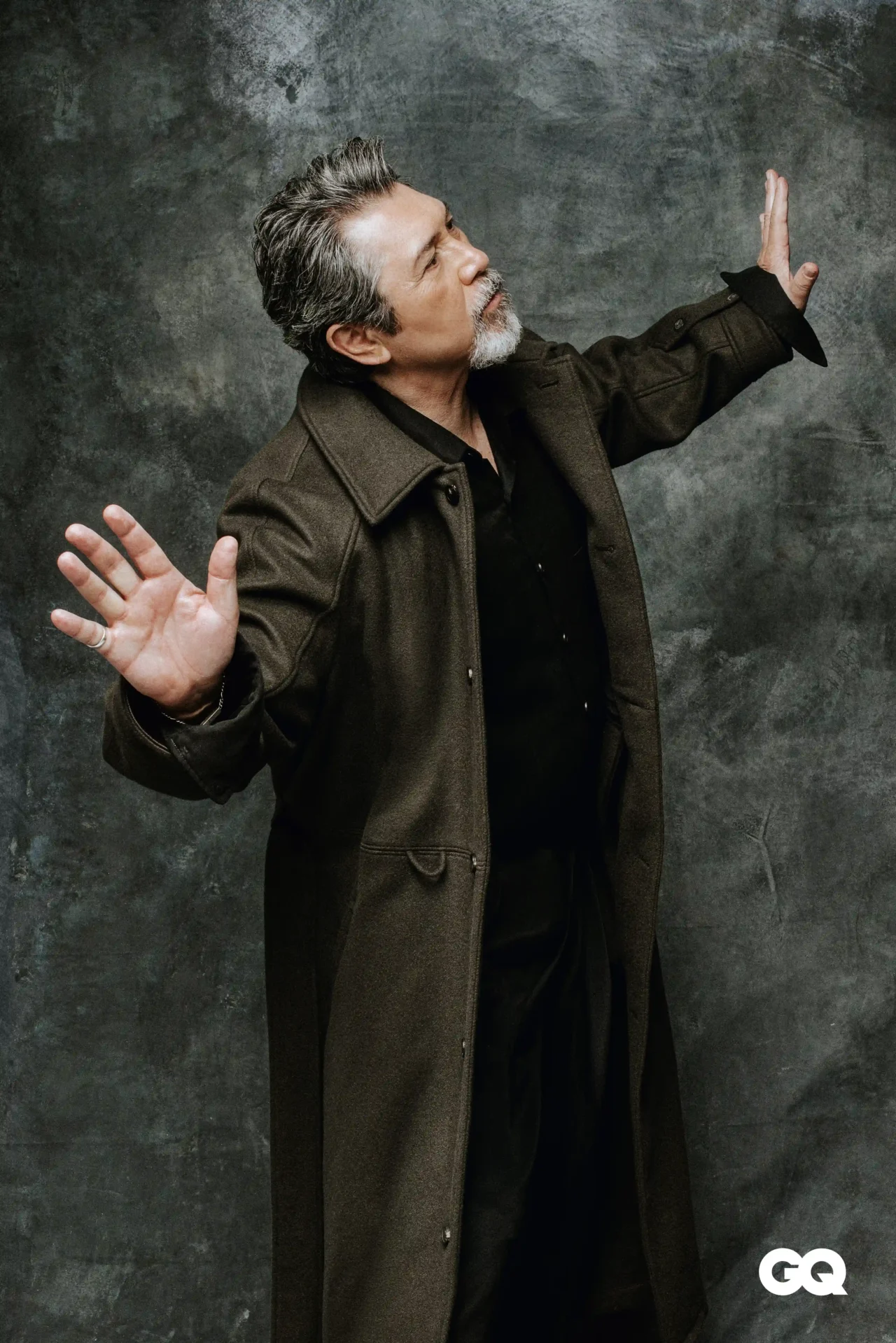
Ironically, during his rapid rise to fame, Phillips never played a Filipino character, but rather Mexican characters—and later in his career, several Native Americans. “I’m not Latino in any way,” he explained. “I played those roles because those were the roles that were available to me as a brown actor in the 80s. There weren’t a lot of us, and it wasn’t that I was purposefully going after a different community to represent.”
By today’s standards, the casting of a FilipinoFilipinoThe national language of the Philippines, widely used for communication, education, media, and culture.Go to Filipino Glossary American actor in roles written for other ethnic communities would almost certainly invite debate. But viewed through the lens of the 1980s, Phillips’ success represented an important step forward for actors of color. At the time, Hollywood was only beginning to move away from decades of white actors portraying people of color in makeup and prosthetics. While he wasn’t Mexican, Phillips’ breakthrough challenged long-held assumptions about who could carry a major Hollywood film. For many young moviegoers growing up in the late 1980s, he became one of the first leading men of color they saw headlining a major Hollywood release.
“After La Bamba and Stand and Deliver, I had young people, not just Latinos, but African Americans and Asian Americans coming up to me and going, ‘Okay, I see someone who looks like me on the big screen.’ You know, there wasn’t as much of that back then,” he shared with a reflective smile.
It would take several more years before Phillips finally had the opportunity to play a Filipino character. That chance arrived in 1991 with Ambition, a film which he starred in and for which he also wrote the screenplay, where he portrayed a Filipino American writer manipulating a psychopathic killer for material for his next book. After spending the early part of his career standing in for other ethnicities, it marked his first opportunity to bring his own heritage to the screen.
He would go on to play FilipinoFilipinoThe national language of the Philippines, widely used for communication, education, media, and culture.Go to Filipino Glossary characters four more times: on the television series Prodigal Son, where he chose the surname Arroyo for his character as a nod to former Philippine President Gloria Macapagal Arroyo, who awarded him the Presidential Recognition Award in 2004; on the Netflix animated series Trese, where he voiced the corrupt Mayor Sancho Santamaria of Manila; in the 2022 comedy Easter Sunday, where he played an exaggerated, boxing-obsessed version of himself to hilarious effect; and most recently in Gangland, where he told GQ Philippines his character, Teddy Sharpe, is part Filipino.
The Second Chapter
The early triumphs of his performances in La Bamba and Stand and Deliver seemed destined for awards recognition. Critics praised both films, audiences embraced them, and yet neither performance earned Lou Diamond Phillips an Academy Award nomination.
“La Bamba got completely overlooked,” he says. “But for Stand and Deliver, [Edward James Olmos] and I were nominated for the Golden Globe. We won the Independent Spirit Award. I won supporting, he won lead. So early on, I was like, ‘Oh, okay, this is wonderful. I’m going to be one of those actors who are fortunately recognized on a critical level.’”
It wasn’t quite how things ultimately unfolded, at least in terms of major industry awards. Apart from a Tony nomination for playing the King of Siam in a revival of The King and I on Broadway and two Emmy nods, Lou Diamond Phillips never received an Academy Award nomination despite delivering several acclaimed performances throughout his career. The closest he came was in 1996 with Courage Under Fire, which many critics regarded as his finest work. Even then, the nomination never came.
In hindsight, however, that omission feels far less defining than it once did. Awards merely recognize a single moment. Longevity defines careers. Hollywood history is filled with actors who burn brightly for a few years before fading away. Phillips, by contrast, is still here—still acting, still creating, and still helping shape the industry from within.
At the 2023 Oscars ceremony, he remembers seeing his contemporary, Robert Downey Jr., winning the Best Supporting Actor award for his performance in Oppenheimer. “He gave me a big hug and he whispered in my ear: ‘Not all of us got a second chapter.’ And it’s true. I mean, whether it’s people like Patrick Swayze or Bill Paxton or Luke Perry, who were friends of mine, who are no longer with us through no fault of their own, or the other ones who crashed and burned because of their choices, to still be standing after all these years—the gravity and the importance of that is not lost on me.”
This year, Phillips finds himself back in the awards conversation. When GQ Philippines spoke to him last July, he had just flown back from Los Angeles, where he attended an Academy screening of his new independent film Gangland, directed by Vincent Grashaw. The film has since received a limited theatrical release in the United States and is now available on major streaming platforms, including Apple TV.
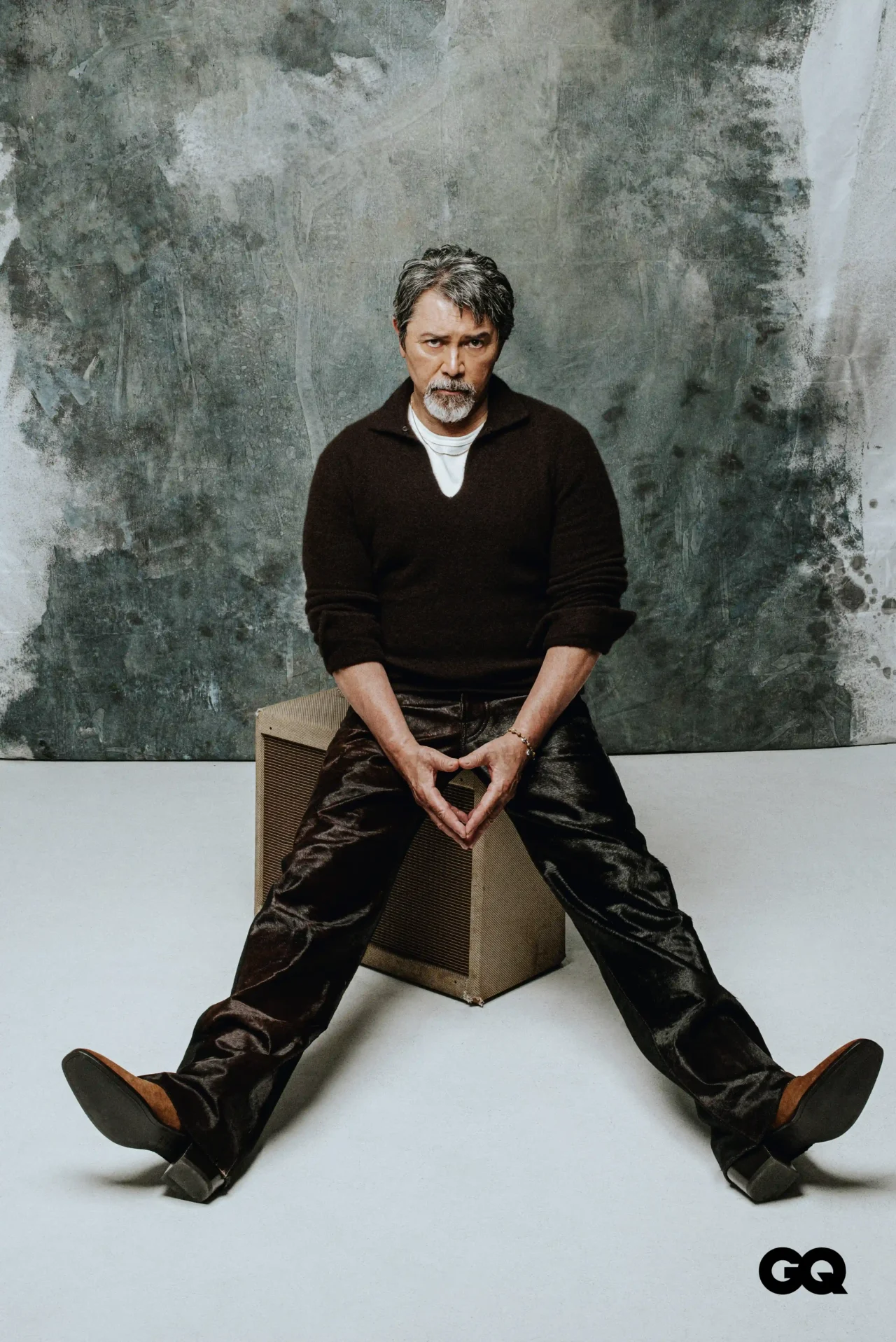
Phillips describes Gangland as “Denzel Washington’s Training Day on a reservation.” He plays Teddy Sharpe, a cop who, alongside a rookie officer played by Dana Namrode, must track down a dangerous fugitive on an Indigenous reservation. Phillips was Grashaw’s first choice for the role. After reading the script—”I absolutely loved it,” he says—and being offered an executive producer credit, he signed on.
The performance has earned some of the strongest reviews of his career in years, prompting early awards buzz for the film. Whether that translates into actual recognition remains to be seen, particularly for an independent production competing against major studio campaigns. Yet even with his name back in the conversation, Phillips insists that awards have never been the reason he chooses a role.
“There’s some awards talk there,” he says of Gangland. “But it’s not something that I chase. It’s not something that is the motivation to take a role, but it certainly is gratifying when you’re part of that conversation because that means that the work is being recognized by your peers for the most part.”
Instead, he says, the project reminded him why he became an actor in the first place. “I loved the role,” he says. “I turned down bigger stuff for it because it was such a beautiful script. And it’s like, okay, I’m turning down something that may have more exposure, but this is something that I believe in. And it went back to the purity of my intentions in the beginning. And every once in a while, I have to remind myself of that.”
The Veteran
Just glance at Lou Diamond Phillips’ IMDb page and you’ll notice just how booked and busy he’s been over the last four decades. He has more than 170 acting credits, a remarkable body of work for any performer. His resume spans everything from Hollywood studio films and under-the-radar independent dramas to animated voice work and prestige television. (He’s particularly proud of the 2012 Western series Longmire.) He has no plans of slowing down, as long as the work continues to challenge him.
“I was never destined to be this studio star,” Phillips says. “I didn’t get on those lists for the big studio tentpoles or the Marvel world. I’ve always been a little bit outside the box…There are many of my peers who get many more opportunities than I do and get paid quite more than I do. But I’ve been really fortunate in that, even at this point in my life, I’m getting challenging roles. I’m not repeating myself.”
With so much still ahead of him (including the Hulu miniseries Count My Lies), Phillips still finds time to honor the past, especially the films that made him a household name. Next year will be a big one as La Bamba celebrates its 40th anniversary. The celebration coincides with the release of American Pachuco: The Legend of Luis Valdez, a documentary that premiered at Sundance and chronicles the celebrated filmmaker’s life and career, as well as the making of La Bamba. It is scheduled to air on PBS this October. Phillips participated in the documentary, and even he was surprised to discover archival footage of himself that he had never seen before.
Then, of course, he’s set to come full-circle with the Young Guns legacy sequel, which is currently in pre-production. Phillips admits progress has been slow, but if the budget and a few remaining details can be worked out, fans will be in for a real treat, with much of the original cast reuniting under the direction of Emilio Estevez.
“I’ve read the script. It’s fantastic,” he says, sounding almost giddy. “I still get people coming up to me at fan conventions, you know, middle-aged guys with their teenage sons going, ‘I just showed my kid Young Guns!’ I don’t think studio executives realize what a fan base there is out there, or how many people are hungry to see a third film.”
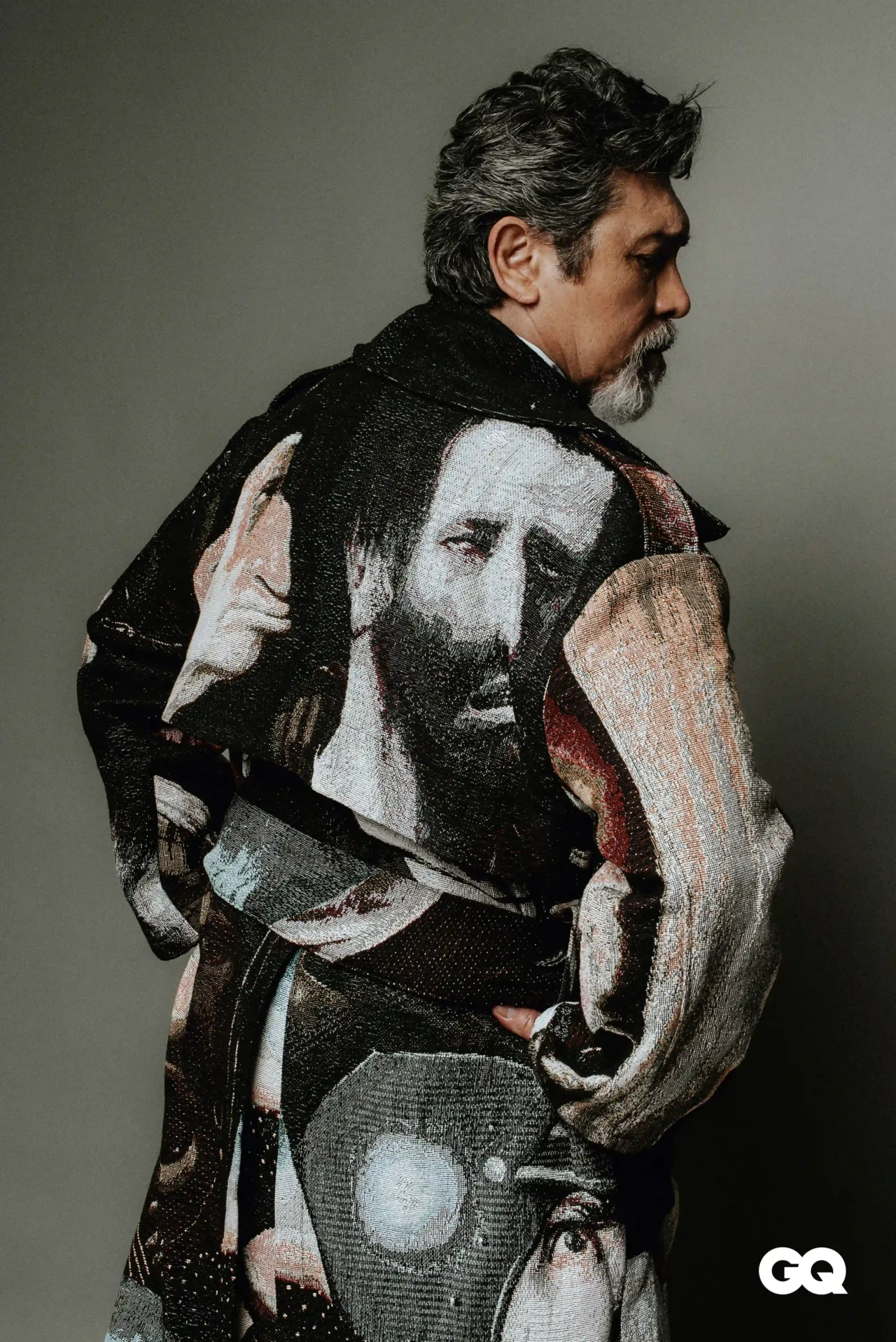
Beyond acting, Phillips has built a life rich with other forms of creativity. He has written two science-fiction fantasy novels (with a third one on the way), returned to his alma mater, the University of Texas at Arlington, to teach masterclasses and acting workshops, and serves as a governor at the Academy, where he helps shape policies on representation and membership. His career has never revolved around fame alone. It has always been sustained by a simple desire to keep creating.
“You know, when I was an unknown kid in Texas, I just wanted to be an actor and a storyteller and a writer,” he says. “When I was in school, I painted all the backdrops [for the theater productions]. I loved it, I loved the craft of it, I loved the art of it. And that’s what sustains you when the tangential things like fame and money disappear. The love of the work has to remain consistent. And there were so many times where it’s like, ‘I’m doing this because I love being an actor or I love being a storyteller.’ And so when you approach it for the right reasons and you go after work for the right reasons, then the product will always remain pure.”
Careers rise and fall. Fame comes and goes. Awards are won and lost. But for Lou Diamond Phillips, none of those things were ever meant to last. The work was. And for someone named Diamond, it feels strangely appropriate. His career hasn’t endured because it was flawless. It has endured because, through every high and every low, he never stopped loving the craft.
Some stars burn brightly for a season. Diamonds last.
A version of this story appears in the September 2026 issue with the title “A Diamond Is Forever”
SHOOT CREDITS:
Story by CHINO HERNANDEZ. Photographs by ANKA GARBOWSKA. Styling by SUTHEE JONASSON. Groomer: YVONNE PHILLIPS. Producer: JULIAN RODRIGUEZ. NYC Producer: DAKOTA GRIFFIN. Videographer: MYLO BUTLER. Set Designer: AUSTIN YEAP. Styling Assistant: KRISTEN MOM. Photo Assistant: OLEKSII HARAI. Tailor: REBECCA TAYLOR. Production Coordinator: NAMELE KIA.
Frequently Asked Questions
Lou Diamond Phillips is a Filipino American actor best known for starring as Ritchie Valens in La Bamba.
Phillips became famous after playing Ritchie Valens in the 1987 film La Bamba, which became a surprise box-office hit. He also appeared in two 80s classics right after that: Stand and Deliver and Young Guns.
Phillips is set to appear in the Hulu miniseries Count My Lies and the Young Guns legacy sequel, which is currently in pre-production.
Phillips is set to appear in the Hulu miniseries Count My Lies and the long-awaited Young Guns legacy sequel, currently in pre-production with much of the original cast reuniting.
Phillips serves as a governor at the Academy of Motion Picture Arts and Sciences and chairs the Equity and Inclusion Committee for the Actors Branch, helping shape representation and membership policy.