Summaries were generated by AI. Generative AI is experimental.
Explore other styles:
Fashion archives hold more than mere inventory; they preserve the physical DNA of a brand’s identity. A uniquely angled pocket, a subverted graphic, or a highly specific fabric treatment—over time, these design choices evolve into a private dialect, instantly recognizable to those who know where to look. A masterful new collaboration between EVISU, mastermind JAPAN, and roarguns acts as a leader in this shared language.
The three-way linkup synthesizes three distinct design vocabularies into a single, cohesive narrative built around washed black denim, heavily distressed surfaces, and hardware encoded with decades of subcultural history. Though they now share a canvas, these labels originally emerged from entirely different corners of the Japanese fashion landscape.
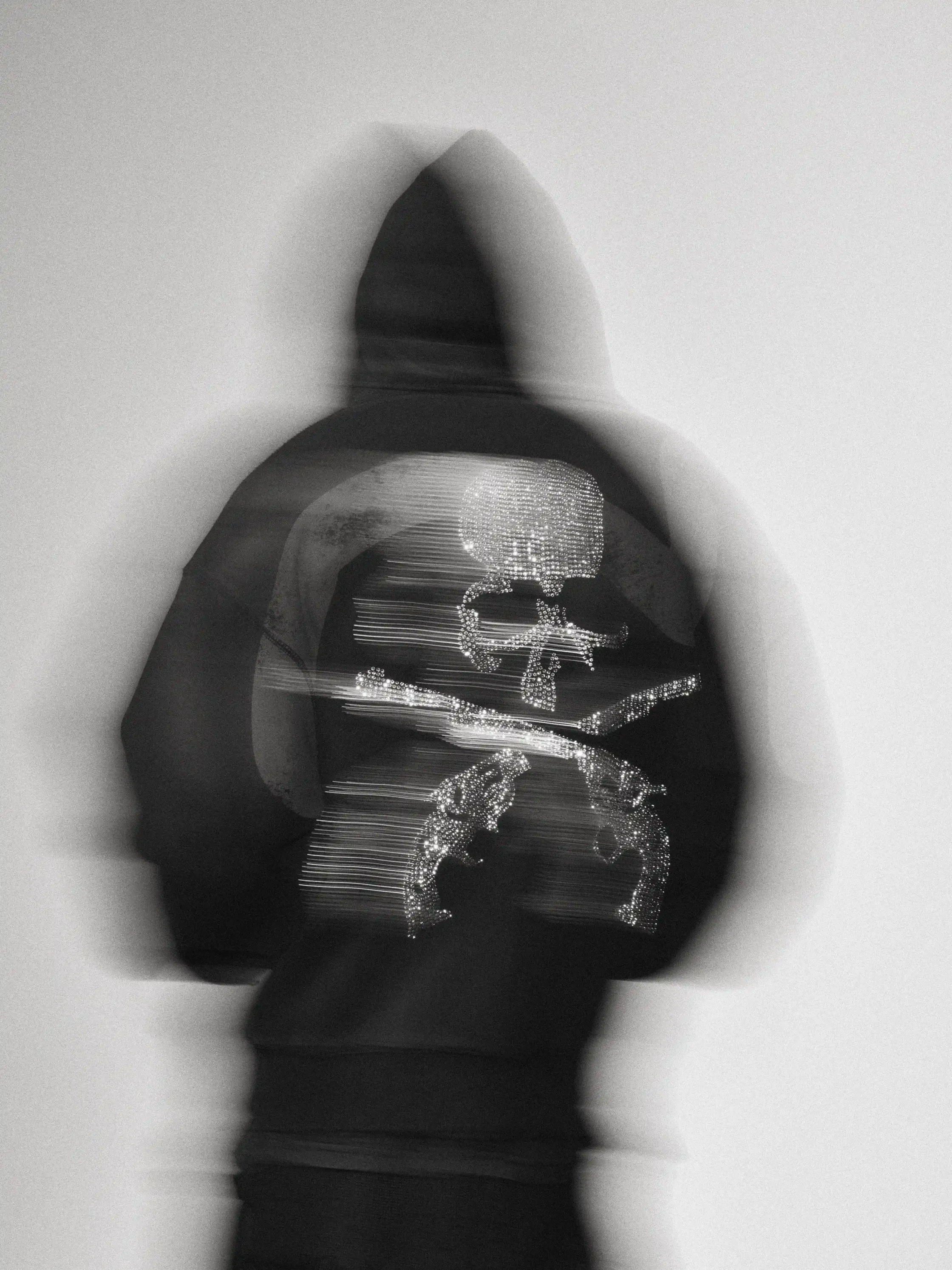
Founded in Osaka, Japan, in 1991, EVISU helped fuel a renewed interest in vintageVintageClothing, accessories, or objects from an earlier era, usually at least twenty years old, that are valued for their style, quality, and character. Vintage shopping offers unique pieces that fewGo to Vintage Glossary-inspired denim through its attention to traditional construction and its hand-painted seagull motif, which became one of its most recognizable signatures.
Mastermind JAPAN, established by Masaaki Homma in 1997, developed its own visual identity through monochromatic dressing, Japanese manufacturing, and a skull-and-crossbones emblem that gave everyday streetwearStreetwearA casual fashion style rooted in skate, hip-hop, and urban culture, defined by graphic tees, hoodies, sneakers, and limited collaborations. Streetwear has moved from subculture to the mainstream, and FilipinoGo to Streetwear Glossary a darker edge.
Established by Saburo Hamanaka, roarguns entered the scene in the early 2000s with a mix of American cultural references, rock-inflected styling, and its crossed-guns motif, conceived as an expression of the brand’s LOVE & PEACE philosophy.
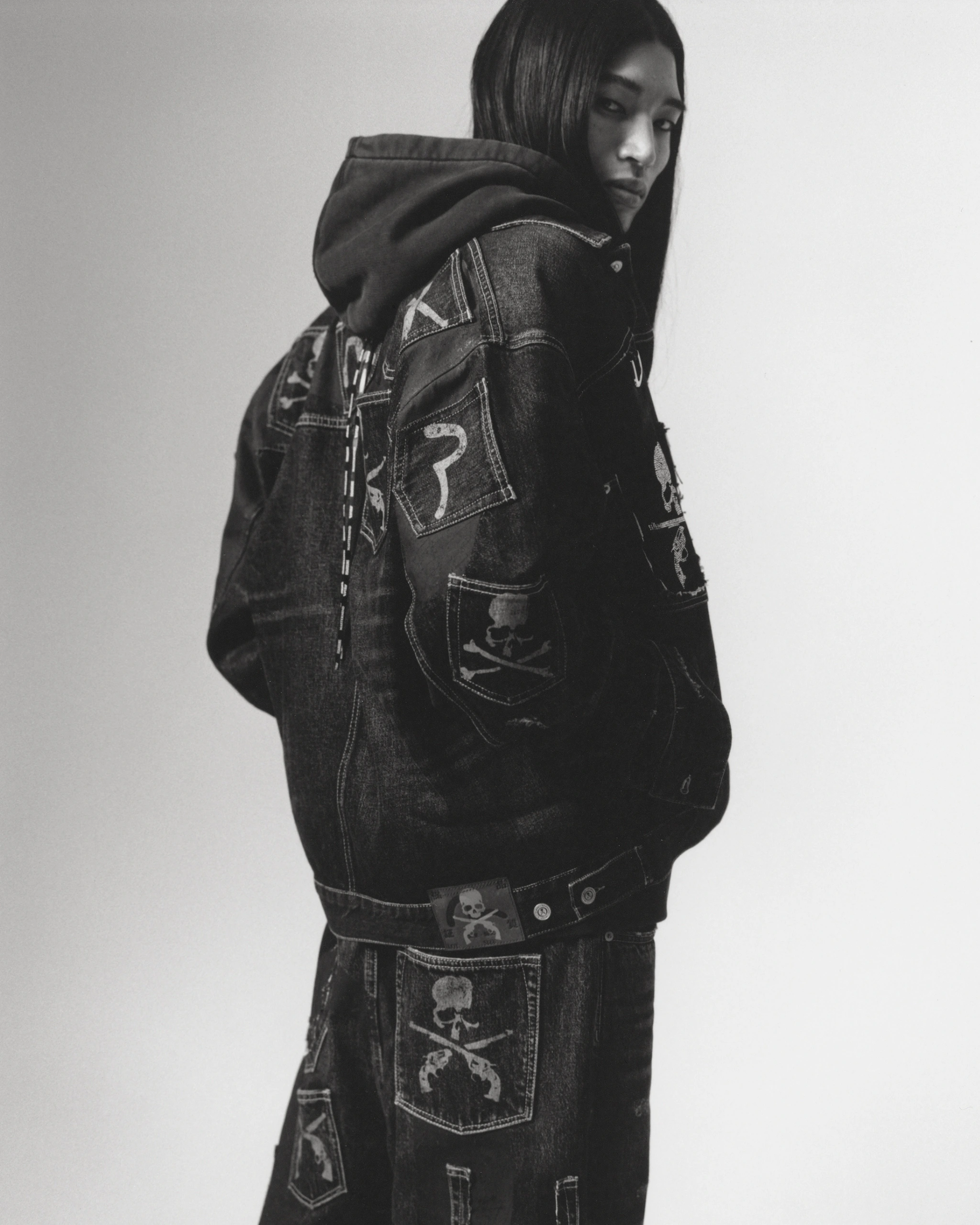
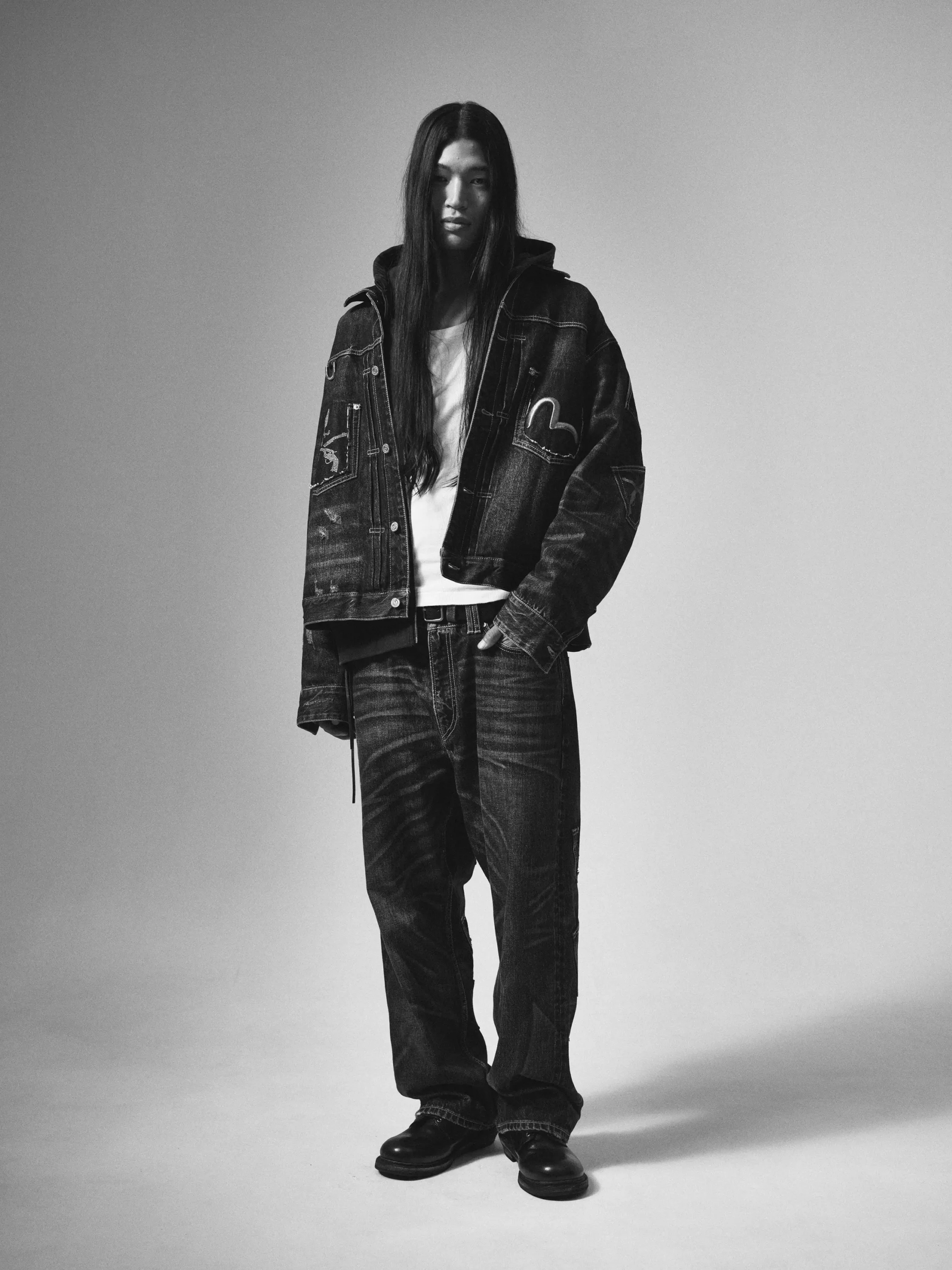
The meeting point is a denim set that brings two of EVISU’s defining elements together for the first time, which are the Daicock motif and its multi-pocket construction. The combination introduces an interesting tension between what is revealed and what is concealed. Distressed fabric and torn pockets expose the familiar seagull graphic, making the garment’s construction part of its visual character. The pockets serve a practical purpose, but they also become a surface for the brand’s history, with wear and damage giving its signature a different context.
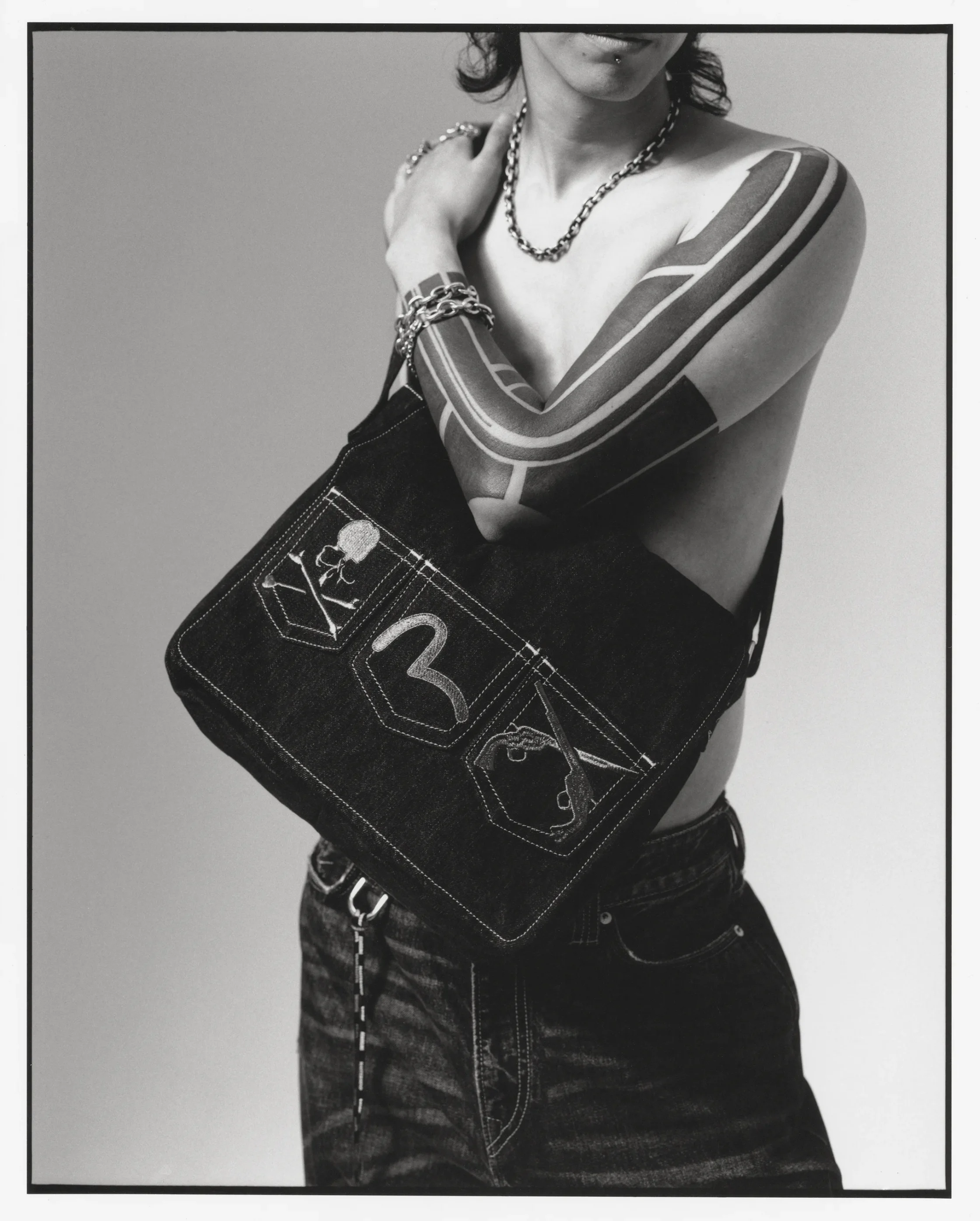
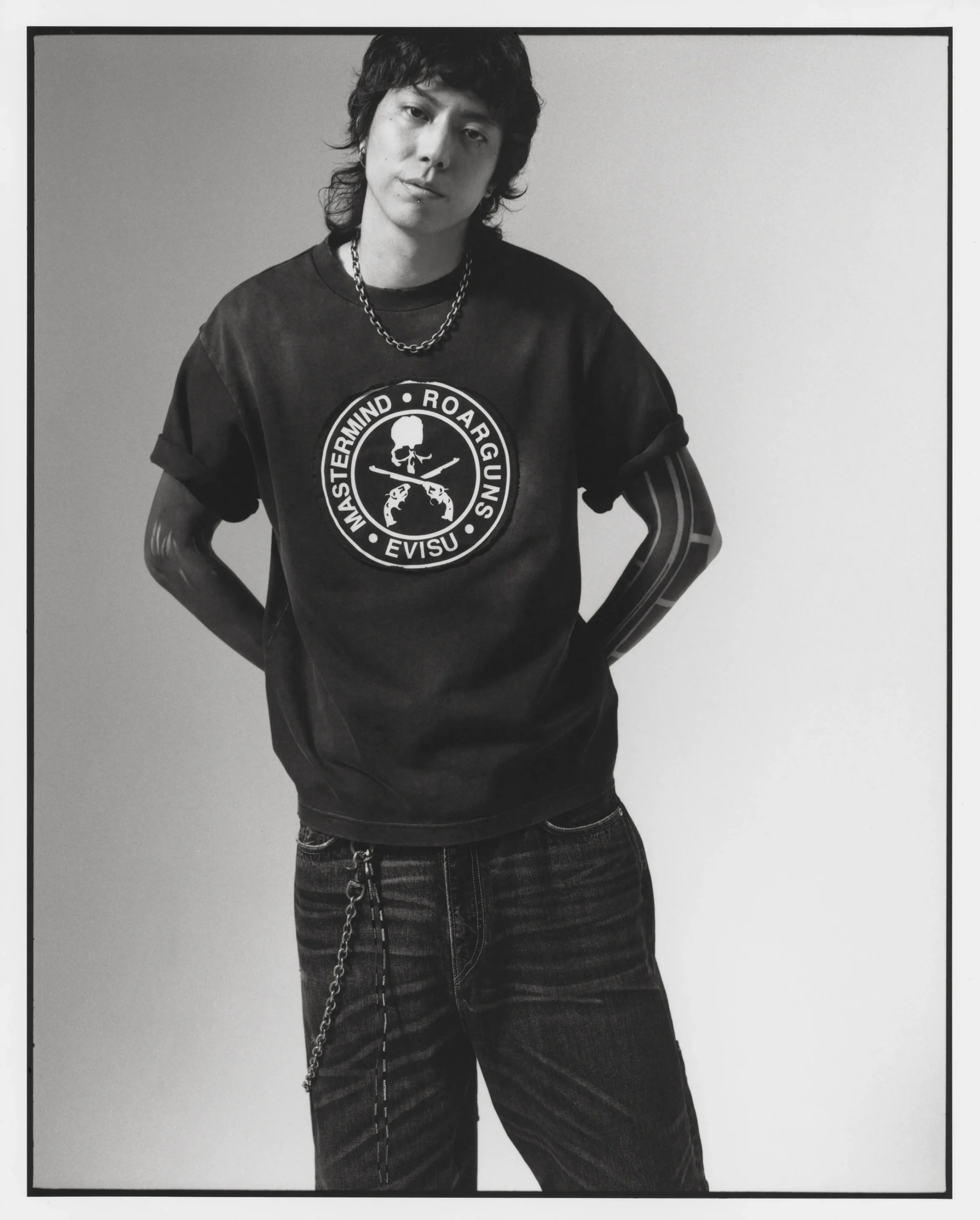
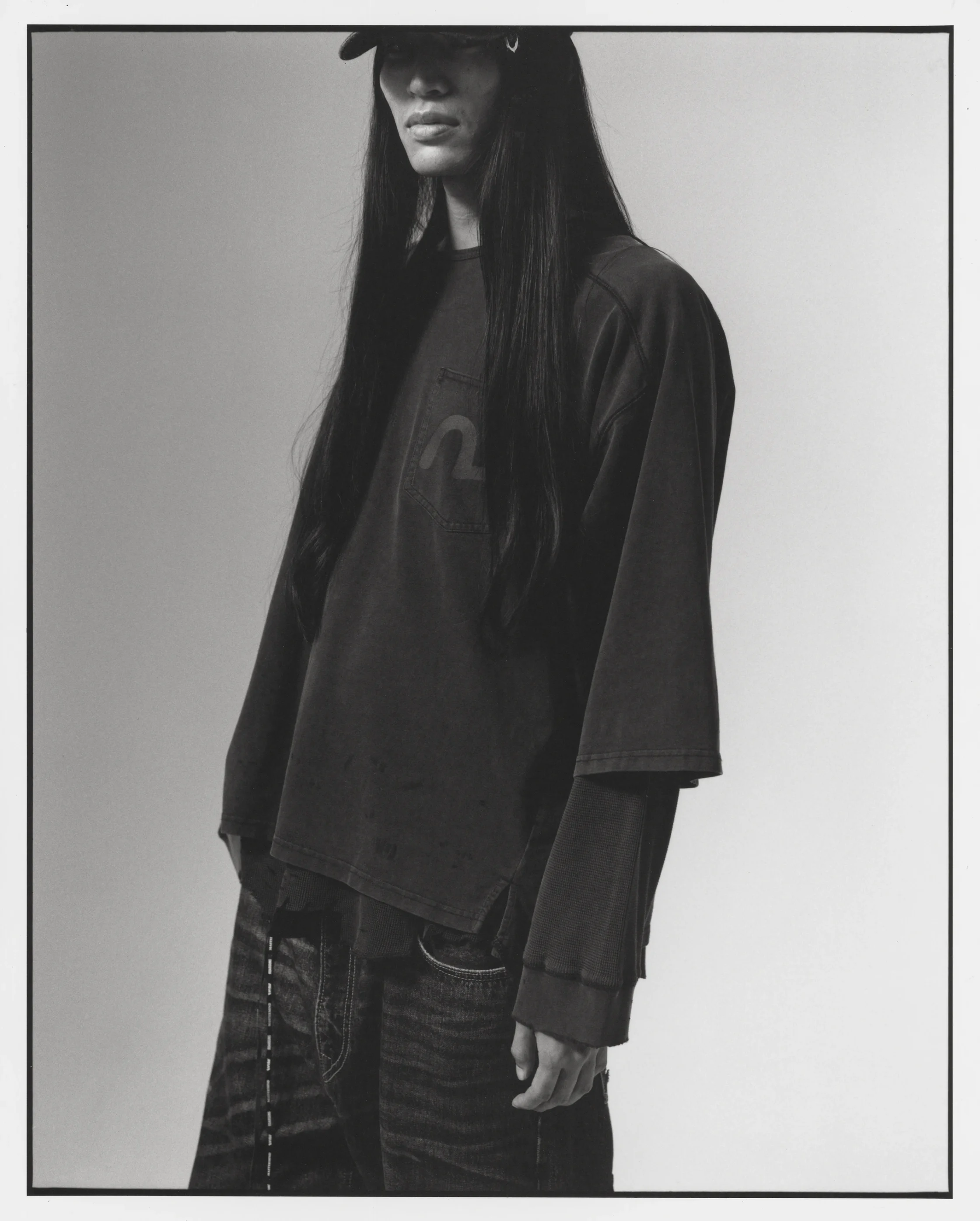
The Type II denimDenimA durable cotton twill fabric, most commonly dyed indigo and used for jeans, jackets, and shirts. Denim ages with the person wearing it, developing fades and creases, and a goodGo to Denim Glossary jacket follows a similar approach, with its established silhouette reworked in textured black denim, with a relaxed, boxy profile that brings a contemporary proportion to a design rooted in denim’s workwear history. Black-overdye treatment sets the tone for the collection, allowing differences in texture, stitching, and finish to register across the garments. Swarovski crystals and metallic-thread embroidery introduce points of contrast, while custom buttons, branded leather patches, and D-ring details bring the collaborators’ identities into the construction itself.
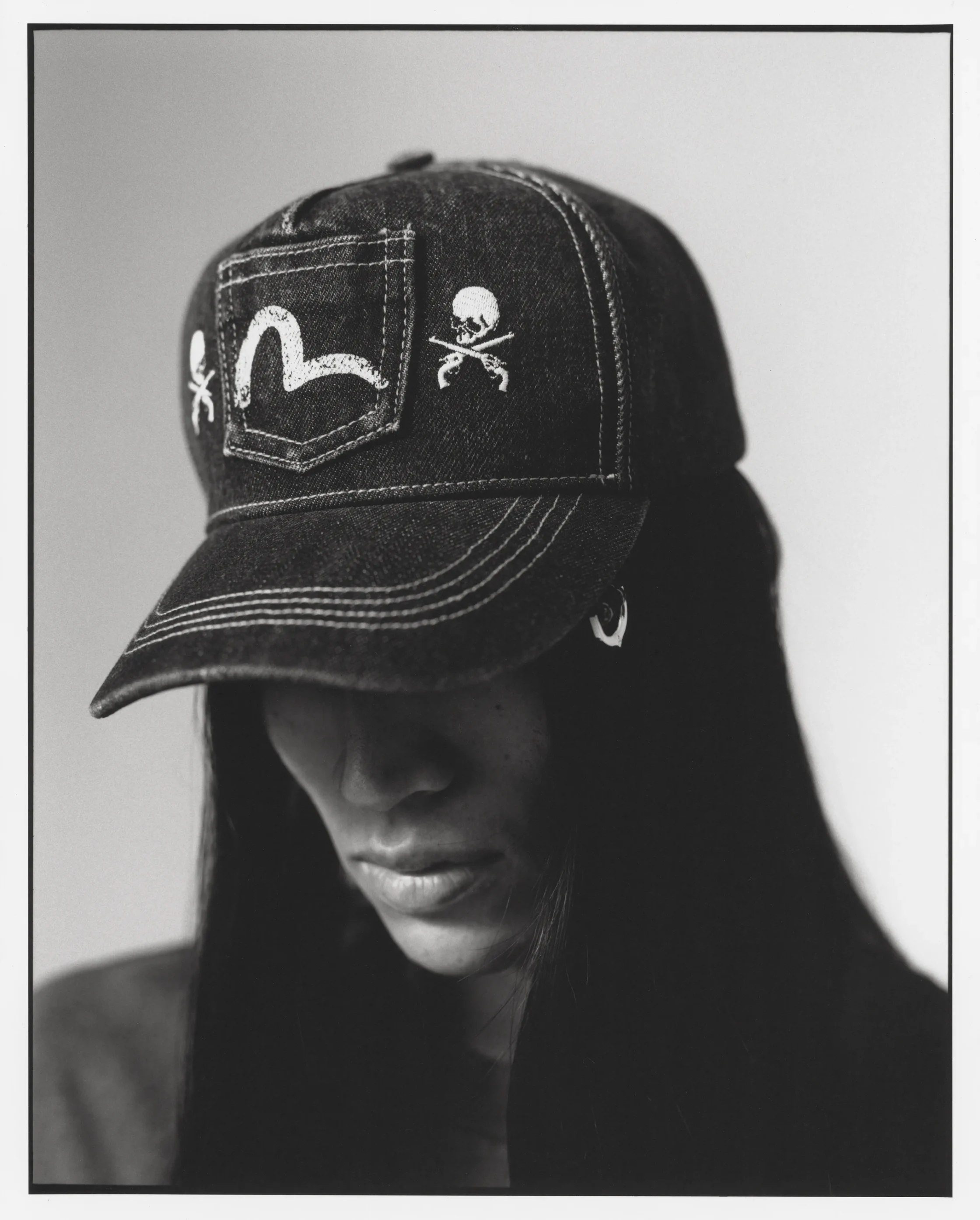
The collection extends these ideas into pieces meant for everyday wear. A zip-up sweatshirt draws on vintageVintageClothing, accessories, or objects from an earlier era, usually at least twenty years old, that are valued for their style, quality, and character. Vintage shopping offers unique pieces that fewGo to Vintage Glossary after-hood designs, in which a hood was attached to an existing crewneck, leaving a distinctive outline around the neckline. A layered waffle shirt uses dropped shoulders and pigment dyeing to create a worn-in appearance, while washed T-shirts, an aged denim cap, and a messenger bag carry the same attention to surface and detail. Each piece offers another way to explore the relationship between familiar forms and the marks left by time and craft.
Across all three heritage labels, the archive becomes a working material, one that can be cut into, overdyed, embellished, and recomposed for a different moment in Japanese fashion.
SHOOT CREDITS:
Photographs by YUTO KUDO. Styling by HAYATO TAKADA. Hair & Makeup: HIROKAZU ENDO. Models: KYOSUKE AKIYOSHI and S. RYOTA. Producer: NAOHIRO TOMURA.
Frequently Asked Questions
EVISU was founded in Osaka, Japan, in 1991.
It is one of EVISU’s signature design elements, often seen alongside its iconic seagull graphic.
Masaaki Homma founded mastermind JAPAN in 1997.
The collection includes washed black denim, Swarovski crystals, metallic-thread embroidery, custom buttons, and branded leather patches.