Summaries were generated by AI. Generative AI is experimental.
Explore other styles:
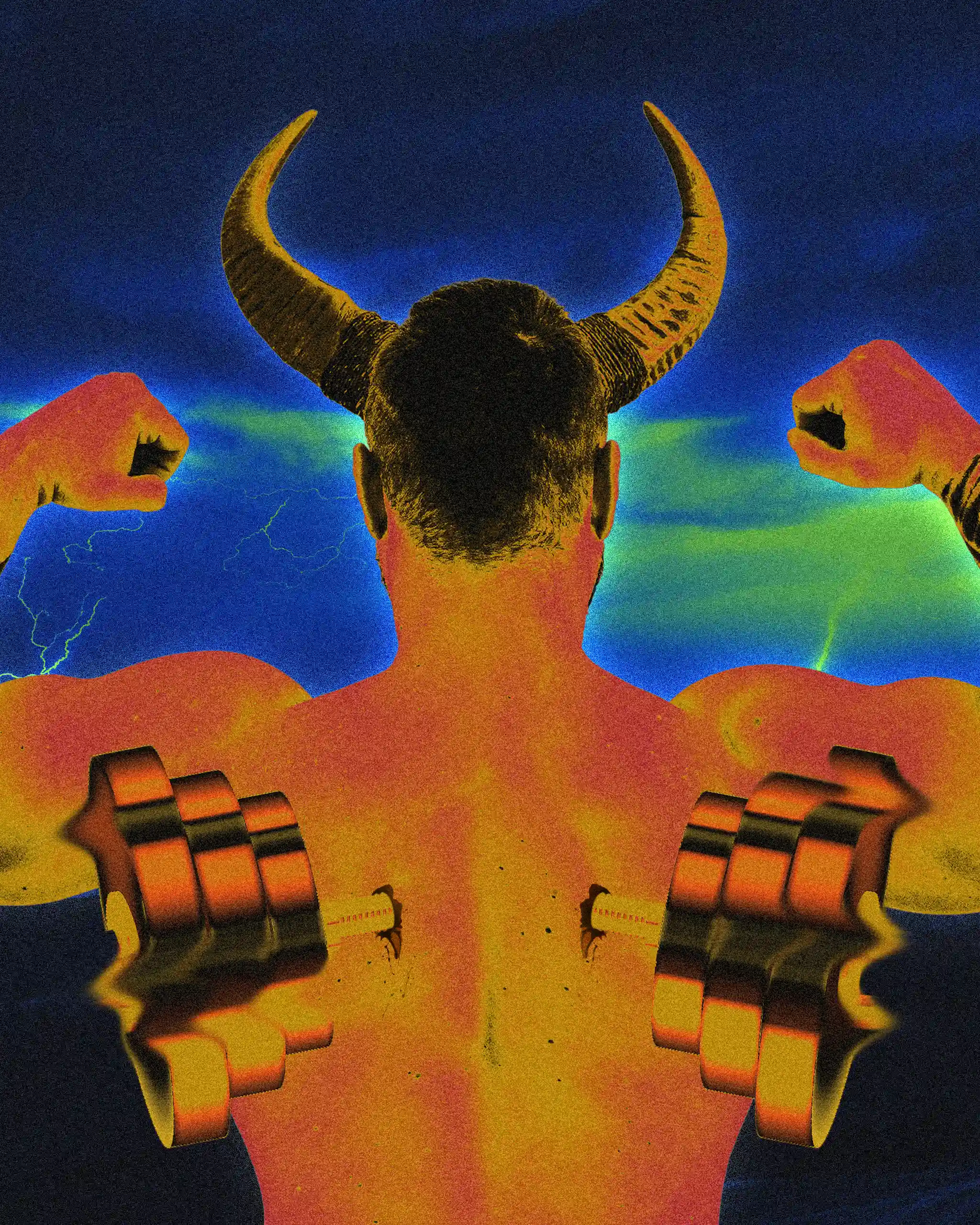
It’s not easy navigating exercise and wellness content online. Between scrolling through genuinely good workout and diet advice and relatable leg-day memes, I always run into that one influencer whose videos revolve around some sort of “villain arc.” Getting back at bullies, impressing the ex who cheated on them, and the phrase “no one’s coming to save you” are common themes in these cold, black-and-white online edits.
I get it. Any reason to finally get off your couch and improve yourself is a net positive in my eyes. The thing is, in the long run, working out for revenge or validation is fuel that eventually runs out; in fact, the “villain arc” can be an easy gateway into something much more sinister if you don’t reexamine your personal reasons along the way.
Whether it’s work, a hobby, or self-improvement, psychologists split a person’s motivation into two paths: extrinsic and intrinsic. As you can imagine, the “villain arc” falls squarely in the first camp. Getting swole to woo potential dates, exes, and other gym bros feels good because it provides tangible rewards for getting sick abs.
But eventually, these reasons reach a hard cap, since you can only crave revenge or validation so much before those pursuits start generating negative emotions. Expecting praise or a jaw-dropDropA limited release of a product, such as sneakers, streetwear, or collaborations, made available at a specific date and time. Drops build hype through scarcity, and they have shaped modernGo to Drop Glossary, but getting a lukewarm or even repulsive reaction instead, may send someone whose whole motivation is to appease others down a spiral, even if, all things considered, they look pretty attractive.
From there, it goes one of a few ways. Some lose all drive and quit because they tied their self-worth to someone else’s opinion, and without a satisfying one, working out feels unbearable. Others double down, especially if spite is driving them. That’s where a lot of the horror stories about injuries begin: the never-ending chase for gains-for-views, and the belief that it’s never enough.
Some never scroll past the “villain arc” edits, and the vocabulary of the videos they watch slowly shifts to terms like “high-value” or “low-value” men, until they eventually land on the “looksmaxxing” community, which recently made its way to Pinoy For You Pages.
Looksmaxxing is the practice of optimizing your face and physique in an attempt to reach a “high score” of attractiveness. It can start with innocent and well-meaning wellness trends like skin and hair care routines, but can quickly escalate to extreme diets, surgery, and “bonesmashing,” or hitting yourself with a hammer to sharpen your jawline.
It’s validation-chasing with an ideology bolted on, and it hits the guys who are already lonely, insecure, or just looking for direction the hardest. I understand why it became so popular, but gamifying something as subjective as attraction and competing with others online is a terrible way to find community.
All you’re gonna get are either people who think attractiveness can replace kindness, or people who try to use your insecurities to sell a product. Want to become a high-value man and attract women? Buy my course; link in the bio. Want to get ripped and out-mog everyone? Use my snake oil; link in the bio.
My own reasons for working out are a lot less cinematic. Earlier this year, my band and I played at a local gig, and after a few too many poorly landed jumps, I absolutely destroyed my knees and ankles. Months went by, and the pain never went away. It was terrifying to imagine playing future gigs sitting down, so I tried my hand at home workout routines I found online and followed a little advice from my gym friend.
No one was watching me; there was no bitter ex to impress (I’m happily taken) and no bullies to prove wrong (I’m surrounded by amazing friends). I was motivated because I wanted to keep doing one of the things I love most. Today, I feel better than I ever did before my injury.
I can’t guarantee everyone will heal the same way, but it certainly helped me get fitter, happier, and more productive. That fulfillment and good experience motivated me to take things a step further and improve other parts of my body.
That’s what intrinsic motivation is, and it’s boring in the best way. Reasons like self-improvement, strength, energy, and the will to keep going for a long time come from working out for its own sake, once you strip away everything external.
Psychologists Edward Deci and Richard Ryan studied motivation and boiled it down to three ingredients. First, it has to feel like your own decision, not something pushed on you by family or the internet. Second, you need to feel that you’re improving. And finally, you’re not doing it alone.
My best advice is something all parents say, and that’s to get off your damn phone. The best communities are ones that touch grass; it’s the barkada that invites you for hoops, the gym buddy who spots you and counts your reps instead of your net worth. It’s the guitarist who asks how your knees are doing during rehearsal.
Reasons like these pay you back in ways looksmaxxing never could: a clearer head after a tough week, the strength to carry groceries, or the plain enjoyment of getting better at what you love most, whether it’s a sport, a lift, or a gig. “No one’s coming to save you” is just plain untrue, because you and your friends are going to show up for each other.
Frequently Asked Questions
A trend of gym videos where people train out of revenge or to prove others wrong, usually set to dark, black-and-white edits.
The practice of optimizing your face and body to reach a “high score” of attractiveness, ranging from skincare routines to extreme measures like surgery.
Extrinsic motivation comes from outside rewards like praise or revenge. Intrinsic motivation comes from within, like enjoyment, strength, and personal meaning.

Ethan Cardaño
Ethan Cardaño is GQ Philippines’ News Writer, bringing the latest in everything men to the forefront. If he’s not actively looking for stories, you’ll find him trying on trending menswear pieces, watching films in cinemas (as intended), frequenting local gigs, and eyeing everything counterculture. Before joining GQ Philippines, he graduated with a degree in Journalism from the University of Santo Tomas (UST), where he served as a photojournalist and eventually became chief photographer for The Flame, the official student publication of the UST Faculty of Arts and Letters. You can contact him at [email protected].
- KEYWORDS
- Wellness
- Villain arc
- Working Out