Summaries were generated by AI. Generative AI is experimental.
Explore other styles:
The exact moment the old world of Philippine comics broke and the new one arrived remains a matter of fierce debate among Manila’s komikeros. But for those of us who came of age in the 1990s, the revolution began innocently enough: with the collector boom.
I was in high school, prowling the bargain racks of my hometown Gaisano after class, when I found John Byrne’s Man of Steel #1. I was a DC kid. Marvel’s dense continuity—those footnotes barking that a particular panel referred to some other issue from years earlier—felt like homework. Superman, by contrast, seemed gloriously self-contained.
Around the same time, comic shops such as Filbars, Comic Quest, and Platinum Comics were multiplying across the country. Jim Lee was drawing X-Men. FilipinoFilipinoThe national language of the Philippines, widely used for communication, education, media, and culture.Go to Filipino Glossary artist Whilce Portacio was becoming a star alongside him. Future Alamat Comics co-founder Budjette Tan and I were among the collectors watching it all unfold.
Then the industry exploded. Lee, Portacio, Todd McFarlane, and several other Marvel superstars were making enormous amounts of money for the company, while fighting over creator rights and compensation. In 1992, they left to form Image Comics, putting creator ownership at the center of the conversation.
The ripples of this “Image Revolution” quickly reached the Philippines. Portacio began making regular trips back to his home country, actively mentoring local talents and preaching the gospel of independent publishing. Inspired by this newfound creative freedom, a group of young Filipino creators took the lesson to heart.
“Image raised the flag of creator-owned comics,” Tan recalls. “That made us say, ‘Let’s make our own.’”
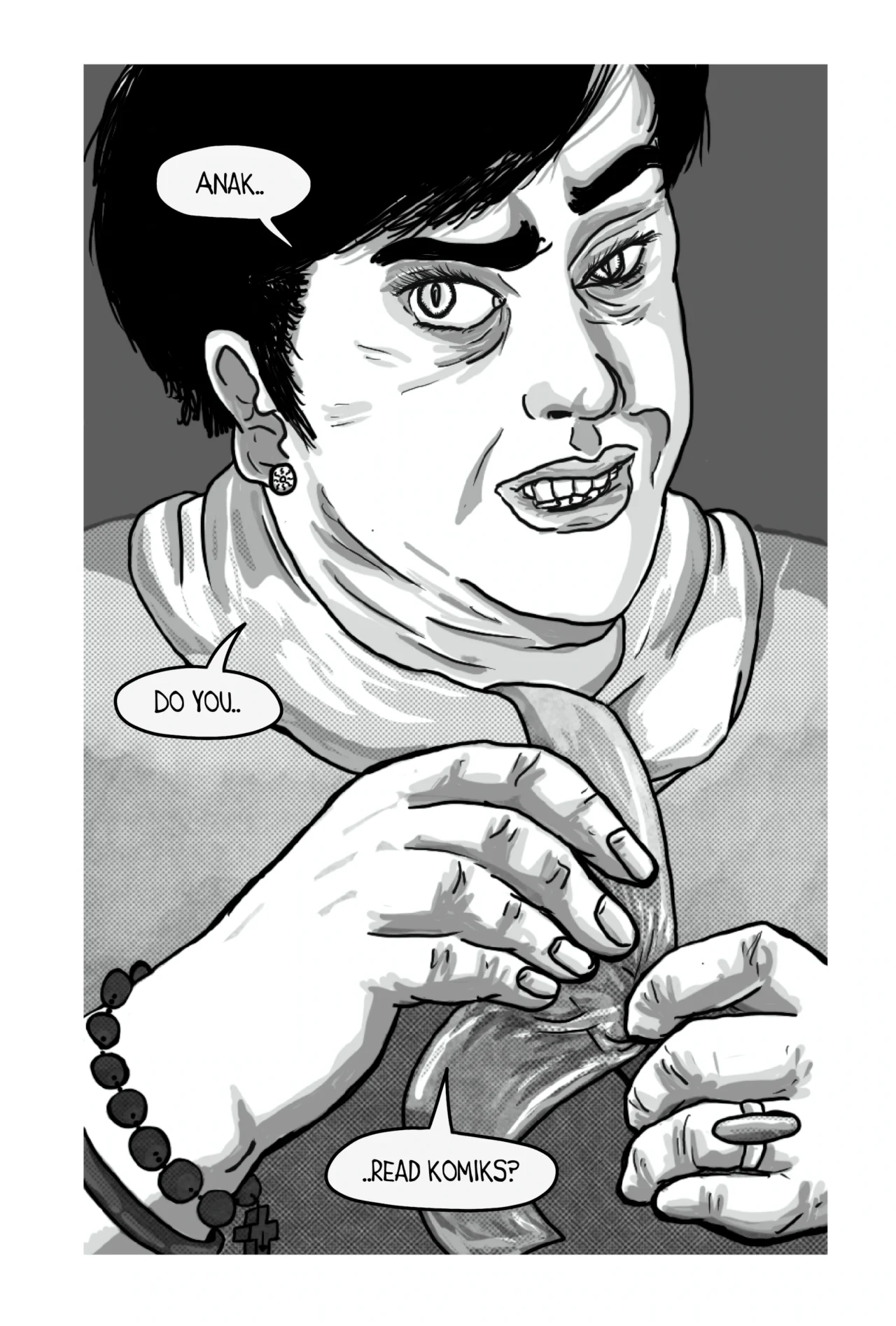
With Portacio guiding them as a mentor, Tan and his peers officially launched Alamat Comics in 1994, ushering in a brand-new era for independent Philippine komiks. Their ambitions were enormous; their business infrastructure was not. Alamat became notorious for its delays, inspiring the joke that it was the “number one comic book company because puro number one lang ang nire-release!” Like early Image, its creators were suddenly learning that producing comics and running a company were two very different jobs.
Still, Alamat became a fixture of the underground. Its books appeared at NU107 rock concerts, Consortium raves, and poetry nights at Club Dredd. Distribution, however, remained brutally primitive. When Tan finally released Batch 72, he drove to every Comic Quest branch himself.
“The amount of gas I spent and the merienda I ate at the mall was equal to the sales of the comic book,” he says.
For years, that was the Philippine comics story: enormous talent, tiny infrastructure, heroic levels of improvisation. That story no longer holds.
Today, Filipino comics are appearing on international shelves, entering global rights markets, and finding audiences far beyond the country’s traditional publishing ecosystem. The transformation didn’t happen because Filipino creators suddenly learned how to imitate the West. It happened because the infrastructure finally caught up with the talent.
From Comic Shops to Community
Two institutions were crucial to that evolution: Komikon and Komiket.
When Komikon—the country’s first dedicated comic book fan convention—debuted at UP Diliman’s Bahay ng Alumni in 2005, it gave independent creators something Alamat had desperately lacked: a timeline and a concentrated audience. Up until then, artists had no central venue to launch their work. “It became the strict deadline for every lazy comic book artist,” Tan remembers.
Ten years later, filmmaker and former advertising creative director Paolo Herras founded Komiket, a non-profit organization focused on building affordable community art markets. While Komikon established a home base in Manila, Komiket deliberately looked outward, traveling beyond the capital to find regional creators and readers. Herras also imported something unusual into the indie-comics world: professional infrastructure. Copyright lawyers were brought in to educate creators about intellectual property. The business of comics became part of the conversation.
Then COVID-19 nearly destroyed the physical ecosystem.
Comic Quest closed. Komiket’s flagship Makati bookstore shut down. Conventions disappeared. But the crisis forced publishers and creators online, eliminating one of the oldest obstacles facing Philippine comics: geography.
“Local publishers had nationwide access to readers,” Herras says. “People were buying our books from as far as Laoag up north and Tawi-Tawi down south.”
The pandemic revealed something important. The Philippines did not lack readers. It lacked access.
Once that barrier disappeared, creators began reaching international audiences without waiting for traditional Western gatekeepers to discover them. Cat Aquino and Dominique Duran’s Champion of the Rose is a perfect example. Aquino began writing fantasy influenced by The Hunger Games, Game of Thrones, and Eurocentric Disney. A visit to Christopher Columbus’s tomb in Seville forced a reckoning with that inherited worldview.
“Why do I find so much beauty abroad but not in my own heritage?” they wondered.
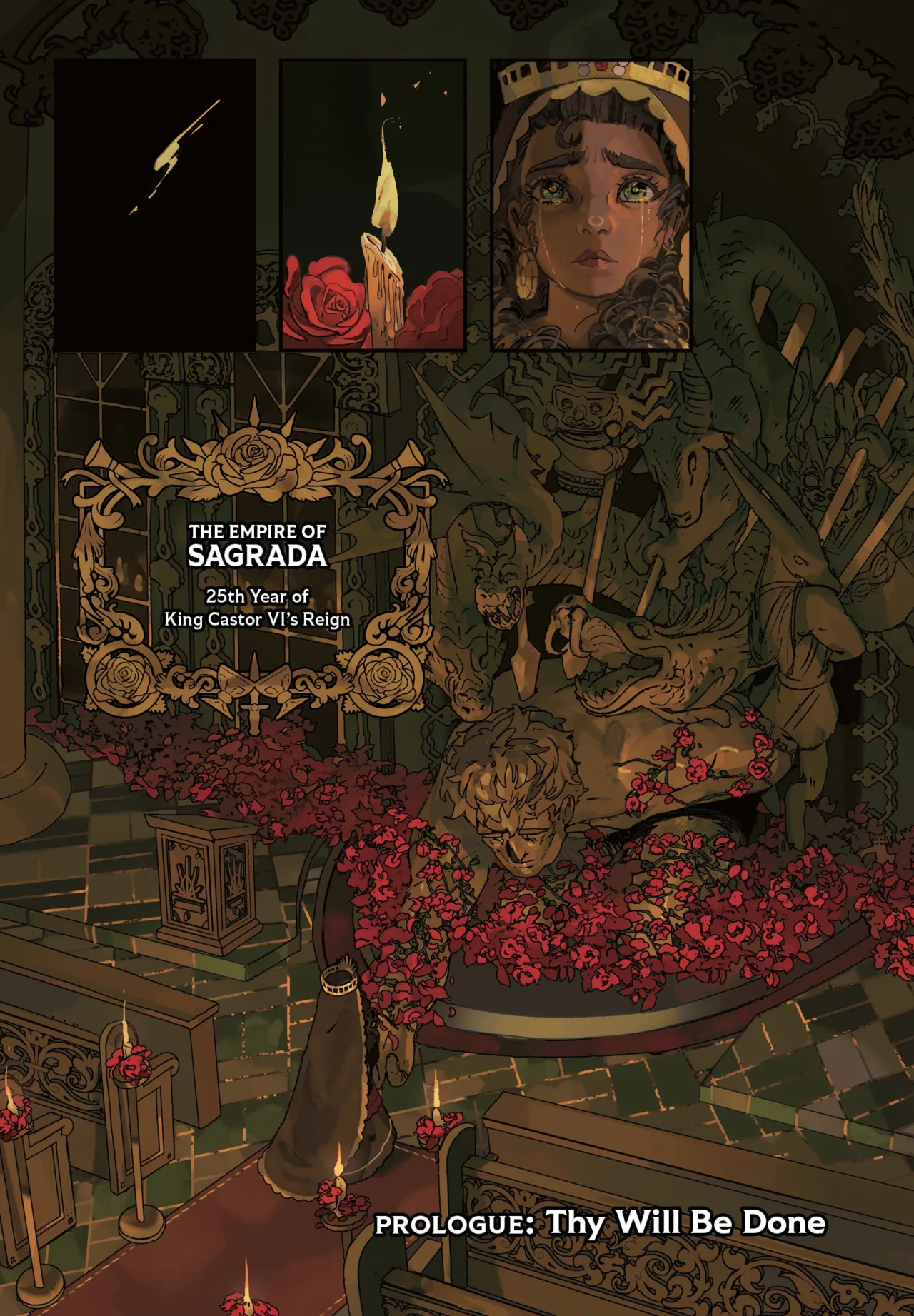
They returned to Manila and transformed their fantasy into an anti-colonial story featuring a transgender protagonist in a fictionalized 16th-century Philippines.
In 2020, Aquino and Duran posted finished pages to Twitter with the #DVPit hashtag, an online pitch event for underrepresented voices. The post exploded. Within weeks, they had an American literary agent, Paloma Hernando. When conventional publishers considered the book too difficult to categorize, Hernando took it to manga giant Viz Media.
Duran subsequently reworked the art into a high-contrast black-and-white manga aesthetic while retaining selected color pages. Cultural consultants and martial-arts specialists helped ensure that the book’s depictions of Filipino weapons, tattoos, and Indigenous-inspired imagery were grounded rather than decorative.
The result was a bestseller in the Philippines and a book that reached an international fantasy audience without sanding away its cultural specificity. That specificity is becoming a competitive advantage.
Dirt, Smoke, Nightmares
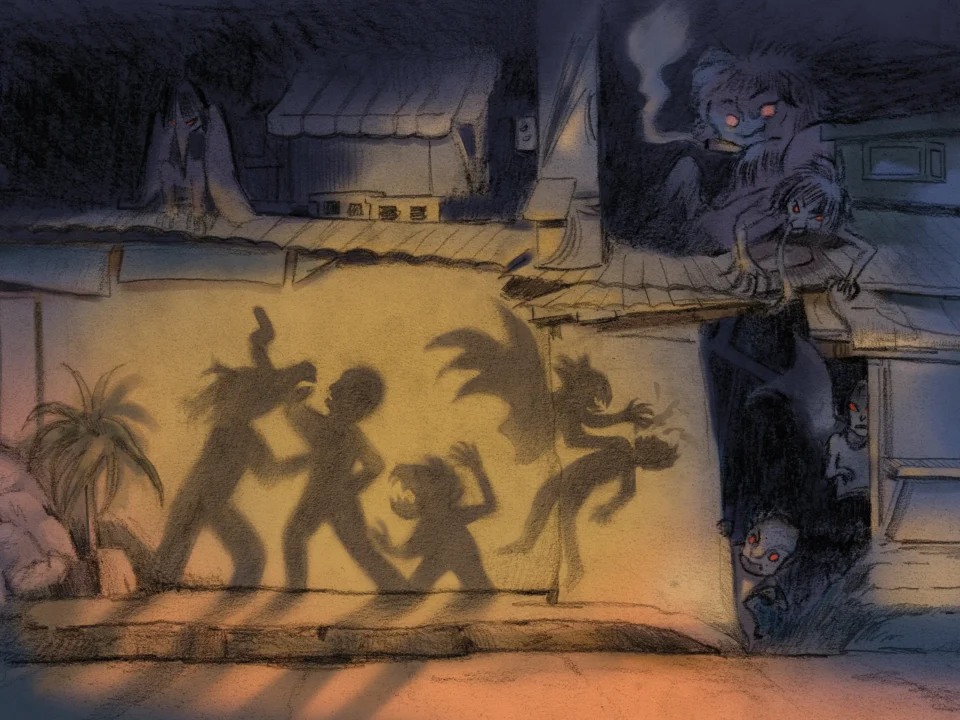
Consider Lucia Asul, an Iloilo painter who entered comics almost by accident. In 2021, she illustrated a nightmare she had experienced and posted it online. The image generated tens of thousands of likes and shares. Subsequent chapters on Penlab led her to Anino Comics, and Lucia Dreaming eventually won Best Graphic Novel at the 43rd National Book Awards.
Asul’s horror is intensely personal, but her subsequent science-fiction work, Night Gate, is equally rooted in place. Its fictional Balaan City draws from Balaan Bukid in Guimaras, while its characters carry the cadence and interior lives of Western Visayans. This is the emerging definition of FilipinoFilipinoThe national language of the Philippines, widely used for communication, education, media, and culture.Go to Filipino Glossary comics: not nipa huts, jeepneys, and folkloric monsters inserted as cultural shorthand, but lived experience.
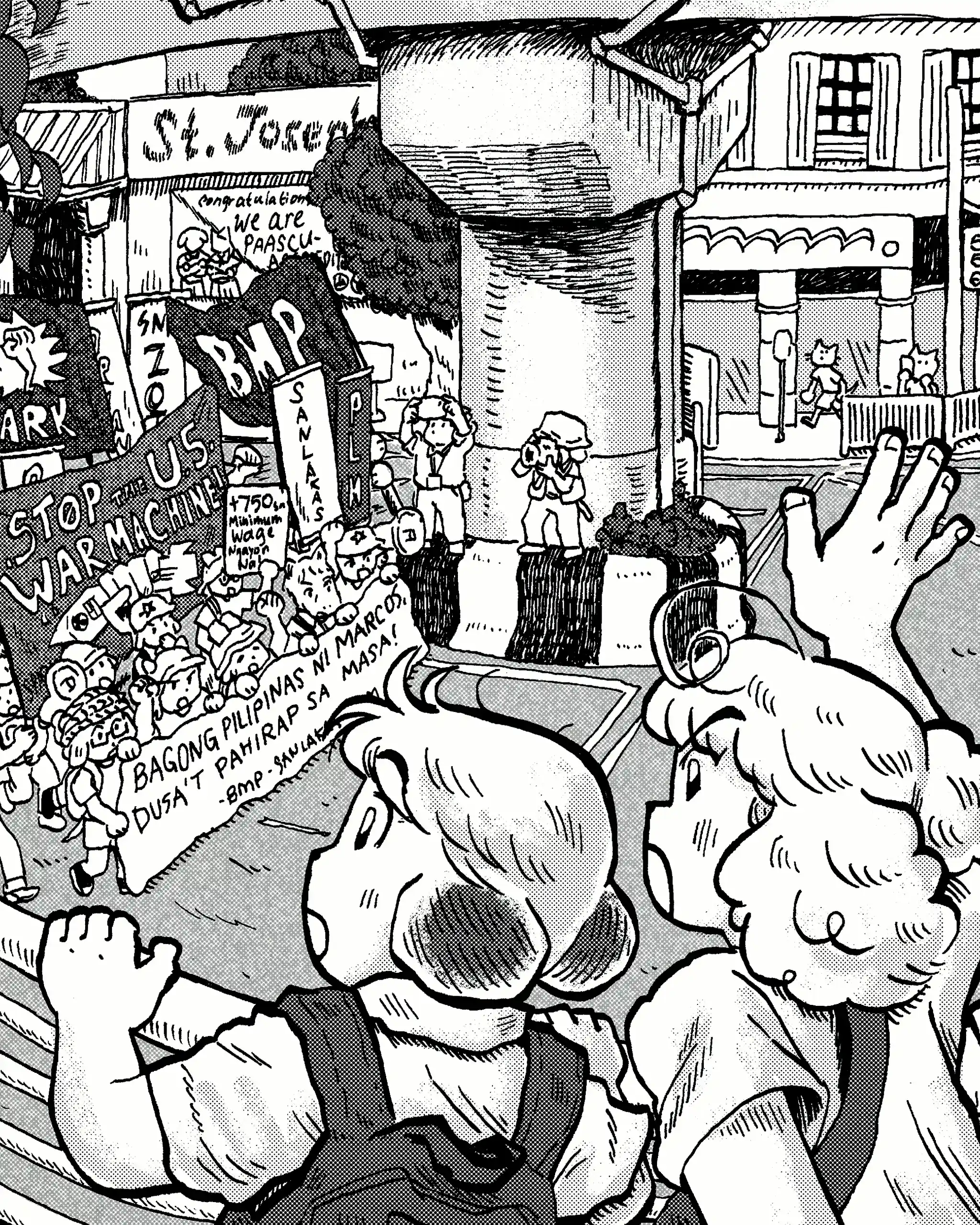
Maria Maranan, creator of Strike the Spark, puts it more bluntly. “I don’t want to market my book as just a ‘FilipinoFilipinoThe national language of the Philippines, widely used for communication, education, media, and culture.Go to Filipino Glossary product’ using easy, stereotypical markers,” she says. “I want you to feel the grit, the dirt, the smoke, and smell the exact smells of Manila on my pages.” That philosophy runs through the new generation.
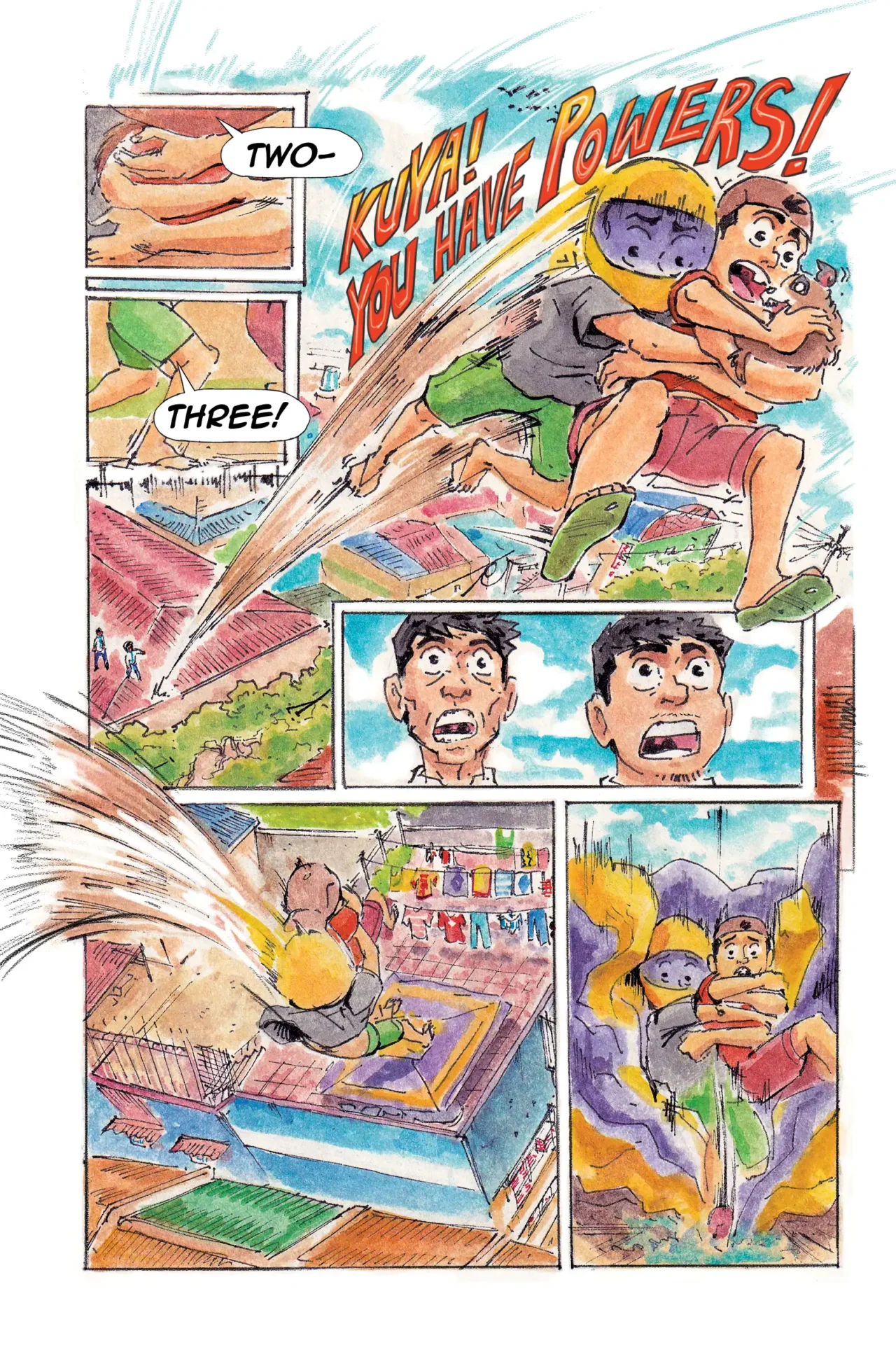
Lucas Lacorte’s Watchdog of Manila transforms the drudgery of commuting into a fantastical superhero version of the capital. Vaughn Pinpin and Tristan Yuvienco’s horror-comedy The Ticking Stone draws on the regional, often contradictory monsters they heard about growing up rather than a standardized version of FilipinoFilipinoThe national language of the Philippines, widely used for communication, education, media, and culture.Go to Filipino Glossary mythology. The approach was distinctive enough to attract a blurb from Dana Terrace, creator of The Owl House.
Even veterans who experienced the loneliness of the 1990s are being pulled back into the fold. Tobie Abad once produced comics in near isolation, burning files onto CDs and circulating work through primitive online communities. He eventually abandoned the medium. Years later, Herras found his old work and invited him back.
Abad’s new book, DILIMAN Generation Now, explores queer marriage, political repression, and salamangka— magic—without compromising its political teeth. Tan has acknowledged that Abad’s gritty 1990s urban fantasy helped inspire the mechanics of Trese.
“I’m incredibly envious of young people getting into comics today,” Abad says. “The community is completely unrecognizable.”
The Business of Being Creative
The biggest change, however, may be less romantic: somebody finally built the machinery around the artists. Komiket’s PICOF Creator’s Lab provides editorial guidance, sensitivity readers, production support, and assistance with international rights. Creators are trained to produce substantial graphic novels rather than the 96- to 128-page books that historically dominated the local market.
More importantly, the program protects creators’ ownership. Alumni retain 100 percent of their intellectual property rights and receive a 20 percent gross royalty rate, while remaining profits are reinvested into publishing new books.
For artists who would rather create than sell themselves, that distinction matters.
“I really would rather just draw and write the stories,” says Maranan. “I don’t want to bother with the business or selling part.”
The same ecosystem helped Renren Galeno move from home-printed comics circulated through Facebook and LBC packages to an international career. Her graphic novel Sa Wala, a slow-burning story about a mysterious rooster rampaging through a Davao slum, is almost aggressively local.
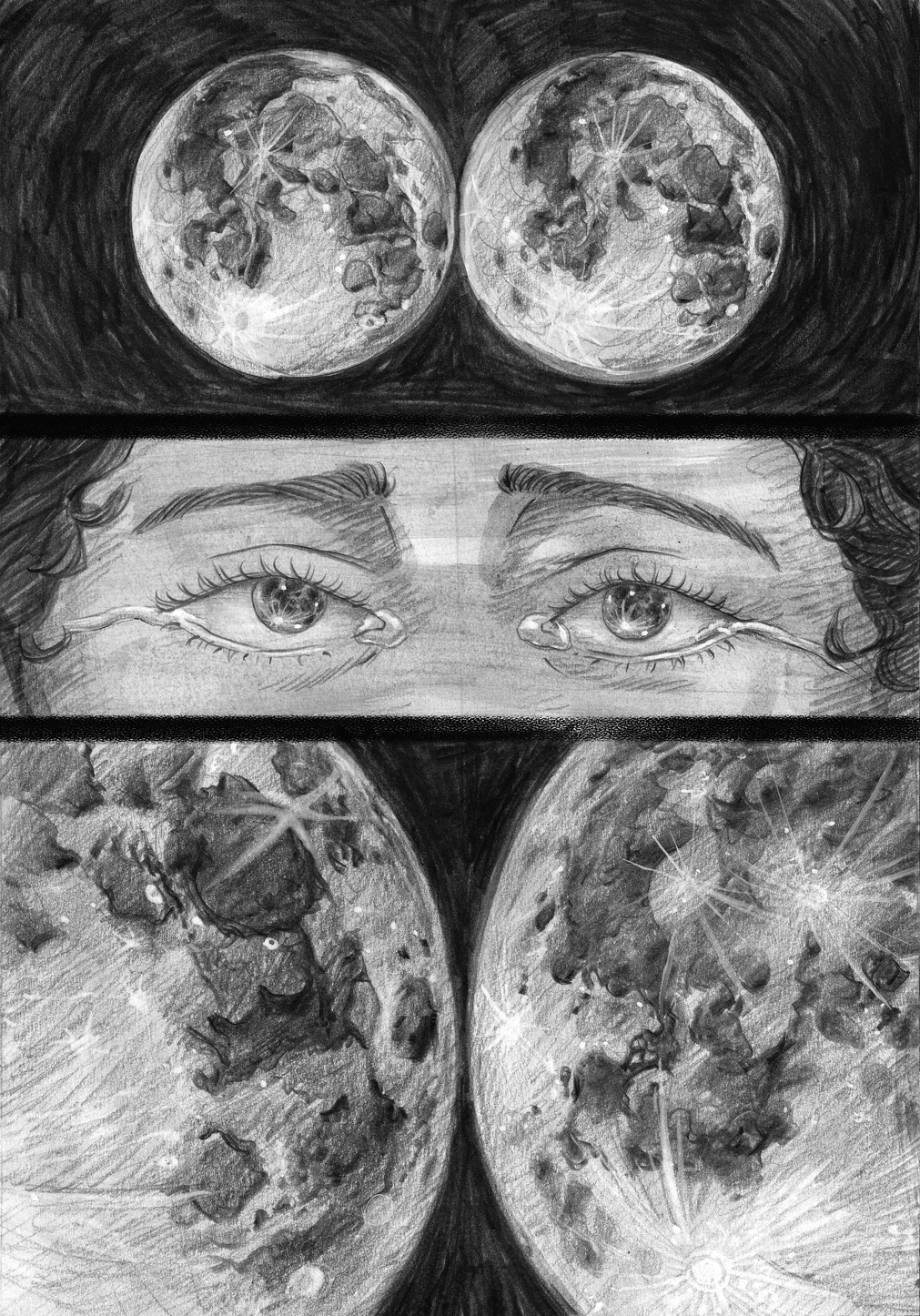
Galeno later illustrated Finding Maura for The Washington Post, becoming a Pulitzer Prize finalist. With support from Philippine translation grants, Sa Wala traveled abroad under different titles, including German, Turkish, and Brazilian editions.
At the Angoulême International Comics Festival, Galeno encountered original artwork by legendary manga artists. Yet what struck her most was the realization that her own deeply local work could travel just as far. “The book was very specific in its local culture,” she says. “But it’s sweet how international audiences can see their own human experiences reflected in characters that don’t look, speak, or act like them at all.”
Ultimately, Galeno’s journey reflects how the new generation has changed the equation. Armed with robust infrastructure and a protective ecosystem, these writers and illustrators no longer build stories around an imagined foreign gaze or wait for an external stamp of approval. Instead, by fiercely embracing the specificities of the country they inhabit—from Davao slums to regional folklore—they have proven that the deeply local is inherently universal. The real revolution isn’t that the global market has finally discovered FilipinoFilipinoThe national language of the Philippines, widely used for communication, education, media, and culture.Go to Filipino Glossary komiks, but that local creators have stopped waiting for the world’s permission to make them.
A version of this story appears in the November 2026 issue with the title “Komikeros Rising”
Frequently Asked Questions
Filipino komiks are comic books and graphic novels created by Filipino writers and artists.
Komiket is a nonprofit organization that supports Filipino creators through affordable community art markets and publishing initiatives.
Alamat Comics is an independent Philippine comics publisher launched in 1994 by Budjette Tan and other Filipino creators.