
Summaries were generated by AI. Generative AI is experimental.
Explore other styles:
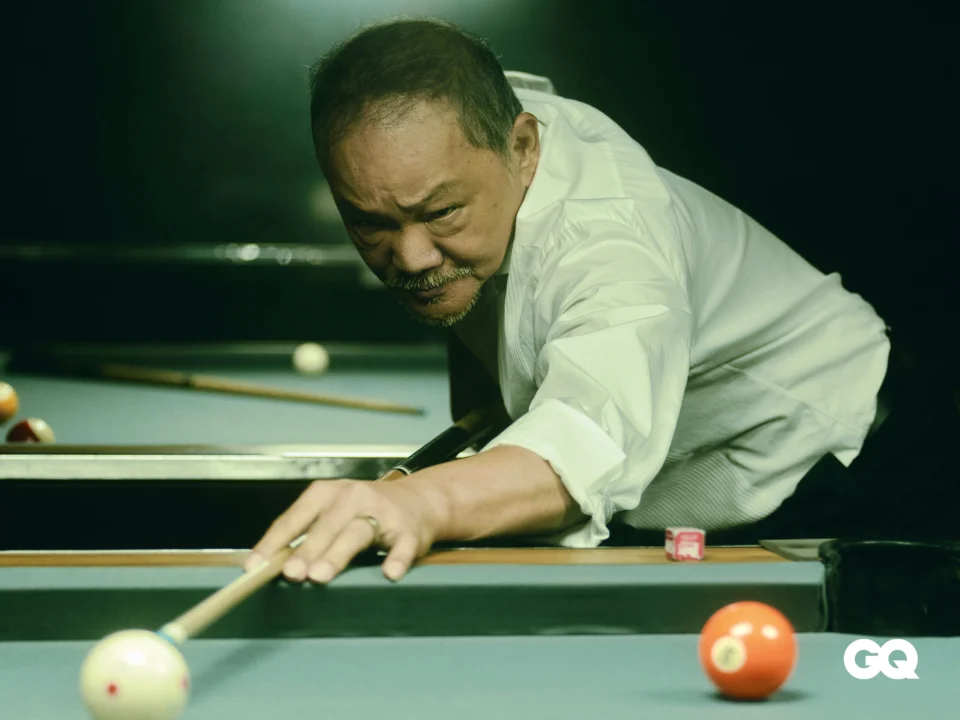
“I couldn’t find my suit, and I wasn’t sure what to bring,” Quark Henares began with his signature laugh. I had asked him to bring just a suit and leather shoes, but he had, predictably, arrived with enough clothes for several options. He carried a pile of them in his arms.
It must be the filmmaker’s instinct. After more than two decades behind the camera, navigating the volatile ecosystem of film production, that reflex is baked into his DNA: anticipate the chaos, over-prepare for every variable, and never, under any circumstance, show up with just one option. The same instinct seems to have followed him beyond the set, through a career that has taken him from independent filmmaking to corporate entertainment and now back in the heart of the local creative industry.
A few months earlier, Henares had moved back to Manila from Singapore, where he had spent four years as Head of Originals for the Philippines at Amazon Prime Video. His time at Prime, however, came to an abrupt end when the company shut down its Southeast Asian operations as part of a larger global layoff. As he settles into his new apartment, many of his things are still packed in boxes.
“I blame The Rings of Power,” Quark jokingly (half-jokingly) said, referring to the Lord of the Rings spin-off series that reportedly cost Amazon almost $1 billion. “We didn’t even get a chance to fail. But the vindication is that one of the shows we made that came out after they closed, called Last One Laughing (starring Vice Ganda), is, to this day, the highest-performing series in Prime Video Southeast Asia history.”
There are no regrets. He loved the Singapore chapter. But it is obvious he is glad to be back on the Manila tarmac. His corporate gig at Amazon was, by all metrics, a corner-office executive desk job. If you spend more than five minutes with Henares, you quickly realize he is not an office guy; he is a creature of the field, an engine fueled by proximity to people, subcultures, and the collaborative friction of other creatives.
“The hurdle I had to overcome while working at Prime, was basically, it wasn’t as hands-on. You say yes or no, and give notes. You’re not on set. Even when I was with Globe Studios, I was on set, really collaborating with the filmmakers. There [at Prime], I was the office guy,” he says.
These days, Henares is back where he’s most comfortable, juggling three jobs he’s passionate about: Chief of Content & Storytelling at Lennon Group, an independent creative collective that combines advertising with social impact work; a producer and partner at boutique production company Rein Entertainment; and, most recently, the Head of QCinema Industry 2026, an industry program for one of the country’s most celebrated international film festivals. Oh, and did I mention he’s writing a new horror film, too?

Living and Breathing Cinema
Ten years ago, I interviewed Henares when he was the head of Globe Studios, the film and television studio of Globe Telecom, in 2016. We were in his then-new apartment in BGC, which could very much be considered a film lover’s dream home: movie posters from films he had written and directed covered the walls, neon signs flashed clever pop culture catchphrases, and modern furniture filled the space. In one corner was a glorious wall of Criterion Collection DVDs and Blu-rays.
That particular interview didn’t get anywhere. Once we started talking about films, we were off. You see, Henares lives and breathes cinema. Talk to him about any filmmaker, era, or genre, and he’ll have something to say. It’s the kind of conversation that can easily swallow an afternoon.
During that interview, Henares lent me an out-of-print copy of Pierrot le Fou, the French New Wave film by Jean-Luc Godard that he wanted me to see. Ten years later, I realized I still had it. So when I was going to see him again, I brought it with me. I kept it in my bag until the interview was over, though, because I knew that if I brought it up too early, the two film nerds that we are might start talking about movies and never stop.
There was plenty to talk about this time, anyway. In the years since that first interview, Henares has expanded his work in film far beyond his own filmography, from producing and championing FilipinoFilipinoThe national language of the Philippines, widely used for communication, education, media, and culture.Go to Filipino Glossary filmmakers to taking on roles across the wider industry. This year, he joined the QCinema International Film Festival team for the first time in an official capacity. As the head of QCinema Industry, he’ll bring together local and international filmmakers, producers, cultural groups, and industry partners to exchange ideas and build connections in a series of talks and masterclasses happening between November 18 and 20, 2026.
QCinema is a festival Henares knows well and, by his own admission, his favorite in the country. Over the years, he has populated its margins as a casual viewer, a fiery panelist, a juror, and, in a beloved annual tradition, the festival’s late-night DJ. But this is the first time he’s helping build the infrastructure from the ground up. Even with an executive title, he still speaks about the lineup with the breathless energy of a teenager at a midnight screening.
“It’s really the international festival of the Philippines,” he says, before rattling off some of the films he’s most excited to see, from Jane Schoenbrun’s Teenage Sex and Death at Camp Miasma and Jordan Firstman’s Club Kid to Isabel Sandoval’s Moonglow and John Torres’ Remotes. “We’re basically showcasing what’s great in world cinema.”
Rakenrol is Here to Stay
In 2007, Quark Henares “stalked” Quentin Tarantino when he was visiting Manila to receive an award from the Cinemanila International Film Festival. “I gave him DVDs of my films, and I think he thought I was kind of a fanboy, which I was, to be honest,” he says with a glorious chuckle. “But I think he saw the billboard of Super Noypi, and he saw the poster of something else at a video store. He probably thought, ‘This Quark guy is bigger than he makes himself out to be.’ So he decided to watch the DVDs. To his credit, what the f**k? He was here in the Philippines for four days, and he decided to watch my DVDs!? So that’s when we hung out till like eight in the morning.”
The anecdote is endearing not because Henares had one-on-one access to an Oscar-winning filmmaker, but because it captures something disarmingly unvarnished about him. There’s no vanity in the story, just a film obsessive who was ballsy enough to hand one of his cinematic heroes his work and hope for the best. It’s hard not to imagine how nerve-racking that must have been.
Fortunately, Henares had the filmography to back up the confidence. By that point, he was already being regarded as one of Philippine cinema’s brightest new talents. His early films weren’t simply the work of a novice filmmaker finding his footing. Critics and audiences saw in him a filmmaker interested in youth culture and FilipinoFilipinoThe national language of the Philippines, widely used for communication, education, media, and culture.Go to Filipino Glossary identity through the lens of pop culture, even if Henares himself didn’t necessarily see that thread.
Those themes came into sharper focus with Rakenrol in 2011, a cult classic about two friends who put together an unlikely crew to form a rock band. The film captured the youth culture of its time while also preserving a particular moment in the Philippine art and underground music scenes. Henares brought together a who’s who of local musicians and artists, many of whom contributed music or appeared in cameos, turning the film into something of a time capsule.
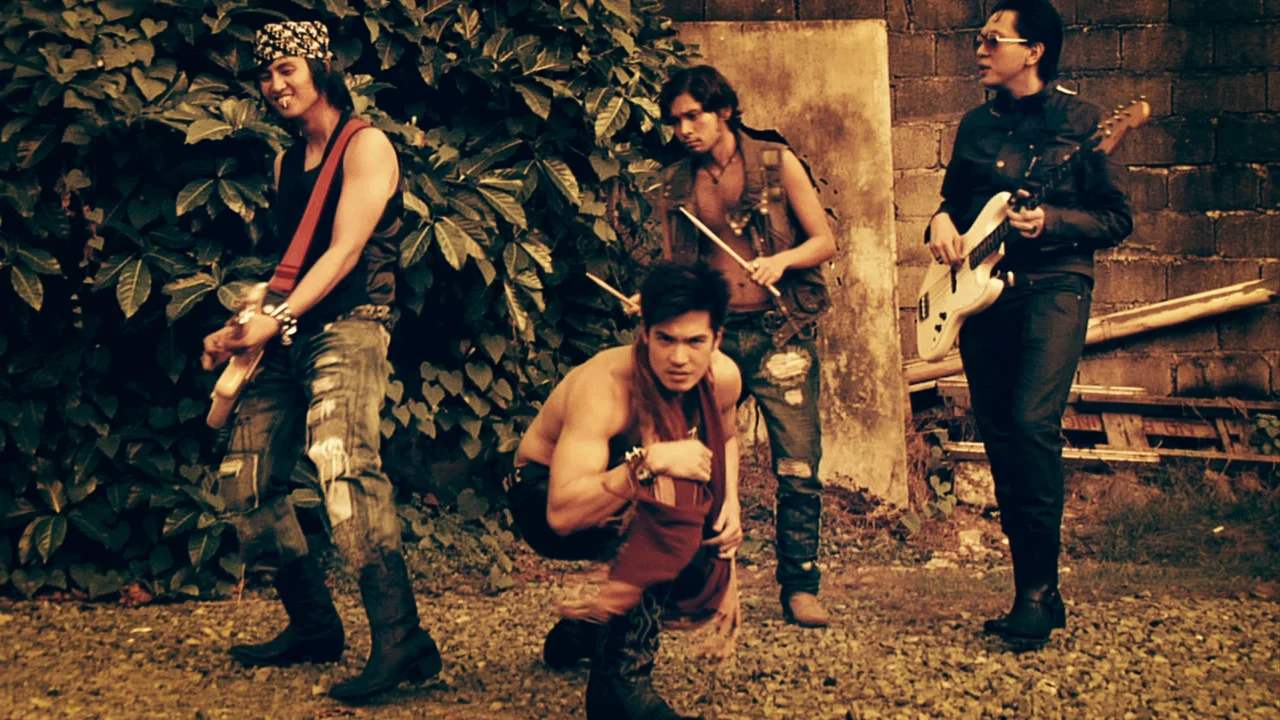
In 2026, Rakenrol celebrates its 15th anniversary, and Henares is still surprised by how much the film resonates with young audiences. At a recent screening at Ely Buendia’s club Sari Sari, he expected a modest turnout. Instead, the screening sold out.
“Honestly, Rakenrol is such a small film. We didn’t expect people to really care about it,” he explains. “Diego Castillo, my co-writer, is my best friend. We’re also really close to [leading actors] Glaiza De Castro, and Ketchup Eusebio, and the cast, so we just wanted an excuse to hang out. And Sari Sari was doing a lot of these film screenings, so I was like, hell, let’s just do one. In two days, it got sold out. Maybe 75% of the audience was Gen Z, and I was like, ‘What the hell is happening?’ We were really caught by surprise.”
The surprise was understandable. The bands featured in Rakenrol are very much products of their time, so Henares was taken aback to find younger audiences singing along to the likes of Urbandub, Taken by Cars, and Teeth. He brought up the experience while recording a reunion podcast for the film with his collaborators. After the recording, a Gen Z technician came into the room and explained why the film resonated with them.
“Oh, it’s because we never really had that culture with the bands all together, hanging out. It’s something we wish we had.” The comment made Henares think about how difficult it can be to recreate that sense of community today, especially in an era shaped by algorithms and quick-hit content.
“I think about the intersectionality of music, film, and the art scene back then. It’s not as much there anymore today,” he says. Luckily, Rakenrol captured a little bit of it in a bottle.


The Kids Who Get It
“I love Gen Z so much,” Henares told me in the corner of the room as the photographer prepared the first layout. Not just because they showed up for him at the Rakenrol anniversary screening, but because they show up for cinema in general. “I had a garage sale selling old Kubrick movies and whatever, and the people who came out were all kids. They were going nuts for Audition by Takashi Miike, then a Todd Solondz film that wasn’t even famous. I literally heard them say, ‘I love this, I don’t know where I’ll play this, but I’m going to buy it.’ Galing!”
Unlike many people of a different generation, Henares, a Gen X-er, is remarkably positive about Gen Z. He appreciates their interest in the analog and hopes social media platforms like TikTok and Instagram will spread the fascination, inspiring more people to become cinephiles. It’s also part of what keeps Henares connected to younger audiences today. He continues to embrace youth culture much as he did with his earlier films, like Keka and Rakenrol, and that connection has allowed his work to find an entirely new generation of fans.
Hopefully, his next project will resonate with them, too. Henares gave me a scoop on the day of the shoot, revealing that he is working on a horror film. Unlike his previous work, Wag Kang Lilingon, which slightly ventured into the genre, Henares considers this new project his first full-fledged horror outing.
“I’m currently writing it with Dodo Dayao,” he says. “I’m super excited. We met about it last week. I’m a big horror fan. I’ve kind of been immersing myself as of late. But it proves to be a major challenge in the sense that you kind of have to give yourself obstructions. Like no pop music, which I might break. Or no jokes, which is also my thing. It’s interesting.”
Still, it’s hard to imagine Henares completely abandoning his signature style. For a filmmaker whose personality is so stamped into his work, even a change in genre is unlikely to erase the things that make a Quark Henares film feel like one. His co-writer, Dodo Dayao, already sees parallels with Henares’ previous work, even at the early scriptwriting stage.
“Dodo actually says it feels like a trilogy to my first two movies,” he says. “Which did not occur to me at all. Honestly, come to think of it, with all the stuff I’ve been doing, there’s a bit of a meta factor. There’s commentary on media and modern culture. I haven’t been this invested in a script in a while.”

Cinema, Still
As Henares continues to write his new film and work on the upcoming QCinema, he hasn’t left his other responsibilities behind. At Lennon, an advertising agency focused on social impact, he serves as Chief of Content & Storytelling. He joined shortly after having a child, drawn in part by the opportunity to work on more nonprofit projects and, as he puts it, to help make “the Philippines a better place for the children.” Then there’s Rein Entertainment, where he is a partner and producer. The company recently released Drug War on YouTube and Salvageland on Netflix, with the film Laya, starring Andrea Brillantes, next in line.
It all brings him back to the thing that has been at the center of his career from the beginning: getting stories made, finding audiences for them, and making sure Filipino cinema continues to move forward. Despite the familiar complaints about the state of the industry, Henares is quick to point to the talent that keeps emerging.
“It’s very exciting. Sometimes, you shouldn’t go to Threads, where everyone has a f*****g hot take about everything. Like, ‘Oh, Philippine cinema sucks.’ I think Jose Javier Reyes got in trouble for saying it was the audience that was the problem,” he says, referring to the FDCP chair’s recent comments about the state of Philippine cinema. Reyes later clarified the remarks, arguing that audiences won’t watch movies they don’t want to watch, and that this is part of a bigger issue in which filmmakers also need to do their part by making films that audiences want to see.
“But I get where he’s coming from. There’s so much talent, you know? John Torres just came from TIFF with The Remotes, and I’m super excited to see that. Lav Diaz just won in Venice. You have Filipiñana. Even Hollywood is taking note with Forgotten Island. It’s like, damn, everyone loves the Philippines, except the Philippines. It feels that way sometimes.”
What he’s getting at is the strange disconnect between the attention FilipinoFilipinoThe national language of the Philippines, widely used for communication, education, media, and culture.Go to Filipino Glossary cinema can receive abroad and the difficulty some local films have finding an audience at home. There are plenty of reasons for that, from the economic realities of watching and making films to the challenges Filipino filmmakers face in getting their work into cinemas in the first place, including large taxes and fees imposed by the government. But none of that seems to stop Henares from looking for the next film worth talking about.
“It’s inspiring ‘cause I don’t think anyone here is actually making money, but they just keep trying,” he continues. “Cinemalaya this year was pretty strong. Ang Mag-iina, A.ni.mál, and Status: Rejected—all good films. Ganda!”
By the time our conversation ended, Henares had me thinking about local cinema in a way I hadn’t expected. I opened my bag, slipped the copy of Pierrot le Fou I had borrowed from him all those years ago back into his hands, then pulled out my phone and Googled what Filipino film was coming to cinemas next. As I searched and watched trailers, he stepped onto set for a few quick layouts, packed his mountain of clothing, and headed for the door. “Thank you guys, see you at QCinema!”
A version of this story appears in the November 2026 issue with the title “Quark, Refracted”