Summaries were generated by AI. Generative AI is experimental.
Explore other styles:
The first time GQ Philippines tried to pursue this story, deputy editor Chino Hernandez’s rosary broke. Perhaps it was a sign that we should have left this one alone, but we thought otherwise. There is a distinct occupational hazard to being morbidly curious about exorcism and the occult, and it is not necessarily the risk of getting possessed. Sometimes, it is simply the relentless urge to know what actually happens inside the Catholic Church when someone claims there is something diabolical in the room.
So we kept trying. Schedules shifted, plans dissolved, and meetings were pushed back. By the end of September—after enough failed attempts to make Chino’s broken rosary feel increasingly prophetic—we finally stepped inside the new Saint Michael Center for Spiritual Liberation and Exorcism in Guadalupe Viejo, Makati.
At that point, joking that something was keeping us away became unavoidable. There was, of course, no proof of any supernatural intervention. Manila simply does what Manila does, with schedules falling apart and Google Calendar becoming the real spiritual battle.
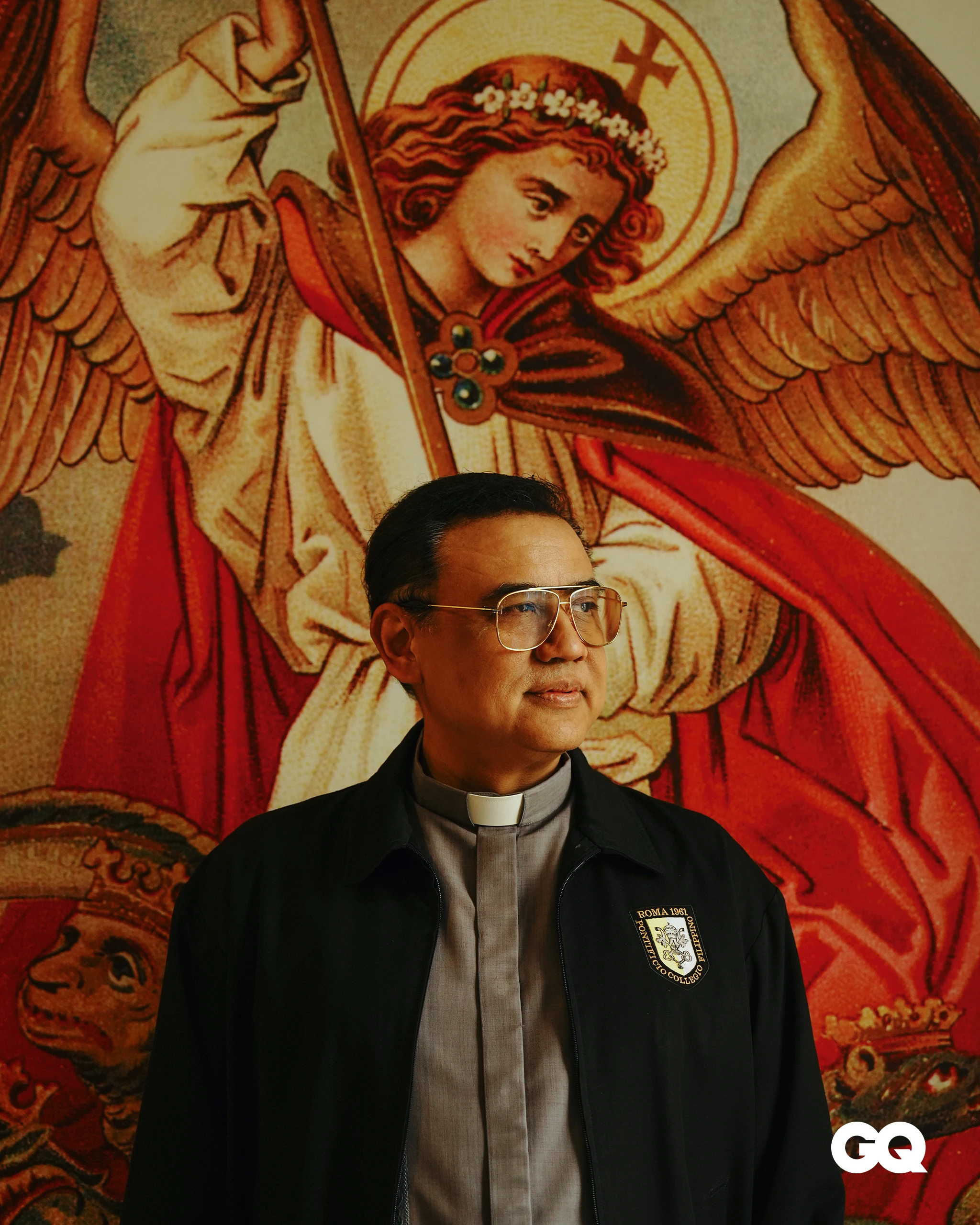
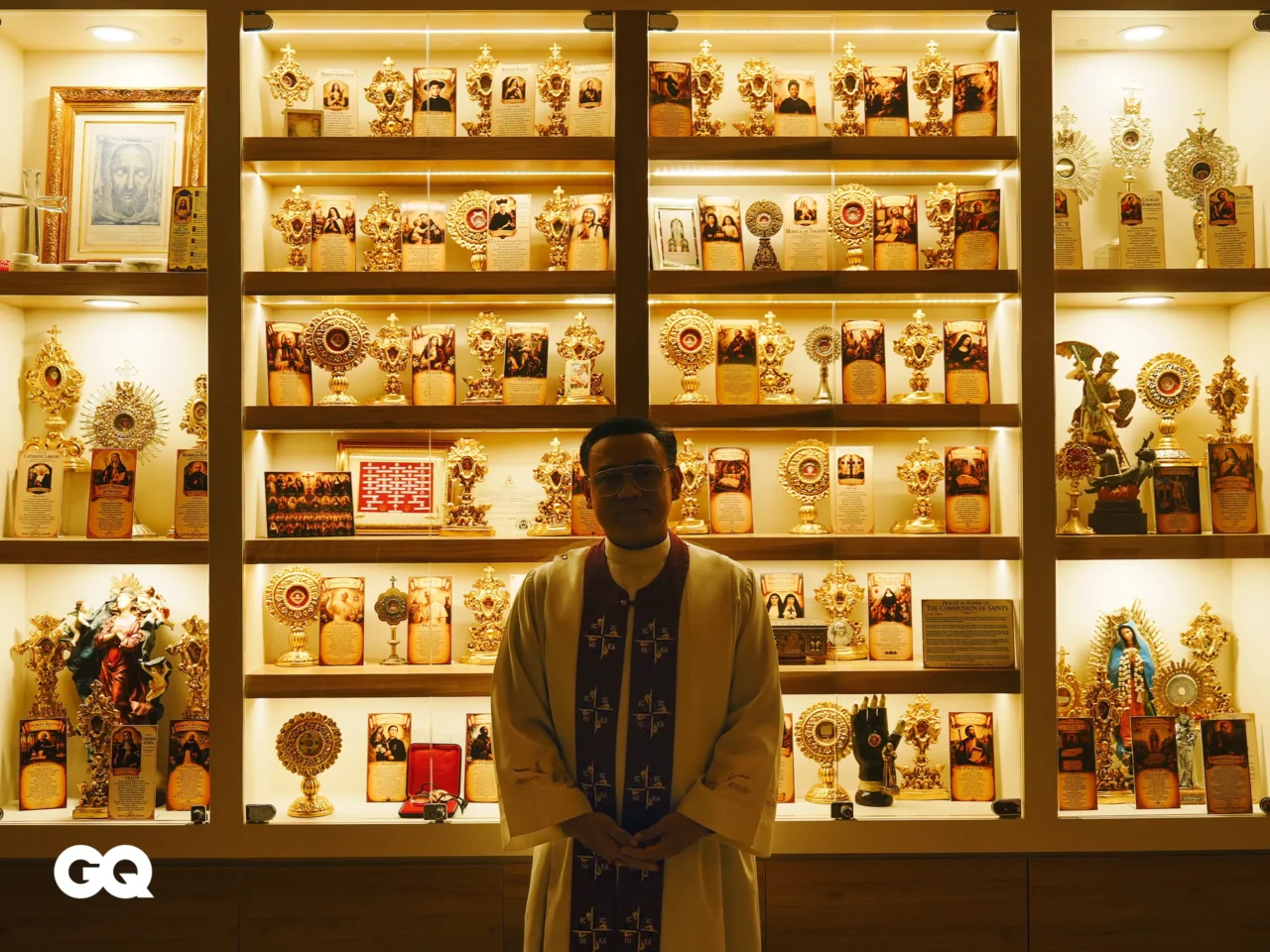
The center itself is almost aggressively unlike the gothic backdrops movies have conditioned us to expect. There are no crumbling stone walls, no dim corridors lit by flickering candles, no giant crucifix dangling ominously over a thrashing child. The building is modern, bright, clean, and functional. It looks exactly like a place you would visit for a corporate consultation or an office meeting—and that is entirely intentional.
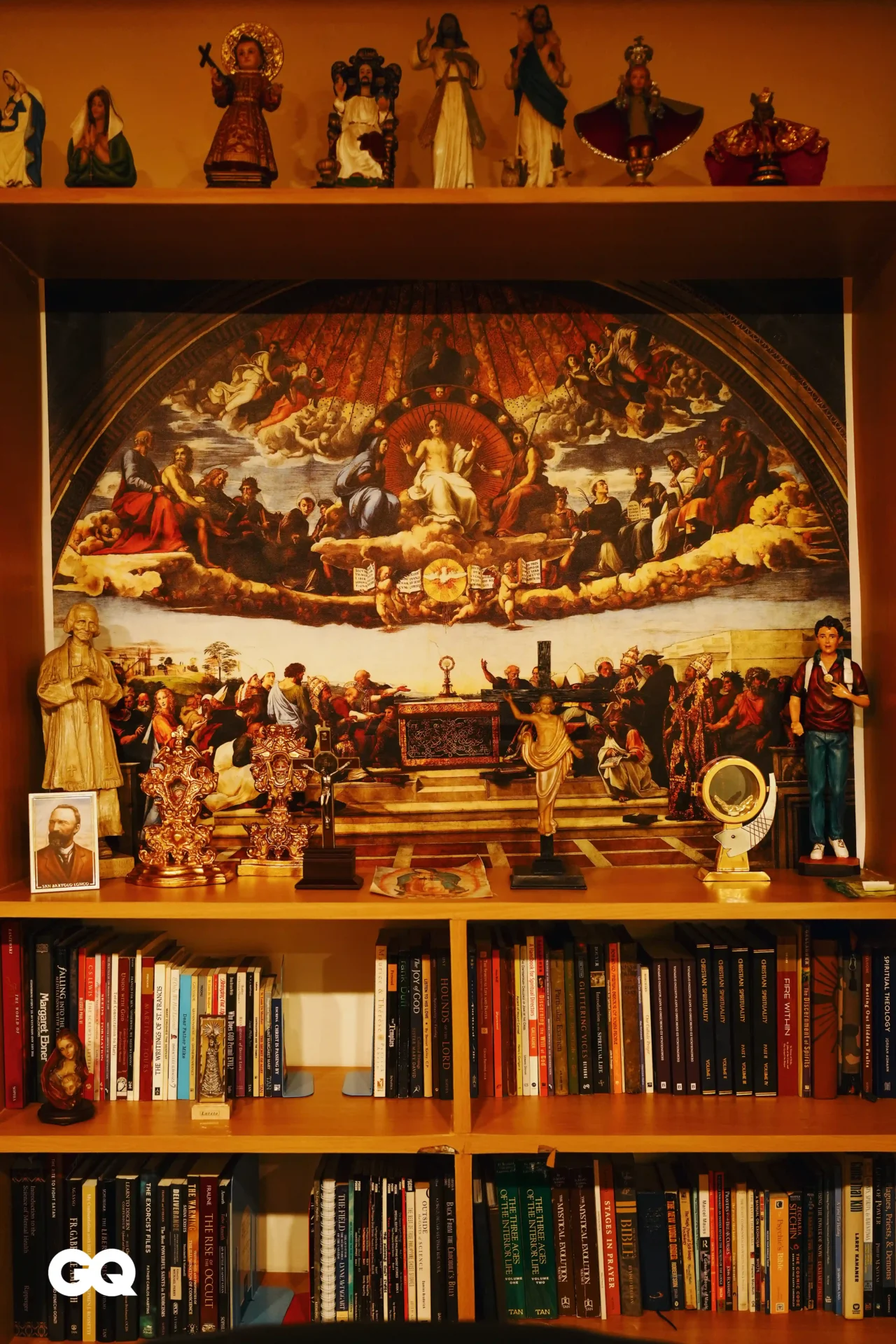
Inside one of its rooms, Rev. Fr. Jose Francisco “Jocis” Syquia, the chief exorcist of the Archdiocese of Manila, sits surrounded by books. Theology and spirituality occupy space beside psychology. Then there are the titles that immediately make you look twice, such as occultism, witchcraft, and demonology. The shelf behind him is almost too perfect a visual summary of his work, with metaphysical questions of faith and scientific questions of the human psyche sharing the same room.
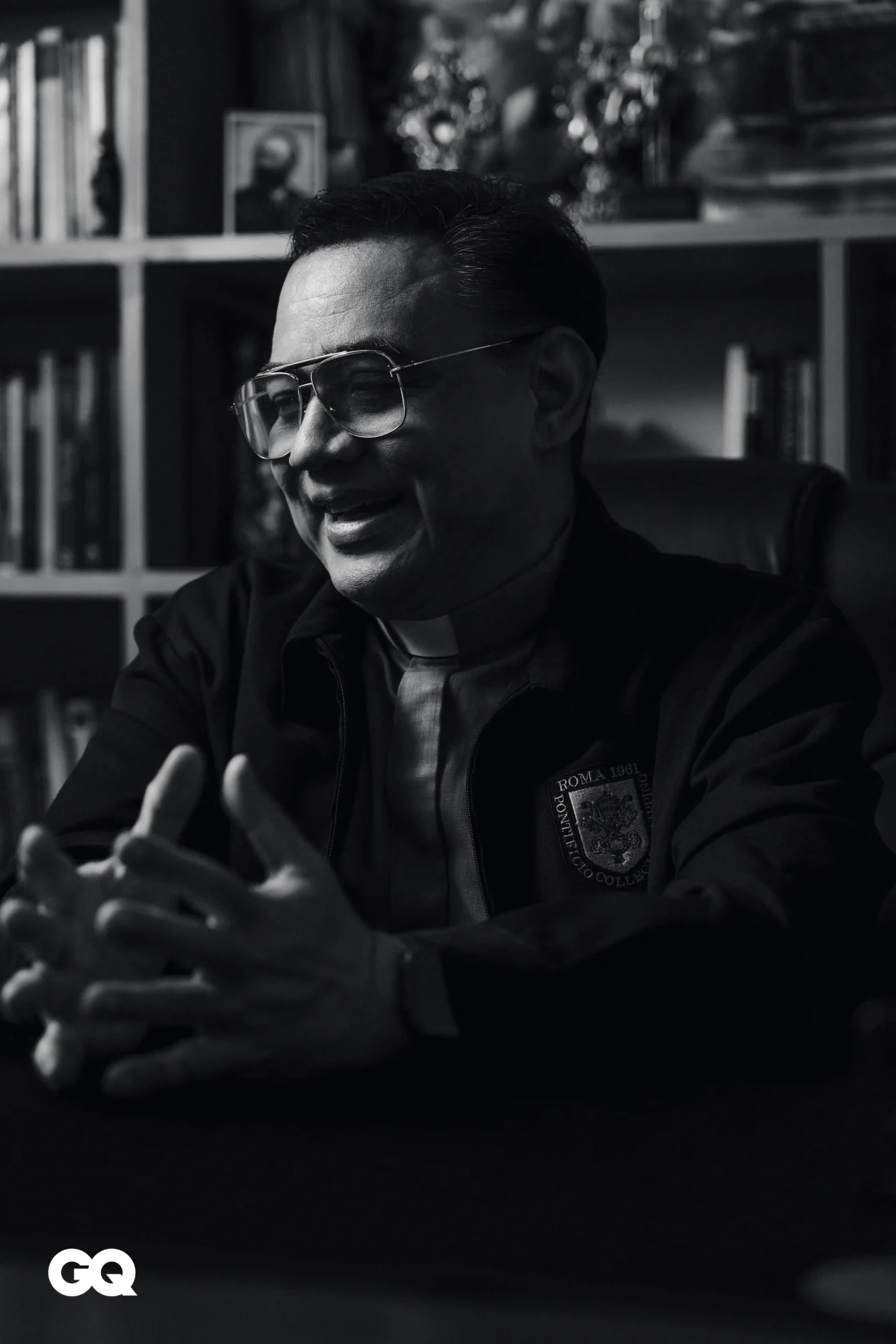
With a master’s degree in psychology, training in sacred and spiritual theology, and specialized studies in exorcism and deliverance, Syquia occupies an unconventional position within the Church. His psychology background is particularly important because Catholic exorcism is not supposed to begin with the assumption that a person is possessed. The Church’s own Canon law emphasizes discernment and requires priests to establish that an apparent case is not simply psychological or medical before conducting a major exorcism.
The road to this ministry, however, began decades before there was a Saint Michael Center, a national association of exorcists, or a room full of books on how to expel the supernatural.
Around the fourth grade, the idea of the priesthood first entered Syquia’s mind, partly influenced by an uncle who was a priest. Then came high school and college, and the vocation began to lose its grip. At the University of Santo Tomas, he threw himself into student politics and social issues during the turbulent Marcos era, serving as a student leader who was deeply engaged in the volatile political atmosphere of the time. After graduating with a philosophy degree, he entered the workforce, considered law school, and eventually found himself drawn to Eastern philosophy.
“I was a Sunday Catholic,” he told me when we talked about that chapter of his life. Mass was still part of the routine, but confession and the rest of his spiritual life had begun to fall by the wayside. Buddhism drew his attention, followed by Hinduism and practices that went beyond studying the religions. His interest eventually led to experimentation with what he describes as psychic powers and an attempt to develop his “third eye.”
Then came months of what he describes as diabolical harassment. The experience, by his account, was frighteningly intimate. He said he would see the devil when he closed his eyes and felt a presence around him. Sleep became difficult, and fear followed him everywhere he went. The solution was not some dramatic confrontation worthy of William Friedkin’s The Exorcist, but a return to the fundamentals of Catholic practice, which were daily Mass, confession, and prayer. After nine months, the experiences stopped.
“God became very real to me,” Syquia says, and that realization eventually led him back toward the vocation he had considered as a child. He entered the seminary in 1989 and was ordained in 2000. Exorcism followed the next year.
While assigned to a local parish, Syquia was asked by his bishop to handle individuals experiencing what appeared to be severe spiritual distress. His background in psychology made him uniquely equipped to distinguish between the mental, the spiritual, and, within the Church’s framework, the diabolical. At the time, there were virtually no priests around him trained to handle this kind of work.
An unlikely catalyst was a cassette tape. Syquia had brought an audio recording by Father Gabriel Amorth, the legendary chief exorcist of Rome, and left it sitting untouched on his bookshelf. One day, with nothing much going on at the parish, curiosity finally won. What surprised him was not the existence of exorcism itself, but the fact that the ministry was still very much alive.
He began preparing a rudimentary exorcism kit—holy water, prayers, a crucifix, the usual sacramentals—without seriously expecting that anything would come of it. “I didn’t think that I would really encounter a real case,” he recalls. “It was more ‘just in case.’” A week later, his first case arrived.
The man who walked through the door was big, and once the prayers began, according to Syquia, he became violent. Suddenly the theoretical part of priesthood had become very physical.
“The first time that happened, I was really afraid,” he said. “I was not trained for this.”
One particular detail during the prayers led Syquia to believe, within his understanding of the case, that he was dealing with something beyond the ordinary. The man appeared to react and respond to particular commands in the prayer even when he himself could not hear the words being spoken. More cases began arriving soon after. “The Lord was bringing me cases,” he says, and what started as an assignment became a ministry, and what started as a ministry became a responsibility he could not easily walk away from.
The early years nearly burned him out. The sheer volume of cases was overwhelming, and the emotional toll was immense. A priest trained for Sunday homilies, pastoral counseling, and standard sacraments suddenly found himself spending his working hours confronting people at the absolute darkest, most fragmented points of their lives.
“I had to enter a world which I didn’t want to enter, but I had to enter because the cases or the victims who were asking me for help were still in that world.” The funny thing is that he never imagined staying as an exorcist for very long.
“I wanted only to be there in the ministry for two years at the most, and I would ask my superiors, or other priests, when they wanted to retire, and they said, you know, Joseph, ‘in the land of the blind, the one-eyed man is king,’ and that means that you think you know little, but we know even less than you, so you’re the most qualified person here.”
As the years went on, a structural crisis emerged: the number of people seeking help was skyrocketing, but there were no dedicated spaces to receive them.
Before Saint Michael, finding a parish willing to host an exorcism could be surprisingly difficult. Some priests were concerned about frightening parishioners. Others did not know what to expect. There were worries about what might happen inside the church, whether a case would somehow affect the parish, and what people might think if they saw an exorcism taking place. In other words, the Church had a growing ministry that occasionally struggled to find a room.
The solution required nearly a decade of patience. According to Syquia, the planning, fundraising, and construction of the center spanned seven years. The result is a permanent, state-of-the-art home for the Archdiocese of Manila’s exorcism ministry, a specialized training academy, and the headquarters of the Philippine Association of Catholic Exorcists (PACE).
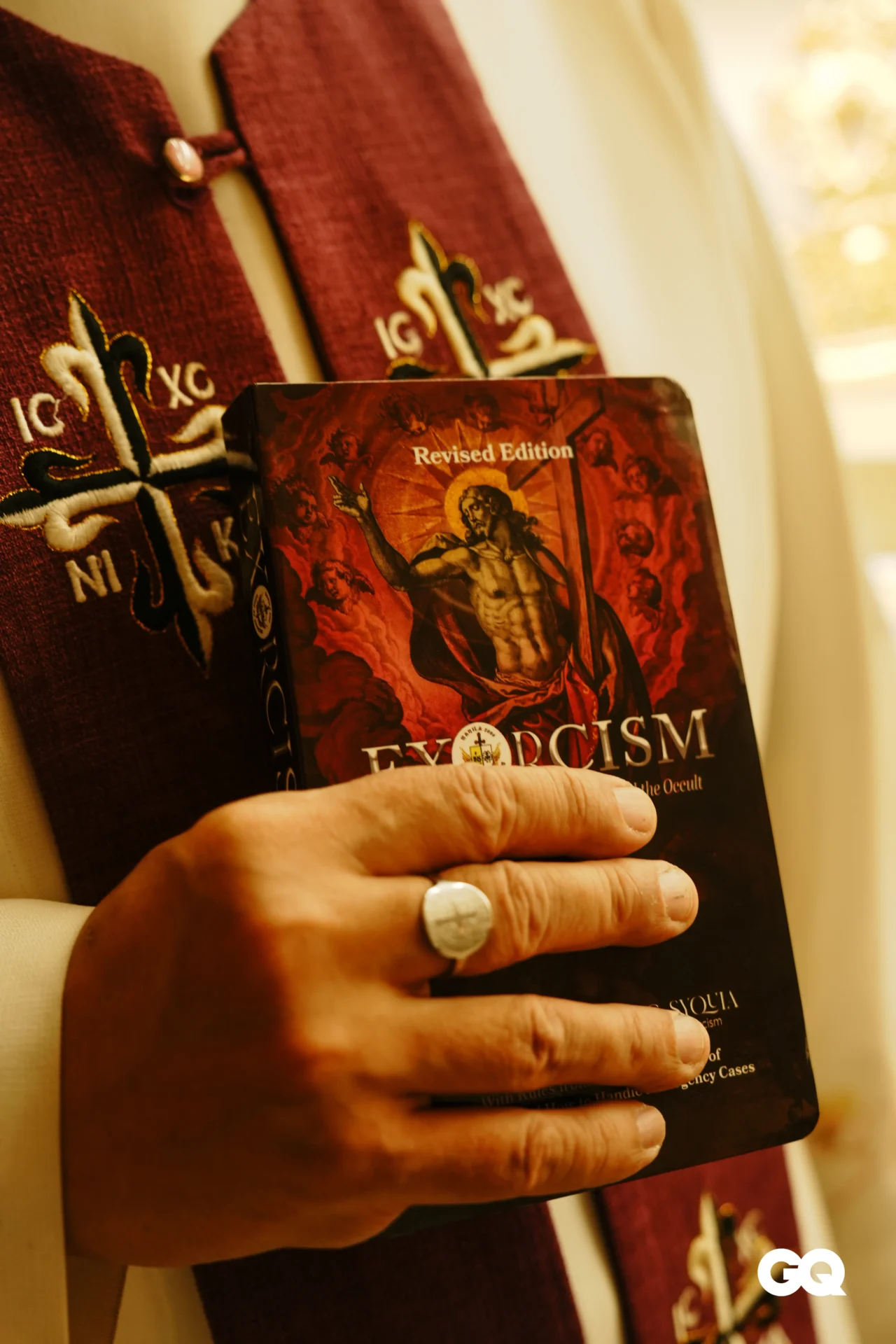
That final designation is critical, as the Saint Michael Center is not merely a venue for deliverances; it is an educational institution. Institutional training is now the project’s core engine. The association currently boasts around 250 delegated exorcists across the Philippines—a staggering leap from the isolation Syquia faced when he started in 2001. More trained priests mean a more distributed workload, ensuring that desperate families no longer have to spend months on a waiting list.
When I asked why the center needed to become a training institution instead of simply a place to perform exorcisms, Father Jocis gave an answer that sounded almost suspiciously corporate. “It’s a force multiplier.”
For a ministry dealing in fallen angels and spiritual warfare, it was probably the most management-consultant-like phrase I had heard all day.
There is also an ambition for the Philippines to become a regional center for the ministry. Syquia points to the country’s huge Catholic population and the willingness of Filipinos to approach the Church with spiritual concerns. The center intends to eventually train priests from elsewhere in Asia as well.
Getting into the ministry, however, is not as simple as being fascinated by the supernatural. Curiosity, in fact, can be disqualifying. “When priests simply volunteer without any cases coming to them, that’s already a red flag for me,” Syquia explains. Young priests can be attracted to exorcism because it is unusual, exciting, or seems like an especially noble assignment, but that is the wrong motivation. Priests who train are expected to have actual pastoral cases, and they must have their bishop’s permission.
“We don’t want any lone rangers or loose cannons.” The same caution applies to the people who come to the center.
Contrary to what horror films suggest, the process does not begin with someone being strapped to a bed. There are interviews, assessments, and psychological and medical considerations to address. Syquia says the team looks at how the problem started, the person’s family and emotional history, and whether there are circumstances that, within the Church’s understanding, could constitute a diabolical opening. Preparation comes before any exorcism, followed by evaluation and continued spiritual support.
That last part may be the biggest surprise in understanding what happens here. “Most of the time, our ministry is not simply expelling demons. It’s actually bringing the person back to God,” he adds.
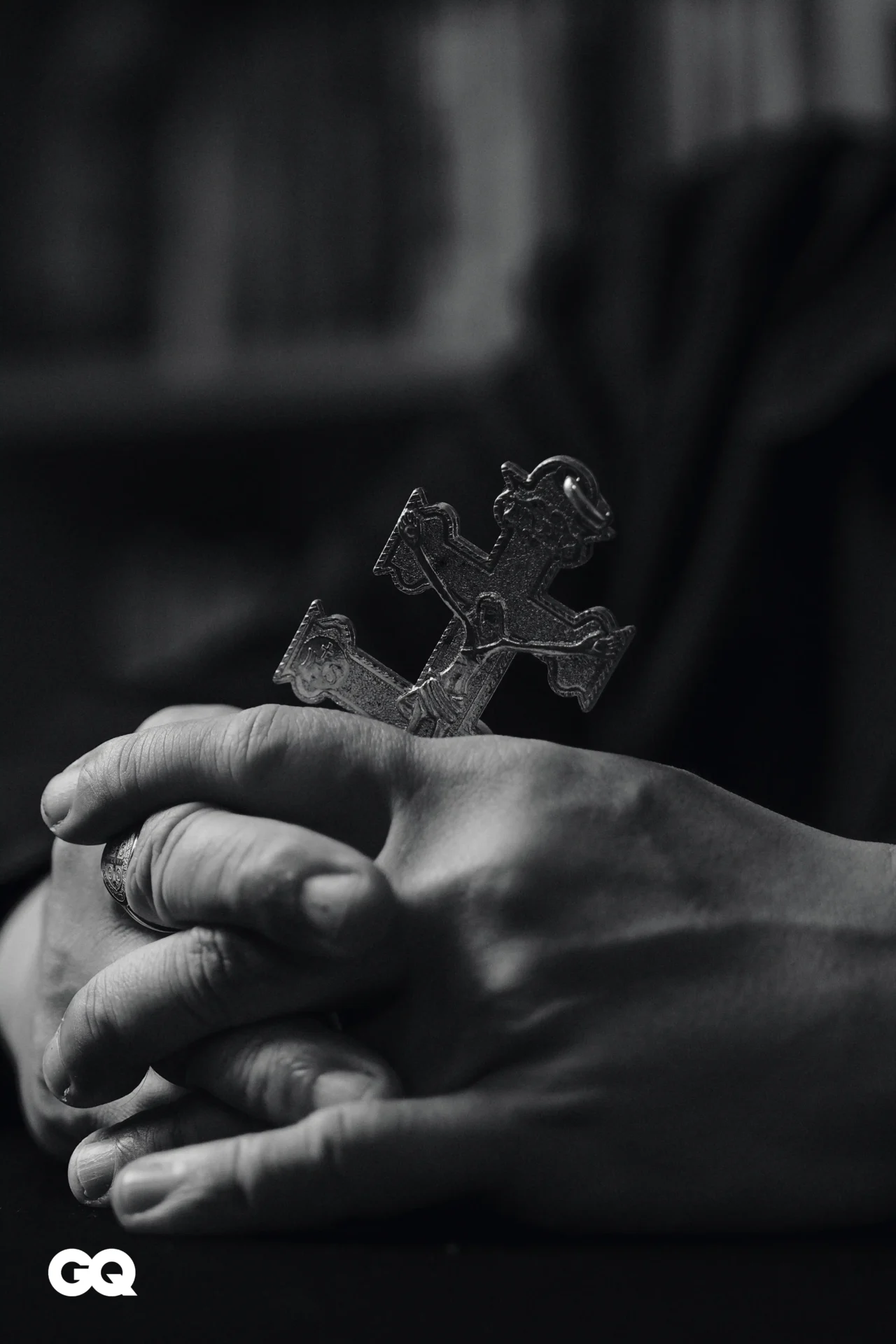
His psychology background becomes particularly relevant when discussing the people who arrive at the center. Many cases involve histories of bullying, sexual abuse, family problems, trauma, anger, fear, depression, and fractured relationships. Spiritual concerns, in his framework, cannot simply be separated from those human experiences. That is also why the center incorporates doctors, psychiatrists, psychologists, and counselors.
“Science is a gift from God,” Syquia tells me. Medicine and psychology have their place, he argues, but science deals with what can be empirically observed, while the spiritual dimension requires a different kind of discernment.
The resulting institution is an odd but strangely logical hybrid, part chapel, consultation room, classroom, office, and spiritual battleground under one roof. The Hollywood version would have you believe the exorcist spends all day yelling at demons. The actual job, at least according to Syquia, involves considerably more listening.
There is another distinction he is keen to make. In an exorcism, there are four characters: the devil, the victim, the exorcist, and God. It might look from the outside like the priest and the demon are the principal players, but Manila’s chief exorcist sees it differently.
The priest has a function, but only temporarily. “What is left is God and the victim in a relationship of love.”
After over two decades, the work has also changed his understanding of evil. What he once considered an abstract concept now feels tangible within the worldview that informs his ministry. The comparison he reaches for is not particularly cinematic. It is a house with cockroaches.
You see one or two crawling around and assume that is the problem. What you do not see is the infestation underneath. That, he believes, is how the diabolical works. Yet for all the talk of demons, darkness, and spiritual warfare, the feeling that stays with you after talking to Syquia is surprisingly reassuring.
Fear, in his view, is often a product of ignorance. He compared the devil to COVID-19, arguing that something becomes less frightening once you understand its limits and how to protect yourself from it. “The more you don’t know about him, the more you will be afraid of him,” he explains, and the answer, ultimately, is faith. “God always wins,” Syquia says with complete confidence.
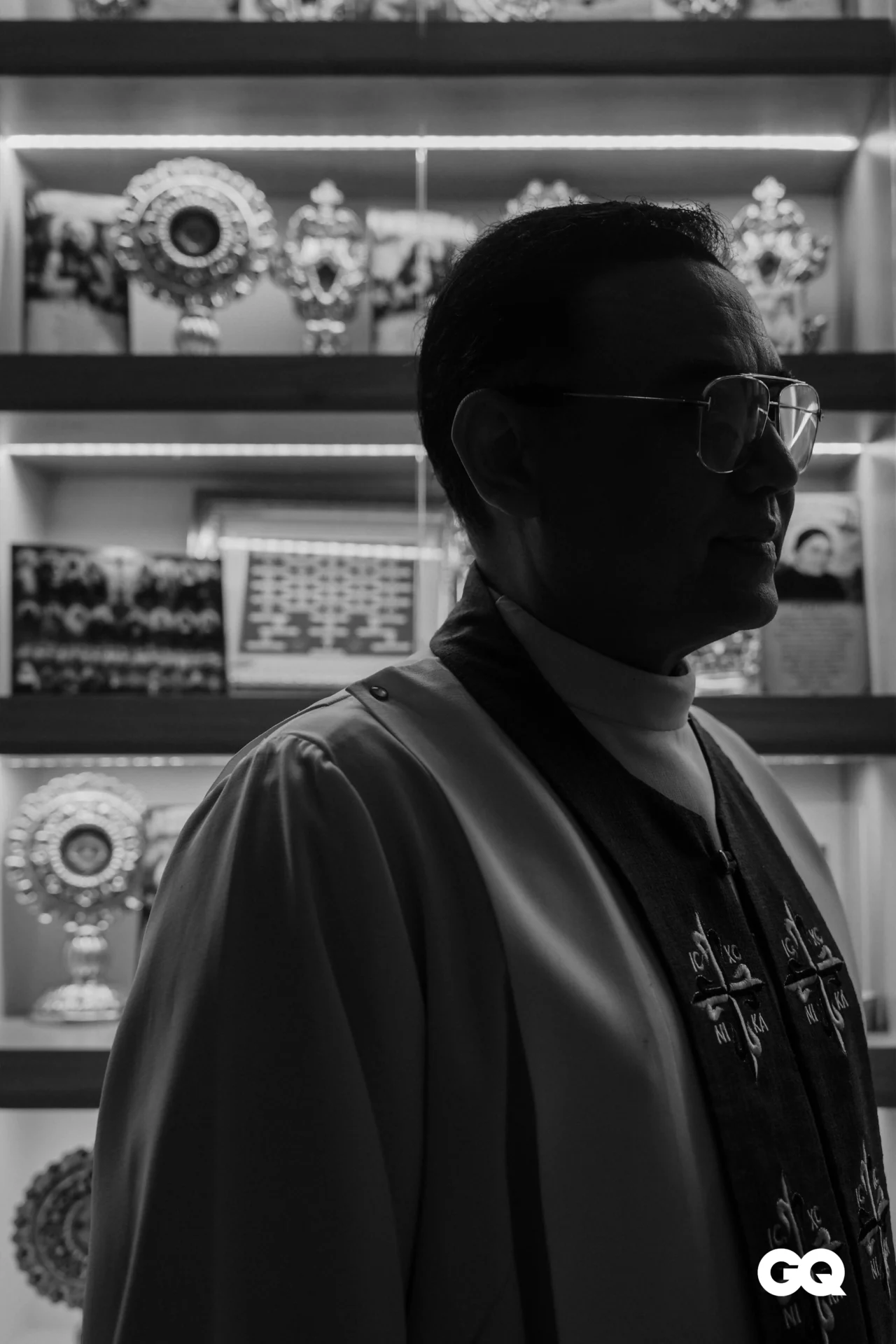
By the time we finished the interview, the room looked like a study. The books were still books, and the center was still bright. Outside, Makati traffic continued doing what Makati traffic does, completely indifferent to whatever conversations were happening inside the building.
And that was one of the most disarming things about the Saint Michael Center: for all the supernatural claims surrounding its work, the place is remarkably ordinary. There are no theatrics, only priests, psychologists, offices, books, paperwork, relics, and people trying to make sense of experiences that have frightened them enough to ask the Church for help.
Syquia himself does not come across as particularly interested in playing the role of a horror-movie exorcist. There is no swagger to it. After decades of doing a job he initially wanted to leave, what remains is a sense of obligation.
“Who am I to waste this gift?” he said. “If it’s given to me and I’m effective here, then I’ll save as many souls as I can.”
Earlier this year, a rosary had broken before we had even begun pursuing this story. It would have been easy to treat it as a warning, especially when the rest of the process seemed determined to make us reconsider coming here. Instead, we went anyway.
There is something fitting about that, in retrospect. Faith, after all, is built around the decision to step toward what cannot always be seen or explained. Walking into the Saint Michael Center did not require us to believe everything we heard inside it; it only required enough curiosity—and perhaps enough faith—to walk through the door and listen.
Frequently Asked Questions
A modern facility in Guadalupe Viejo, Makati, that serves as the Archdiocese of Manila’s exorcism ministry, a training academy, and the headquarters of the Philippine Association of Catholic Exorcists.
The chief exorcist of the Archdiocese of Manila, who also holds a master’s degree in psychology.
No. The process begins with interviews and psychological and medical assessments before any exorcism takes place.
Around 250 delegated exorcists across the country.