Summaries were generated by AI. Generative AI is experimental.
Explore other styles:
Erwan Heussaff is sitting in front of me, reflecting on a trip that wasn’t just a shoot, but a bizarre family reunion. He recently took his FEATR cameras to Paete, Laguna—the woodcarving capital of the Philippines and, more importantly, his mother’s ancestral hometown. The resulting episode was designed to document the town’s fading crafts, making it his first real look at the area as an adult. “Yeah, yeah, yeah,” he says. “But I mean. As a kid, we would go from time to time.”
The aftermath of that video was delightfully domestic. “It was cute. My mom organized a trip with her ikebana classmates,” he laughs, painting a picture of Manila titas descending upon their ancestral home for a full spread of local dishes.
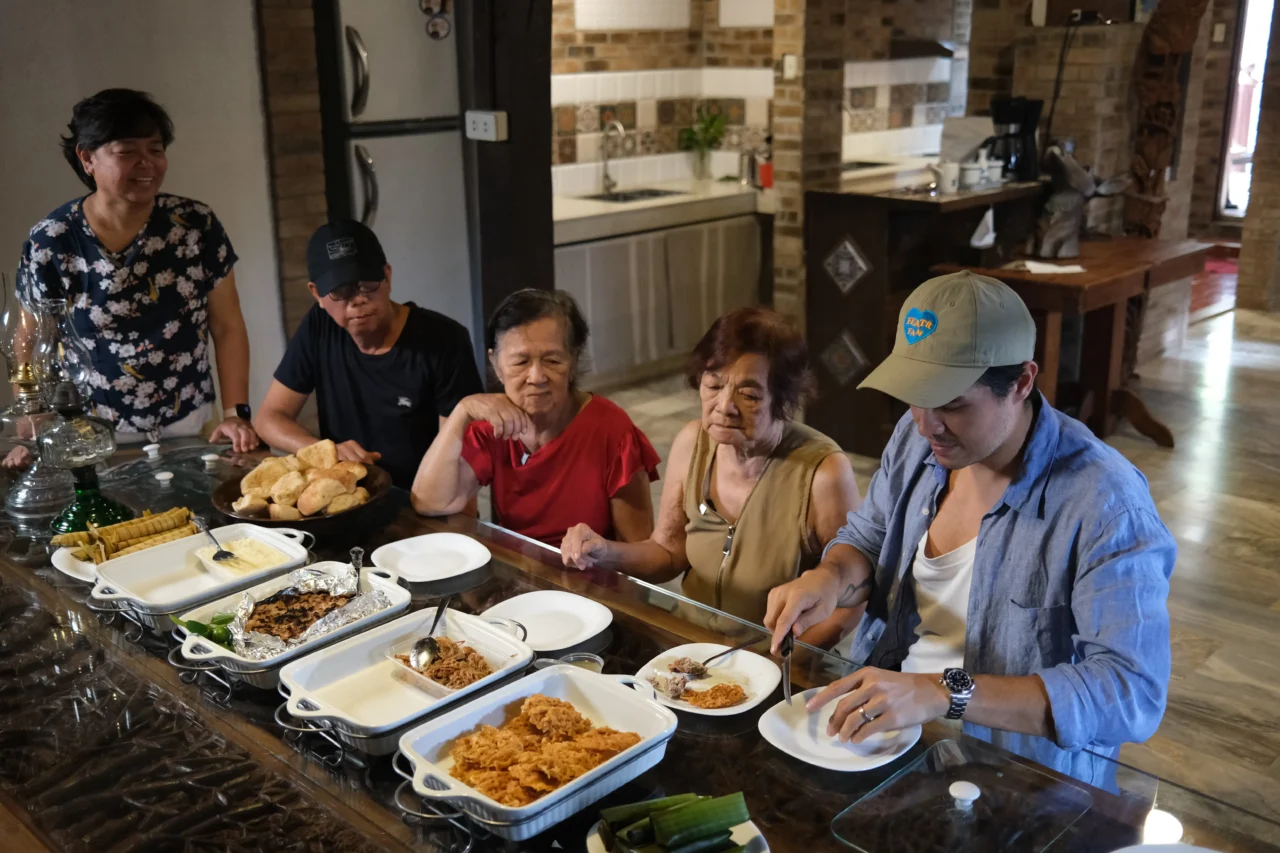
But shooting in Paete had its hazards—namely, over-enthusiastic locals. During one scene in his YouTube video, an elderly resource person gripped Heussaff’s hand for a full minute before introducing him to bibingkang hipon. “We didn’t catch the audio ‘cause she didn’t have a clip,” Heussaff recalls, “but when she held my hand, she was telling me how she knew everyone. ‘Oh, I’m related to this and this and this and this.’”
He smiles at the memory. “That episode was really cool to do, because I realized if I ever had a girlfriend from Paete, that would be kinda tricky ‘cause I am—I’m connected to everyone there, right?”
Beyond the threat of a tangled family tree, Paete represents something deeper for Heussaff: a romanticized but undeniable familial pull toward creativity. When asked if his family’s artistic streak, including that of his sister Solenn and daughter Dahlia, might be a spiritual inheritance from this woodcarving town, he muses, “I do like to think that, you know, these softer genetic codes or skills are passed down from generation to generation, right?”
It truly is a beautiful, romanticized sentiment, but it exists in sharp relief against Paete’s current landscape. Because outside the realm of heartfelt get-togethers, family trees, and spiritual inheritance lies a fragile ecosystem where art is struggling to put food on the table.
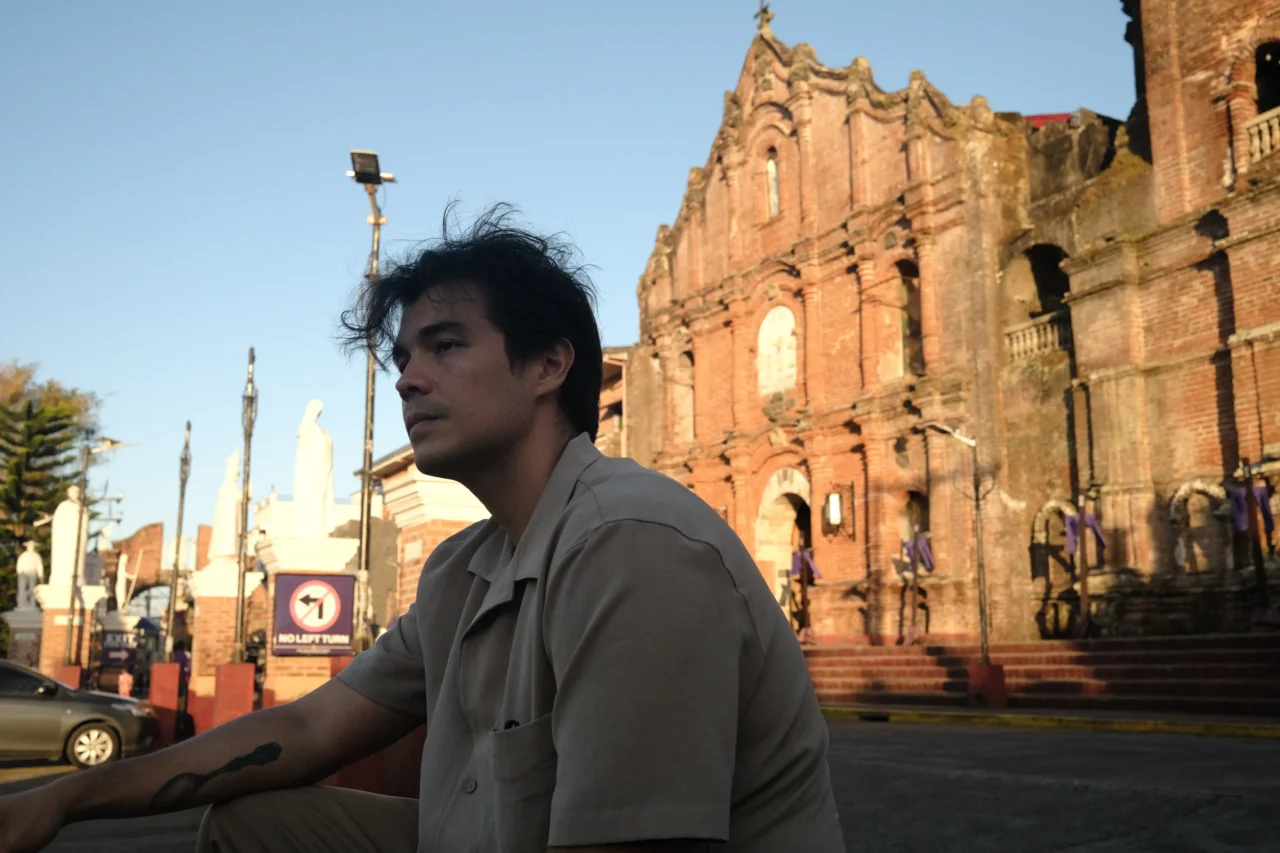
There is a shadow over Paete. Its legendary woodcarvers are leaving to become seafarers on cruise ships, a decline mirrored globally in Japan’s dying kimono trades and Sicily’s fading Opera dei Pupi puppet theatre, and the Philippines’ disappearing traditional farming. This global decline can be called endangered crafts.
Heussaff isn’t giving in to despair; he is looking for a leverage point. He views the crisis through the lens of a media strategist. “It’s always gonna be a demand and supply issue,” he says. The solution? A marketing flywheel. “If we can make these things look and sound cool again, right? It’s a lot; a lot has to do with wording and packaging and how it’s seen.”
He uses an analogy: a provincial farmer might just see hard, thankless labor in a field of red rice. But transport that rice to a high-end establishment like Toyo Eatery in Manila, watch foreigners marvel over it, and suddenly everything changes. “All of a sudden, your perspective about rice completely changes,” Heussaff explains.
That spark is what he wants to ignite. “You need people like us to start that conversation so that the artisans and the people who are actually doing the real work, like not us, people who are actually doing the real work… have the motivation rather to kind of keep this going.”
For Heussaff, saving Paete isn’t just about preserving a dying FilipinoFilipinoThe national language of the Philippines, widely used for communication, education, media, and culture.Go to Filipino Glossary craft; it’s about honoring a personal blueprint. By using his platform to make heritage look cool again, he is ensuring that the creative impulse that runs through his own family continues into the next generation. He is simply doing what his family has always done—shaping raw materials into something beautiful.
Featured Photo Credits:
Makeup Artist: NOEL INOCENCIO
Hairstylist: JA FELICIANO
Videographer: LORENZO CORRO
Producer: KEVIN GONZALES
Art Director: MARC YELLOW
Frequently Asked Questions
Paete, Laguna is his mother’s ancestral hometown, and he’s related to much of the community there.
Many woodcarvers are leaving the craft to work as seafarers on cruise ships, mirroring the decline of traditional crafts worldwide.
By using media and marketing to reframe traditional crafts as desirable, similar to how local ingredients gain prestige once featured at high-end restaurants.
Heussaff suggests it might, noting that his sister Solenn Heussaff and daughter Dahlia also show creative talent, and musing that such skills could be passed down through generations from their family’s roots in Paete.
Heussaff’s FEATR episode documented Paete’s fading woodcarving crafts and featured local dishes like bibingkang hipon, blending a personal family reunion with a broader look at the town’s endangered traditional artistry.