
Summaries were generated by AI. Generative AI is experimental.
Explore other styles:
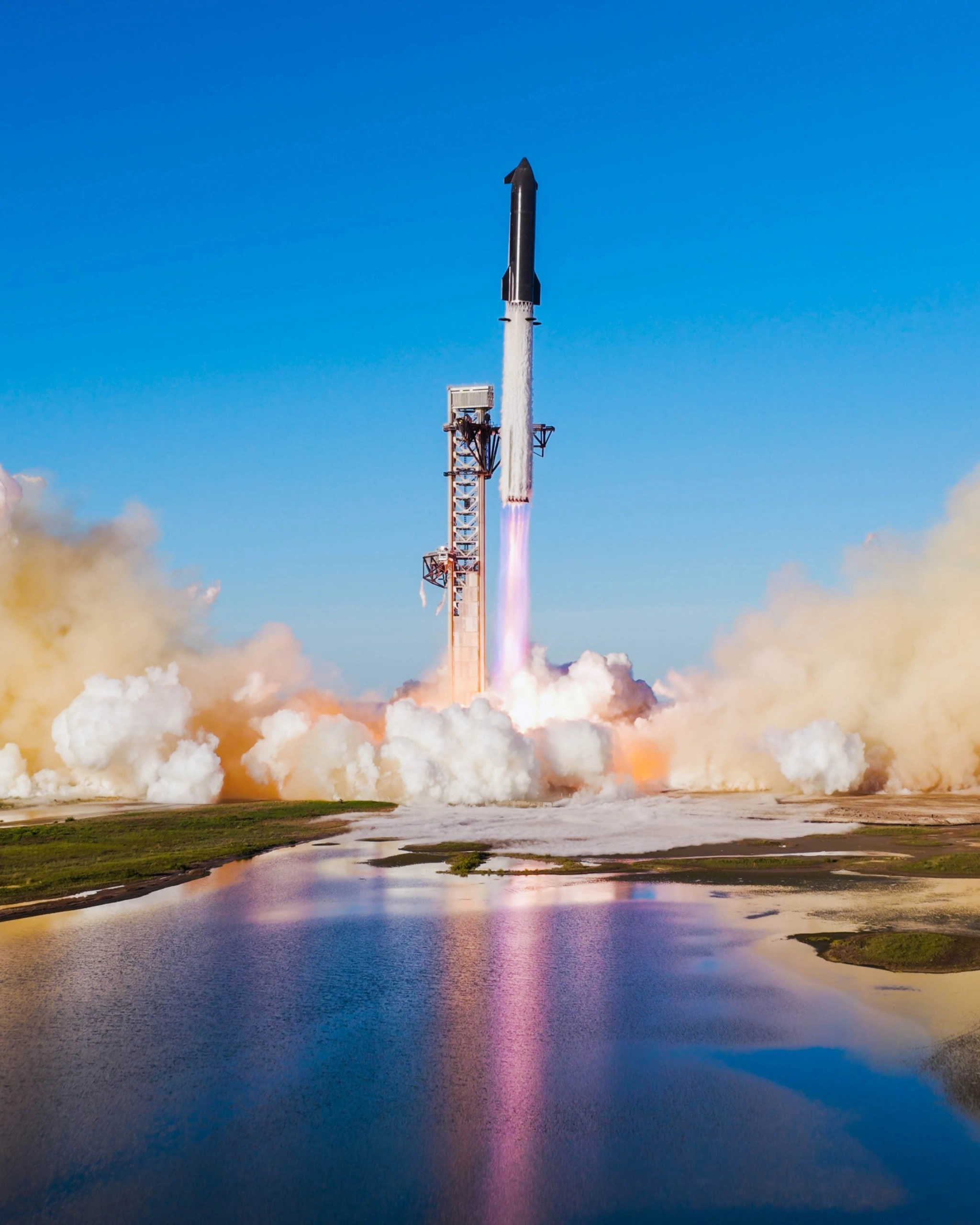
SpaceX has achieved another historic milestone, with the successful return of Starship 42 from orbit back to Earth and its subsequent landing at the launchpad, guided by giant mechanical metal arms that the company has dubbed “chopsticks.”
Last Friday, Elon Musk’s most ambitious space launch yet, titled Starship Test Flight 15, successfully sent the 171-foot spacecraft into orbit in an attempt to catch both its upper and lower stages. The attempt to catch the lower stage, known as the Super Heavy booster, was unsuccessful, with the company diverting it to New Mexico, where it eventually exploded.
The mission continued as Starship 42 embarked on its 22-hour journey around Earth, completing a total of 14 orbits and deploying 26 Starlink satellites before returning. Upon its return, the company successfully brought the Starship upper stage back to its launchpad, where the mechanical arms guided it mid-air, catching it with pinpoint precision and safely securing it in the Mechazilla launch tower at SpaceX’s Starbase facility in Texas.
This is a milestone for many reasons. For one, it demonstrates a remarkable achievement in spacecraft recoveryRecoveryThe period after exercise during which the body repairs and strengthens itself through rest, sleep, nutrition, and hydration. Recovery is when fitness gains actually happen, and ignoring it can leadGo to Recovery Glossary, with the upper stage successfully caught by its launch tower upon returning from orbit. It also marks a significant step forward in rocket sustainability, demonstrating the potential for spacecraft components to be recovered and reused. Finally, the achievement opens up new research possibilities, allowing scientists to examine the spacecraft firsthand and retrieve valuable data from its flight. SpaceX researchers are currently collecting and analyzing information from Starship 42.
Frequently Asked Questions
Starship 42 is SpaceX’s 171-foot spacecraft designed for orbital spaceflight and future space exploration missions.
They are giant mechanical arms attached to SpaceX’s Mechazilla launch tower, designed to catch returning rocket stages.
The Super Heavy booster is the lower stage of SpaceX’s Starship rocket system, designed to help propel the spacecraft into orbit.
It demonstrates the potential for recovering and reusing spacecraft components, which could make future space missions more sustainable and cost-effective.
No. The Super Heavy booster catch was unsuccessful, and the booster was diverted to New Mexico, where it eventually exploded.