Summaries were generated by AI. Generative AI is experimental.
Explore other styles:
For the past decade, the bathroom counters of the modern gentleman have resembled the laboratory of a slightly unhinged medieval alchemist.
We have jars of artisanal clay harvested from the foothills of places we couldn’t find on a map. We have sea salt sprays designed to make us look like we just stepped off a surfboard in Siargao, even if we actually just stepped out of a cubicle in Makati. We have pomades scented with “tobacco and oud,” which is just a sophisticated way of saying your head smells like a jazz club in 1954.
Yet, amidst this multi-billion-peso empire of potions and magic, the single most revolutionary grooming tool of 2026 is currently sitting at the bottom of your drawer, buried beneath an old analog watch, that scientific calculator you never used in college, and three dead AA batteries.
It is thin. It is flat. It has teeth, but it doesn’t bite.
It is time to reconsider the comb.
To speak of the comb in the year 2026 feels a bit like standing up at a tech convention and delivering a passionate defense of the rotary phone. It feels retro to the point of absurdity.
In his seminal essay “Consider the Lobster,” David Foster Wallace asked us to look past our dinner plates and contemplate the raw, uncomfortable reality of the creature being boiled alive for our culinary pleasure. I am asking you to perform a similar act of radical empathy for a piece of injection-molded acetate.
Look at it. Think about what we have done to it. We have exiled it to the pockets of eccentric lolos and the back pockets of mechanics named Mang Jun. We have replaced it with the ultimate instrument of grooming laziness: our own fingers.
Somewhere around 2012, the global grooming industry collectively decided that using a tool to arrange your hair was too “try-hard.” The mandate was clear: you must look like you woke up looking magnificent. Your hair needed to look “undone,” “textured,” or “lived-in.” The result? A generation of men walking around looking like they had just been lightly electrocuted or were hiding a family of small, frantic Maya birds in their bangs.
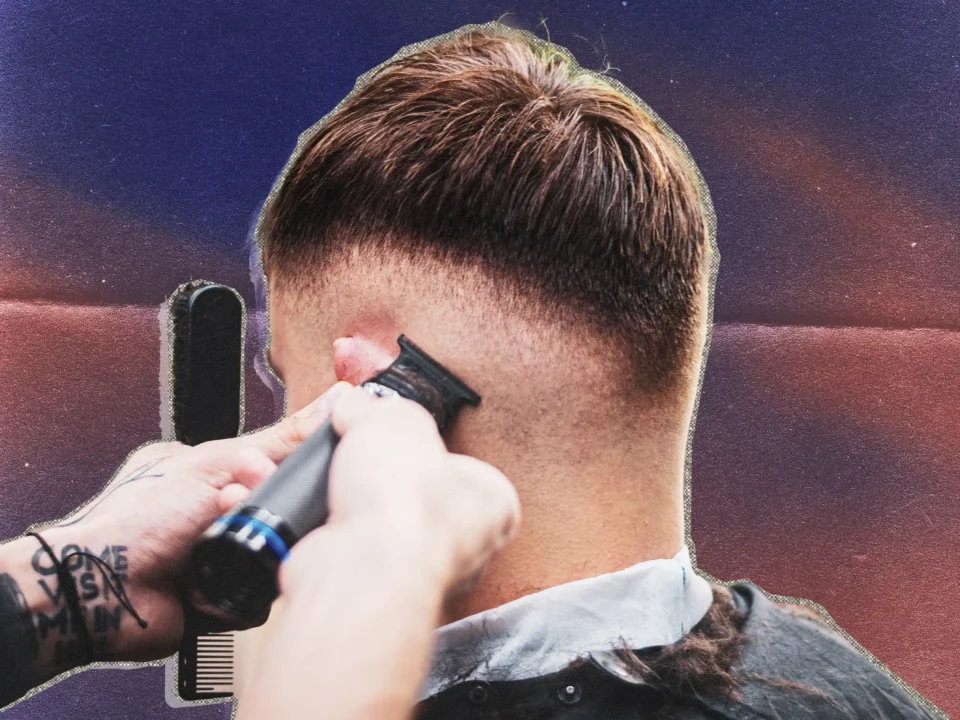
Let us be honest with ourselves. The “finger-comb” is a lie. Your fingers are thick, blunt instruments. Using your hands to style your hair is like trying to play the piano while wearing oven mitts. It lacks precision. It lacks dignity.
The comb, by contrast, is a triumph of human engineering that dates back to the dawn of civilization. Archaeologists have dug up combs made of wood, bone, and ivory from Egyptian tombs. Think about that. King Tutankhamun, a man who had access to the finest luxuries of the ancient world, looked at his options and said, “Make sure my golden comb is in the sarcophagus. I’m certainly not going to be walking around Aaru with bedhead.”
For centuries, the comb was an emblem of the masculine elite. In the 1950s, the pocket comb was the ultimate weapon of cool. James Dean didn’t run his fingers through his hair when he wanted to look brooding; he pulled a comb from his leather jacket, executed a flawless, sweeping stroke, and looked effortlessly cool. Then there’s Danny Zuko and the T-Birds in Grease, who turned the pulling of the pocket comb into a theatrical art form.
Then came the dark ages. The 1990s brought us grunge, which required hair to look like it hadn’t encountered a drop of water in years. The 2000s gave us faux-hawks that required the structural engineering skills of an engineer and levels of gel. And by the 2020s, the comb was viewed as a relic of an uptight, overly manicured past.
But nature abhors a vacuum, and society abhors a messy side-part. The return of the comb in 2026 isn’t just about nostalgia; it’s a matter of public health.
When you use a high-quality comb, something magical happens on a microscopic level. It doesn’t just push hair around. The tines stimulate the capillaries in your scalp, increasing blood flow and reminding your hair follicles that they have a job to do. Furthermore, it takes the natural oils produced by your scalp—sebum, if you want to get scientific—and evenly distributes them along the hair shaft.
Your fingers can’t do that. Your fingers just deposit grease from that lumpia you ate at lunch. The comb acts as a natural conditioner, creating a healthy, subtle shine that no synthetic serum can replicate.
There is also a profound psychological benefit to the act of combing. We live in an era of terrifying speed. We check our emails while brushing our teeth. We listen to podcasts at 1.5x speed. I’ve seen people doomscroll on the MRT and flick through social media like a Terminator cyborg accessing a military database. But you cannot rush a comb. If you yank a comb through your hair at hyper-speed, it will punish you by tearing out a clump of your precious, receding hairline.
The comb forces a moment of morning mindfulness. It requires you to look at yourself in the mirror, evaluate the structural integrity of your skull, and make a conscious, deliberate choice about how you wish to present yourself to the civilized world. It is the difference between slapping some paint on a canvas with your palms and using a fine brush. One is a toddler’s finger-painting; the other is a portrait.
Of course, the power of the comb has its place and time. There are those who violate its sacred boundaries. Take, for instance, a certain action star turned politician. Caught on camera for all to see, this particular gentleman casually whipped out a fine-toothed comb to groom his facial hair during a Senate hearing. Now that’s dedication. If the economy collapses, at least the moustache will remain structurally sound and camera-ready for the media.
But please, let’s keep it classy. The comb is a tool of privacy. It belongs in front of your home mirror, or perhaps during a discreet, five-second bathroom break. It is not an instrument to be used during an important meeting, on your motorcycle taxi ride, or in the middle of a business lunch.
Now, if you’re ready to enlist in the Great Comb Renaissance of 2026, you must choose your weapon wisely. Do not log on to an online shopping app and buy one of those cheap, black plastic combs that cost two pesos each. Those are made by machines that leave sharp, microscopic ridges along the edges of the teeth. Every time you run one through your hair, those ridges act like tiny saws, slicing through your hair cuticles and causing split ends. You might as well style your hair with a weed-whacker.
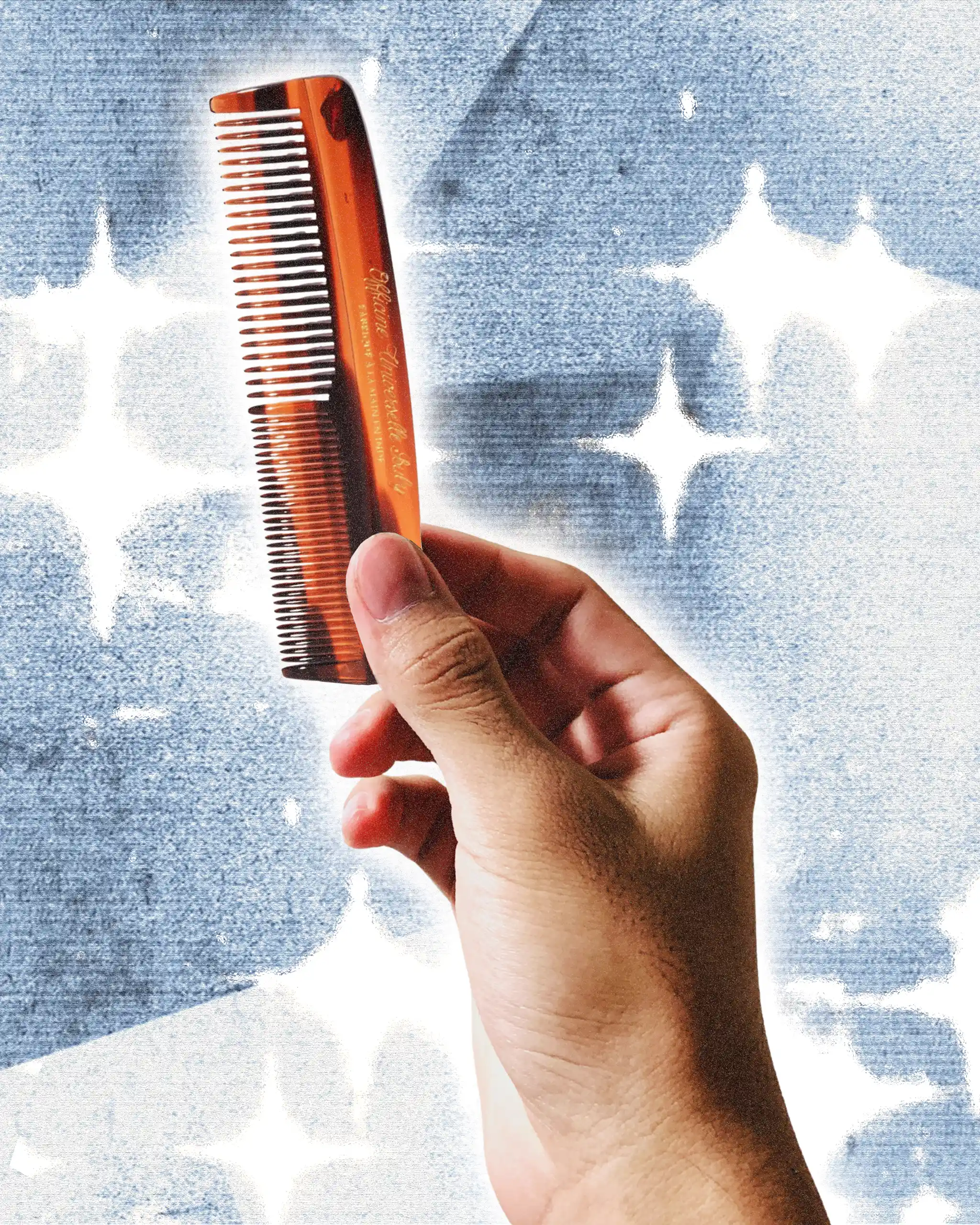
Instead, invest in a hand-sawed cellulose acetate comb. Brands like Kent have been making them in England since the 1700s. Acetate is a plant-based material that feels warm to the touch and glides through your hair like a hot knife through butter. You want a comb with both wide teeth (for detangling after you step out of the shower) and fine teeth (for locking in that sharp, clean line).
As Steve Martin once wisely demonstrated through his brand of manic perfectionism, comedy—and style—are all about timing and precision. A stray hair can ruin a punchline, just like an unkempt silhouette can ruin a tailor-made suit. When you step out into the world with a combed head of hair, you’re signaling to the universe that you have your life together. You’re saying, “I woke up, I looked at the chaos of existence, and I tamed it with five inches of cellulose acetate.”
So, put down the clay. Stop clawing at your head like a bear scratching itself against a pine tree. Go find a comb. Run it from your forehead to your crown. Look at that crisp, elegant line in the mirror.
Now isn’t that better?
Frequently Asked Questions
Fingers are too blunt and imprecise for detailed styling compared to a comb’s fine teeth. Combing also stimulates scalp capillaries, increasing blood flow, and evenly distributes natural scalp oils (sebum) along the hair shaft, something fingers can’t replicate.
A hand-sawed cellulose acetate comb, like those made by Kent since the 1700s, is recommended over cheap plastic combs. Plastic combs often have microscopic ridges from mass manufacturing that can snag and damage hair cuticles, causing split ends over repeated use.
Yes. Combing stimulates blood flow to the scalp’s capillaries and helps distribute the scalp’s natural oils evenly along the hair shaft, functioning similarly to a natural conditioner and creating shine without relying on synthetic styling products.
Around 2012, grooming trends shifted toward an “undone” or “lived-in” hair aesthetic, which discouraged visible styling effort, including comb use. Finger-styling became associated with effortless cool, even though it offers far less precision than a proper comb.
A good comb should have both wide teeth for detangling wet hair after a shower and fine teeth for precise, clean styling lines. Acetate combs are preferred over plastic for their smoother glide and reduced risk of damaging hair cuticles.
Frequently Asked Questions
A comb offers more precision than using your fingers and helps distribute the natural oils from your scalp along the hair shaft.
A hand-sawed cellulose acetate comb is recommended, ideally one with both wide teeth for detangling and fine teeth for styling.
A comb is best used in front of a mirror or during a discreet bathroom break, rather than in public or during important meetings.

Peejo Pilar
With nearly two decades of production and publishing experience, managing editor Peejo Pilar runs GQ Philippines' daily operations like a finely tuned Wacky Races car engine—aligning and collaborating with writers, editors, and creatives. He assists the editor-in-chief and deputy editor in overall management and editorial campaigns as well as keeping the storytelling efficient and sharp, proof that you can manage creative chaos without losing your mind. You can contact him at [email protected].