Summaries were generated by AI. Generative AI is experimental.
Explore other styles:
They say true style begins the moment you open your closet doors to a clean, curated sanctuary of pieces collected over time. For most grown men, however, the reality is closer to a landfill of impulse buys, bent wire hangers, and faded shirts you haven’t touched since the last decade.
If you want to dress better, you don’t need a Patrick Bateman walk-in—you need a strategy. Here is how to restore order to your wardrobe, maximize every square inch, and make getting dressed the easiest part of your morning.
Edit Your Wardrobe, Fix the System
Before you buy a single storage bin, you have to clear the deck. Block out an afternoon, pull everything out, and take a hard look at what you actually own. Separate the heavy hitters—the pieces you reach for weekly and feel sharp in—from the dead weight.
Decluttering requires cold-blooded discipline. It makes you rethink your purchases. The rule is, if you cannot build at least five distinct looks around a piece—and actually wear them—then that piece is no good, and it’s better off being post-loved at an online barter exchange thrifting store. Anything untouched in the last three months or unlikely to be worn in the next three is dead weight.
Engineer Your Sightlines
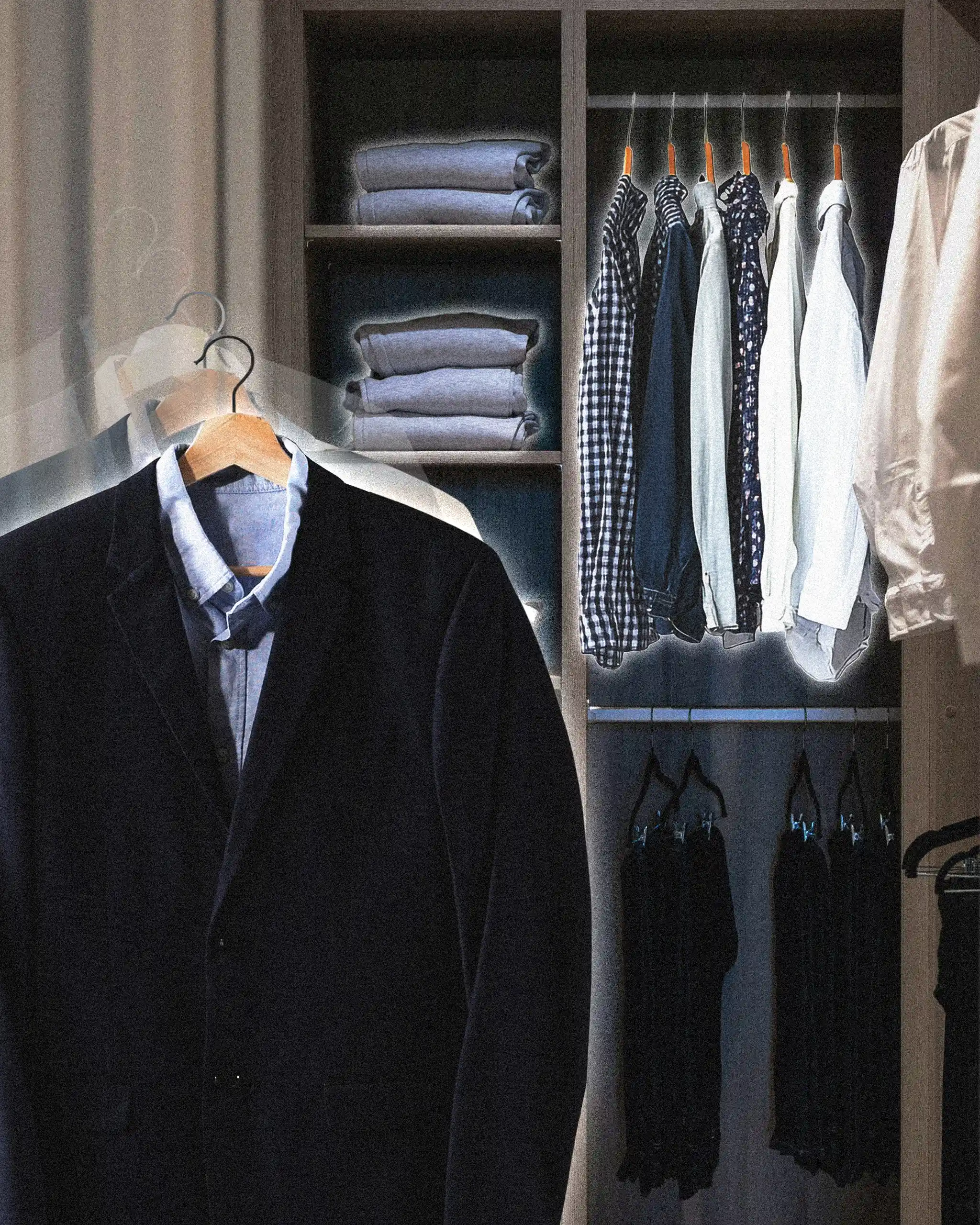
Once the chaff is cleared, group your clothes strictly by category: button-downs with button-downs, trousers with trousers, blazers with blazers. Within each section, arrange garments by color gradient from light to dark, pushing loud patterns to one end so your eye has somewhere to rest. Organizing by shade creates an instant boutique effect—and immediately exposes if you accidentally own six identical navy polos.
More importantly, organize for ergonomics, not just aesthetics. Keep your daily workhorses—oxfords, chinosChinosLightweight cotton trousers with a clean, tailored look that sit between jeans and dress pants in formality. Chinos work from the office to the weekend, and in tropical weather theirGo to Chinos Glossary, dark denim, go-to jackets—at eye level and within arm’s reach; relegate black-tie gear and rarely worn pieces to high shelves or the far corners.
Maximize the Negative Space
Lucky is the man who lives in a home with a built-in closet. For the rest of us navigating tight condo layouts and modest apartments, creating breathing room requires treating your closet like a vertical game of Tetris.
This is where clear bins and large boxes that fit under your bed come in handy. They provide enough space for you to throw in your clothes without making a mess out of it.
Install double hanging rods to instantly double your trouser capacity. Stack matching woven bins on upper shelves for swimwear and gym gear, and utilize under-bed rolling containers for off-season rotation. Heavy coats, parkas, and cold-weather layers saved for winter travel should be tucked into vacuum-sealed bags so they aren’t hogging prime real estate year-round.
Pay attention to hardware, too: anything prone to wrinkling belongs on contoured wooden hangers that mimic the slope of your shoulders. Heavy knitwear, meanwhile, must always be folded—never hung—unless you want gravity to stretch your favorite merino sweater into a tunic.
Corral the Hardware
Clutter loves small surfaces. Establish a dedicated valet tray or compartmentalized box for your watches, cufflinksCufflinksCufflinks are decorative fasteners used to close the cuffs of a shirt with buttonholes on both sides, typically a French or double cuff shirt. They are one of the fewGo to Cufflinks Glossary, sunglasses, and everyday jewelry so you aren’t hunting for a stray collar stay at 8:00 a.m.
Finally, rescue your footwear from the dark abyss of the closet floor. Group pairs by silhouette—sneakers with sneakers, Chelsea boots with boots, loafersLoafersSlip-on leather shoes without laces, available in styles such as penny, tassel, and horsebit. Loafers combine comfort with polish, and they pair easily with tailored trousers or chinos, making themGo to Loafers Glossary with loafers—and use tiered racks or clear drop-front boxes to build upward. Pay extra attention to leather dress shoes, especially in humid climates where mold can quickly ruin a good pair. Slip unfinished cedar shoe trees into your leather rotation to absorb moisture and hold their shape, then store your finest pairs in breathable cotton dust bags.
Becoming impeccably dressed starts long before you button your cuffs. When your closet is dialed in, you know exactly where to get the right pieces for the day and you stop wasting ten minutes every morning second-guessing your reflection. That’s the superpower an organized closet can give you. Absolute peace of mind.
Frequently Asked Questions
Start by decluttering, then group clothes by category and color. Keep frequently worn pieces at eye level and store occasional items in less accessible spaces.
Use double hanging rods, stackable storage bins, under-bed containers, and vertical shoe racks to make the most of limited space.
Hang suits and structured garments on contoured wooden hangers to preserve their shape. Fold heavy knitwear to prevent stretching, and use breathable garment bags for delicate pieces.

James Fergus Arevalo
James Fergus Arevalo is a writer for GQ Philippines, blending the rigorous mind of a data scientist with a passion for modern grooming, lifestyle, and culture. When he isn't writing, he spends his time meditating, painting, and exploring the deeper questions of life. He holds a degree in Biology from Ateneo de Naga University and has a deep curiosity about human potential. You can contact him at [email protected].