Summaries were generated by AI. Generative AI is experimental.
Explore other styles:
More than an hour into our conversation, Darren Criss is just as animated as when we began. He jumps from one topic to the next, covering everything from Green Lantern comic books to receiving “reverse” balikbayan boxes, from favorite past projects to how he chooses a set list for a concert. The conversation moves at a breakneck pace, seemingly veering in a million different directions. But for Criss, there is a logic to all of it: He is interested in people, in how they communicate, and in all the different ways one person can reach another.
“I have an insatiable appetite for communication and everything that that means. I happen to be able to communicate through the performing arts,” he tells GQ Philippines while sitting in his home in New York City. “Why do we communicate? It’s to bring ourselves closer and to have a closer understanding of each other, particularly to people we’ve never met and to strangers we have not communicated with. That is everything to me.”
It is an idea that helps explain the unusual shape of Criss’s career. Over the last sixteen years, he has fluidly moved between television, film, music, theater, and concert stages, rarely staying in one lane for too long. He first became famous as the scene-stealing Blaine Anderson on the musical series Glee, then stunned audiences with his chilling dramatic turn as serial killer Andrew Cunanan in The Assassination of Gianni Versace, becoming the first Filipino American to win the Emmy Award for Outstanding Lead Actor in a Limited Series or Movie.
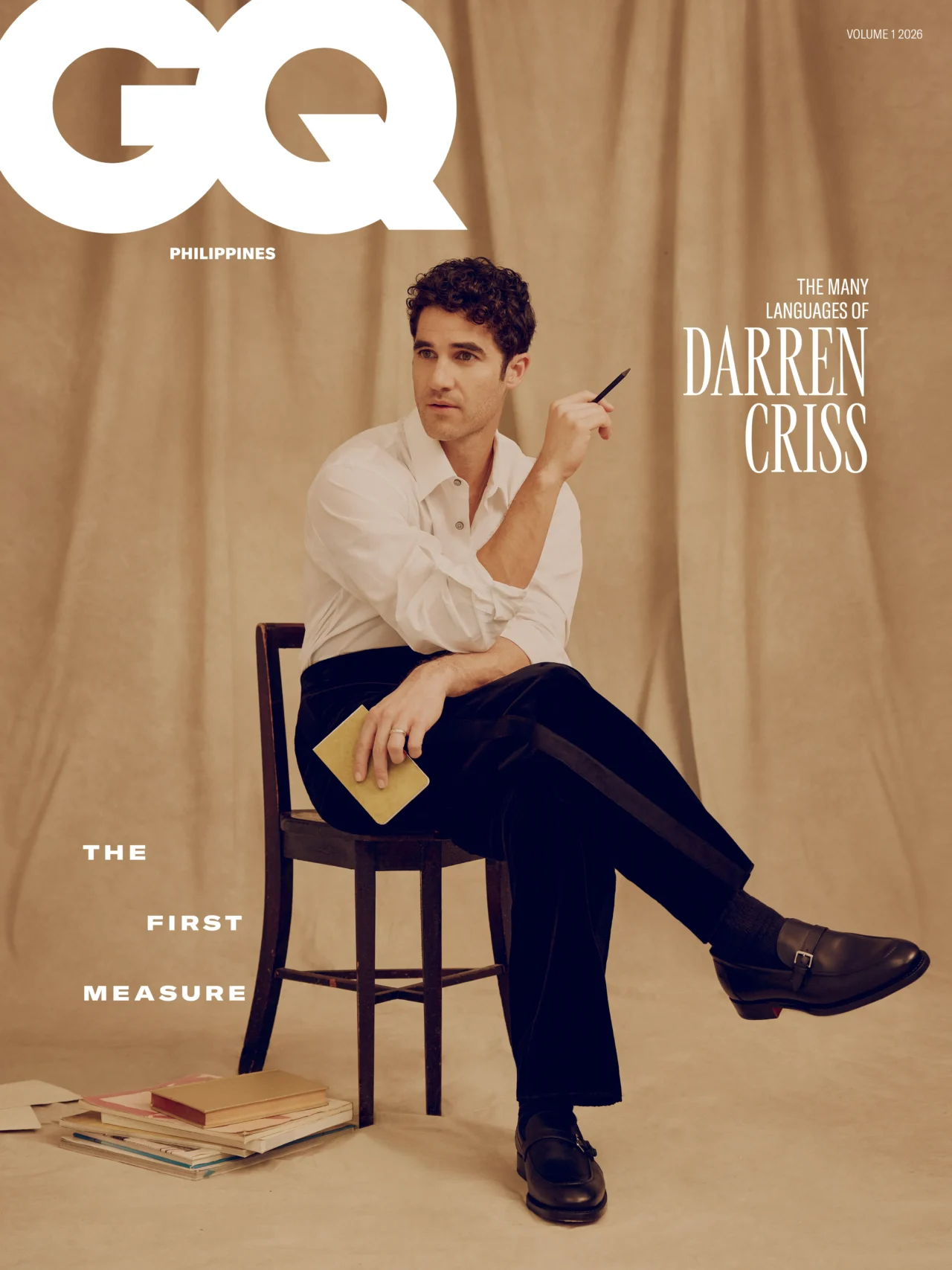
At the same time, he stayed in touch with his musical theater roots, appearing in a string of stage hits in New York City. He made his Broadway debut in the revival of How to Succeed in Business Without Really Trying in 2012. Most recently, he produced and starred in Maybe Happy Ending, which earned him two Tony Awards last year, for Best Actor in a Musical and Best Musical. Next up is a concert at the Royal Albert Hall in London.
It is easy to look at that career as a collection of achievements. But what connects them is not simply a desire to succeed; it is a curiosity about what else he can do, and how many different ways he can reach people.
“I want people to understand each other more than I need them to understand me,” he says with a sincere smile. “That’s something that I hope to make a dent in in my lifetime. But you know, it’s like trying to boil the ocean.”
The Language of Performance
You may not know this, but Criss can speak a variety of languages. “I wasn’t great at a lot of things in school, but I speak Italian, I speak French, I speak Japanese,” he explains. “I wouldn’t say incredibly well, but I love the idea. I’m obsessed with the idea of language itself.”
For him, language is more than a utilitarian tool for basic communication; it is an elastic playground, a subject to study, and another way of understanding how people see the world. Naturally, that curiosity finds its way into his work. Even the way Criss sings onstage can change depending on the character, the venue, the audience, or even just the room’s energy.
“I’ve never done a Broadway show where I sang the same way because it’s a different venue. It’s a different dialect every time,” he says. “In Maybe Happy Ending, I had to overpronounce things because I’m playing a certain character [a robot] that does that. When I did Hedwig and the Angry Inch, I had an Eastern European accent. If I was doing Little Shop of Horrors, I would have kind of a classic New York accent, and so you have to sing words that way for the clarity of the piece.”
That constant adjustment is part of what draws him to live performance. “I think the stage is probably an amalgam of everything that I love in the most immediate sense. It’s transient. It’s immediate. It’s in person. It talks about connection. It is you in the room with me.” No two performances have to look and sound exactly the same.
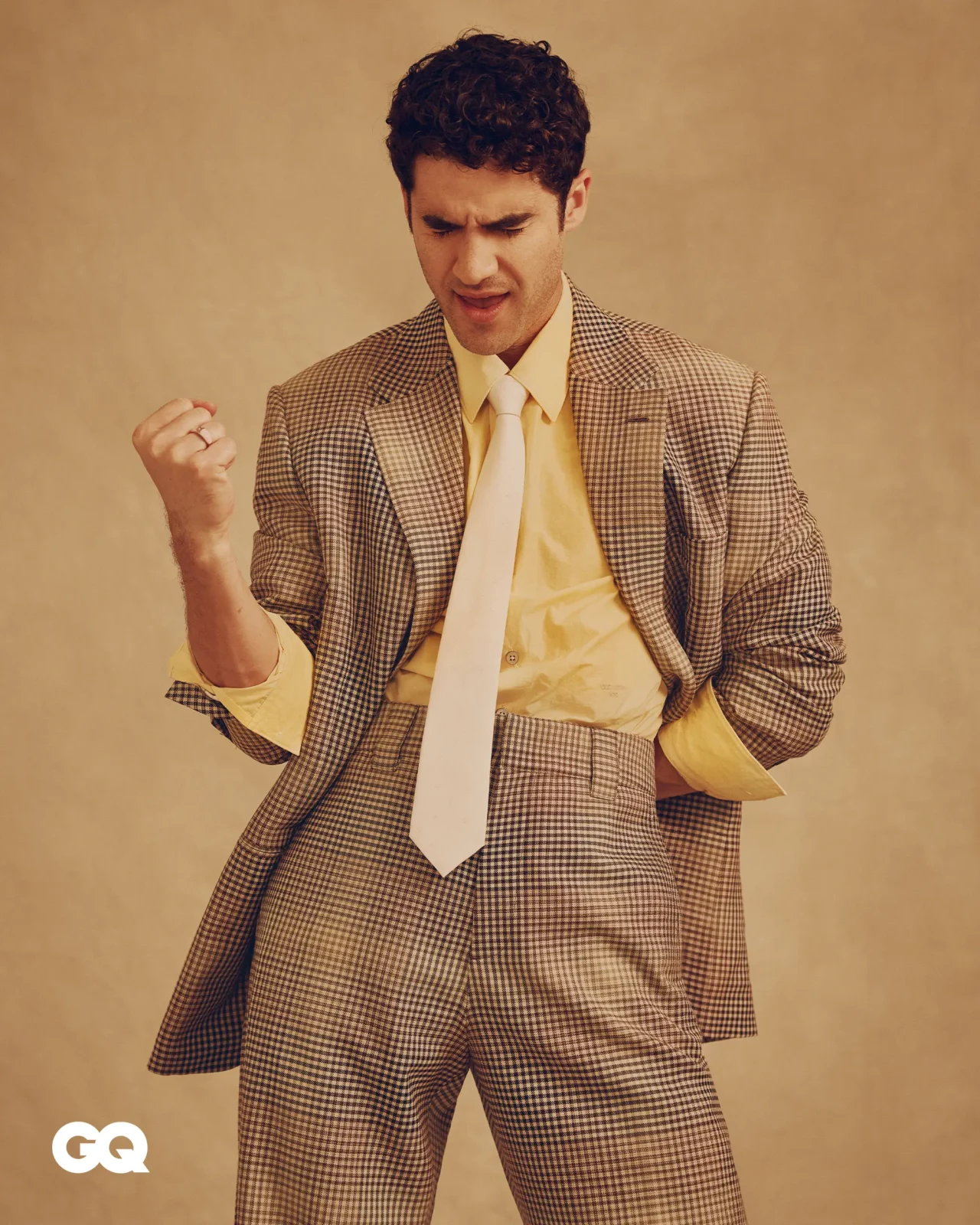
When he is on tour, he doesn’t simply arrive with a fixed set list and perform the same show night after night. He’ll go to a coffee shop in whatever city he’s playing, observe the people around him, and get a feel for the atmosphere before deciding what the night’s set should look like. This leaves room for each audience to shape the performance in its own way. He describes this creative impulse as an inherent need to “zig” whenever the world wants him to “zag.”
His upcoming concert at the Royal Albert Hall on October 18 is another good example of his desire to surprise. The London institution has long been associated with some of the biggest names in show business, with audiences typically dressed in smart-casual wear or even buttoned-up suits. Criss, known as “the musical theater guy,” would rather not do what is expected of him.
Instead, he intends to inject the raw, visceral energy of a rock gig into one of London’s most storied concert halls, treating it with the same grit as a performance at the Troubadour in Los Angeles or the Bowery Ballroom in New York City, legendary venues known for their rock pedigree. “I’m not doing a more stereotypical person-from-Broadway-jazz-combo set,” he explains. “I like flipping those things on their heads.”
This defiance of expectations extends to his public persona. Criss takes a distinct pleasure in meeting someone who knows him from one part of his career but not another, or who discovers that the actor also makes music. The confusion, rather than bothering him, seems to be part of the fun. “I enjoy keeping people off-kilter,” he says cheekily.
“And you could maybe hypothesize that it has something to do with my own dichotomy,” he continues. “I like [when people say], ‘Oh, this guy must be Mediterranean,’ and when I say FilipinoFilipinoThe national language of the Philippines, widely used for communication, education, media, and culture.Go to Filipino Glossary Irish, that reaction and that confusion, I guess I’ve always thrived off of. I like not being the thing that you necessarily expect.”
The Language of Identity
“Everyone’s experience of any culture or cultural heritage is different depending on where you grew up, how you grew up, how your parents celebrated it. Not everybody has the same version of it,” Criss explains. “And it’s a weird thing because my experience is distinctly American. It’s distinctly half FilipinoFilipinoThe national language of the Philippines, widely used for communication, education, media, and culture.Go to Filipino Glossary.”
“Our cultures follow us everywhere via much smaller things. You know, I think it’s more in attitudes and in the way you prioritize things and the way that you see the world. It’s not so much in specific dishes or the way you celebrate a holiday—although those are big ones. I think cultural identity is a collection of much smaller things.”
And what are those small things for Criss? Well, it’s his Irish American father. His Filipino mother. It’s the way he grew up among other half-Asian kids in the Bay Area of San Francisco. It’s in visits to the Philippines to see relatives as a child. It’s in his father being strict about clarity of language at home. It’s in the University of Michigan, where he went to school and, with fellow students, created A Very Potter Musical, a viral parody musical that would become formative in his life.
It’s also in what he calls “reverse balikbayan boxes” that his family received from the Philippines, which included sweet treats like dried mangoes. It’s in the formal suits he owns, the barongs he keeps. It’s in the projects he chose to do, and the ones he didn’t. Criss rejects the notion of a singular blueprint for identity; you just have to find your own way to celebrate it, with what you were born into.
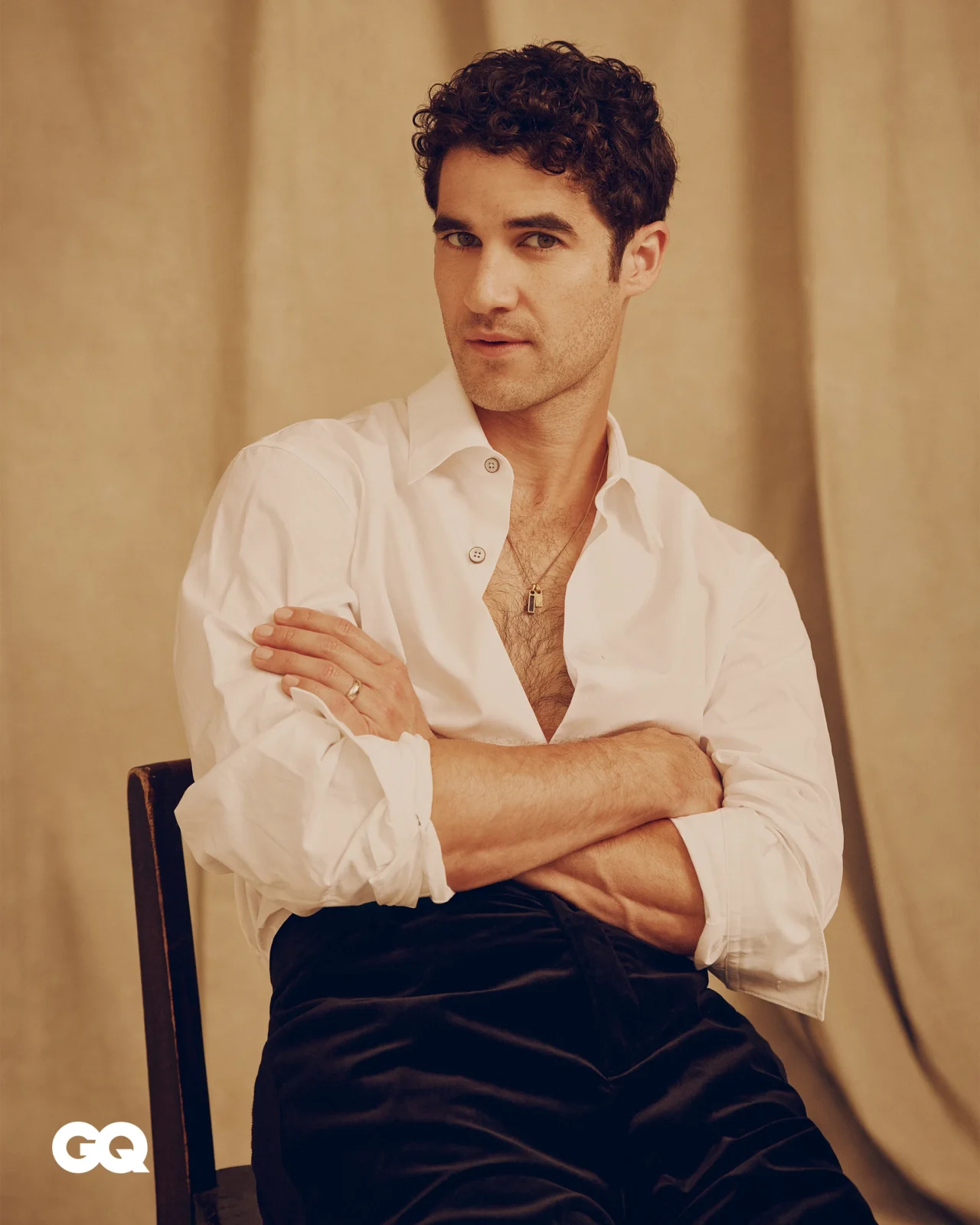
In that sense, identity is partly an inheritance: the things handed down to you, the things you absorb, and the things you eventually make your own. But for all the small pieces that make him distinctly Darren Criss, his Filipino heritage still carries a particular weight. Filipinos, after all, have a way of passionately celebrating and claiming their own, especially when someone achieves a certain level of worldwide success. This isn’t lost on Criss. He understands it, even if he’s not sitting there claiming to represent the Philippines, just as he’s not claiming to represent the Irish American community. But the very fact that Filipinos see something of themselves in him, he says, is a beautiful thing.
He turns to Hal Jordan, a.k.a. the Green Lantern, as an example, although he’s quick to clarify that he’s not casting himself as a superhero. What resonates with him is the idea of being given a responsibility to represent a people without ever asking for the role.
“He’s like an ordinary guy,” he says of the DC character. “But for whatever reason, this other greater force sort of bestows this title [of The Green Lantern] upon him. ‘You are the hero now and you’re going to do us a whole lot of good and we’re going to make you our guy.’ And meanwhile, you’re like, ‘Geez, I don’t know if I’m the right guy. I can think of like a hundred people who would probably fit this role a lot better than me.’”
“But then you realize it is your responsibility to don the cape, to wear the ring, and to wear the crown in a way that even though you don’t necessarily believe yourself to be some sort of greater being than you are, if other people will you to be it and wish you to be it and want you to be it, it kind of makes you it. You have to rise to the occasion of whatever that means. And that’s an honor.”

And rise to the occasion he did. Through his career, Criss has found himself embraced by communities far beyond the one he was born into. His work on Glee, particularly his portrayal of Blaine Anderson, made him a meaningful figure for queer audiences. The theater community, meanwhile, has embraced him through roles ranging from Hedwig and the Angry Inch to his Tony-winning performance in Maybe Happy Ending. And then there are the people who, like Criss, have grown up navigating more than one cultural identity and see themselves in him.
For Criss, the hope is that what he puts into his work and out into the world gives other people the confidence to discover what they can do themselves. “That unconsciously I’m giving other people their own Green Lantern rings to do their own superhero work in their own way. And so, helping people get in touch with what those powers are through displaying whatever mine are is something that I would hope that I can do for people that I’ve never met, for my family, for my children, for anybody that comes in contact with anything that I’ve done.”
The Language of Success
Criss was genuinely shocked when I told him his career reminded me of another showbiz legend, Liza Minnelli. Minnelli never allowed herself to be sequestered within a single medium. She built a career by following her interests and instincts across different forms of media, finding success not simply through awards but through the work itself and the connection it created with audiences. Her EGOT status, in many ways, was simply a result of that pursuit.
“I can’t tell if that was a question or a compliment. I thank you for saying that,” he says, visibly humbled by the comparison. “I’ve been really, really lucky with cool things. But the truth is I’m pretty discerning, I guess. I pride myself on that. I mean, there are a lot of things that I’ve done that, you know, didn’t cut through or that people wouldn’t have heard of. But I would not have not done it. They still possessed something that I was attracted to for whatever reason.”
The attraction to the work itself, rather than the promise of what it might lead to, is central to how Criss approaches his career. The size of the audience is secondary to the quality of the connection he can make with it. For instance, after the success of The Assassination of Gianni Versace, you’d think he would have gone on to pursue a big movie career like many actors who found early success on television. But he didn’t. He made his way back to Broadway, drawn by its sense of connection with a live audience.
“I’d rather have a more positive, accessible, greater effect on a smaller number of people for a smaller amount of financial return,” he explains. “I think that’s how I would quantify greatness—shooting for things that you really are passionate about. And by the time you get to that bonus round of things like ‘firsts’ or big award moments, then your enthusiasm is matched by others.”
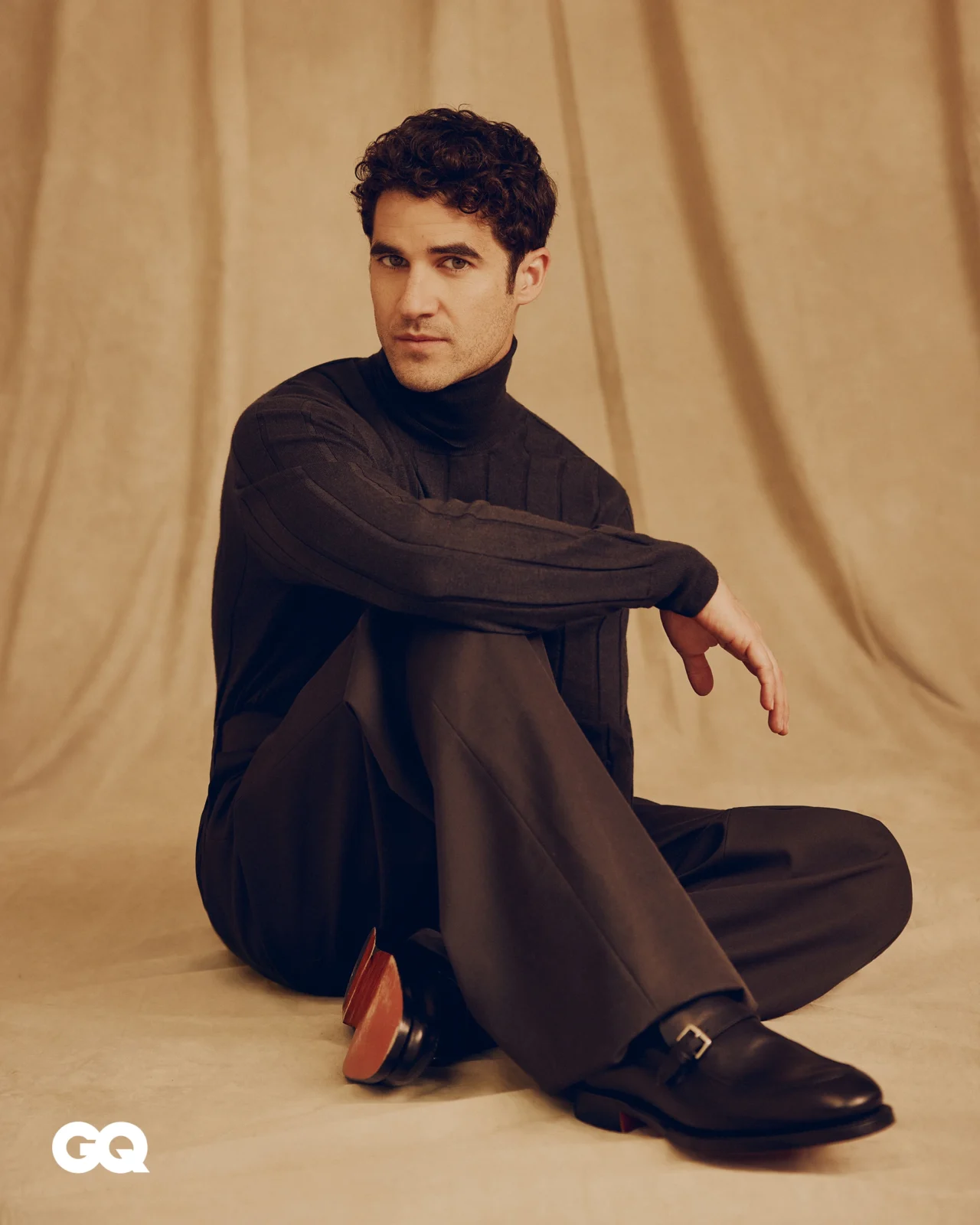
None of this means Criss is careless about the business side of his career. He is a smart businessman, as seen in his work as co-producer of Maybe Happy Ending. The original sci-fi musical, about helper robots living in futuristic Seoul, was a big artistic and financial risk (Criss encourages everyone to Google the show’s tumultuous production history). Luckily, it paid off. The show earned great reviews, six Tony Awards, and, as of July 2026, became the longest-running show in the history of the Belasco Theater.
But beyond the awards and the financial returns, the greater gift was getting to make something beautiful and meaningful with people he loved. The experience, he says, reminded him of his roots, when he created A Very Potter Musical back in college.
“I made something and embarked on something because I thought it was beautiful. I thought it was fun. It put a smile on my face,” he says of Maybe Happy Ending. “It warmed my heart. And I got to work with friends in the same way that A Very Potter Musical was all about just doing stuff with your friends. I got to make something with [director] Michael Arden, who’s an old friend of mine. And that was enough.”
There is something revealing in those last sentences. Success, for Criss, begins with something much smaller: making art that means something to him, with people he cares about, and then finding a way to share that meaning with a larger audience.
Why do we communicate? I remember him asking more than an hour ago. His answer was to bring people closer, to help us understand one another. By the end of our conversation, it becomes clear how deeply that idea runs through everything he does. Whether it’s onstage, on television, in a coffee shop, or even in a balikbayan box, communication is his way of reaching people. It begins with something personal—maybe a song, a performance, a story, or an idea—and from there, it can take on a life of its own in the people who receive it.
As we wrapped up and skipped across a million different topics, I had to ask about his next project. So, what’s next? What comes after the Royal Albert Hall performance in October? He stops, thinks, and chooses his words very carefully. “There is a lot I want to do and a lot of things I have specific sights on, but I’m going to be vague for the sake of theatricality.”
Fair enough. With all the things Criss puts into his work, I’m certain someone will find a way to connect with it—whatever it is.
A version of this cover story appears in the September 2026 issue with the title “The Langauge of Darren Criss”
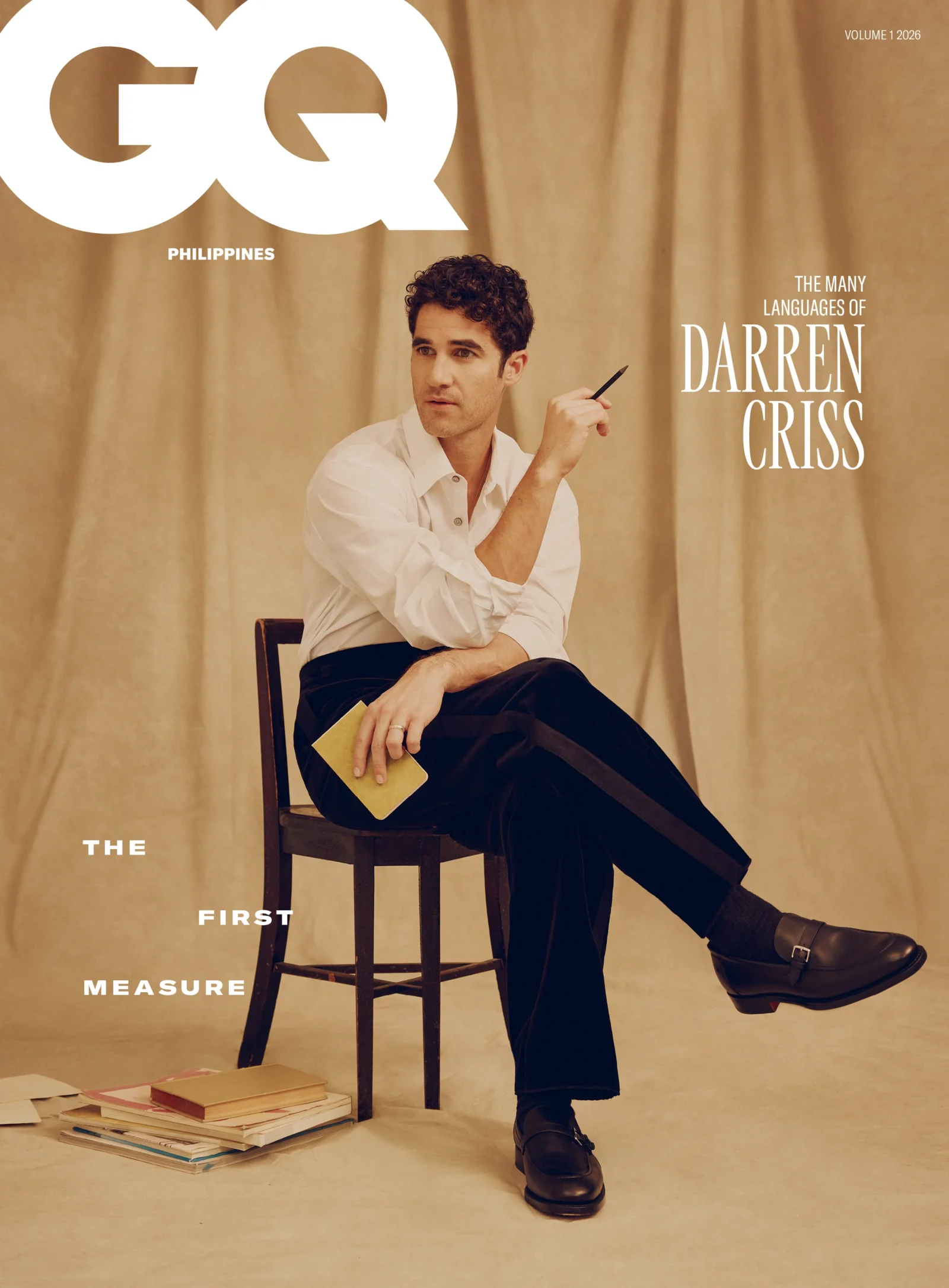
GQ Philippines: Vol. 1 – September 2026
SHOOT CREDITS:
Story by CHINO HERNANDEZ. Photographs by DAVID URBANKE. Styling by JUNGLE LIN. Groomer: AMY KLEWITZ. Producer: DAKOTA GRIFFIN. On-set Producer: REA IOANNOU. Photo Assistance: SEQUOYAH WILDWYN-DECHTER. Digitech: JONATHAN CARMELLI. Set Designer: CHANCEY BRIDGES. Videographer: KEN MARTELL.
Frequently Asked Questions
Darren Criss is an American actor, singer, musician, and performer known for his work across television, film, theater, and music.
Yes. Darren Criss is half Filipino and half Irish American. His mother is Filipino, and he grew up with connections to the Philippines through his family and visits to relatives.
Darren Criss is set to perform a concert at London’s Royal Albert Hall on October 18, 2026.
Darren Criss is best known for playing Blaine Anderson on Glee and Andrew Cunanan in The Assassination of Gianni Versace. He is also known for his work in musical theater, including Maybe Happy Ending, for which he won a Tony Award for Best Actor in a Musical.
Apart from English, Darren Criss speaks Italian, French, and Japanese, although he says he would not describe himself as incredibly fluent in them.