Summaries were generated by AI. Generative AI is experimental.
Explore other styles:
José Rizal is everywhere in the Philippines. The national hero is etched onto currency, cast in bronze across town plazas, stamped on street signs, bound into school curricula, and summoned every December in standard-issue speeches about nationhood. Yet there is a distinct irony in a man so omnipresent becoming so distant. His profile is universally recognized; his complexity is less so.
In the maiden September issue of GQ Philippines, the magazine examines the many facets of FilipinoFilipinoThe national language of the Philippines, widely used for communication, education, media, and culture.Go to Filipino Glossary strength. Gracing three distinct covers are three globally recognized Filipino men, each interpreted through a work associated with Rizal.
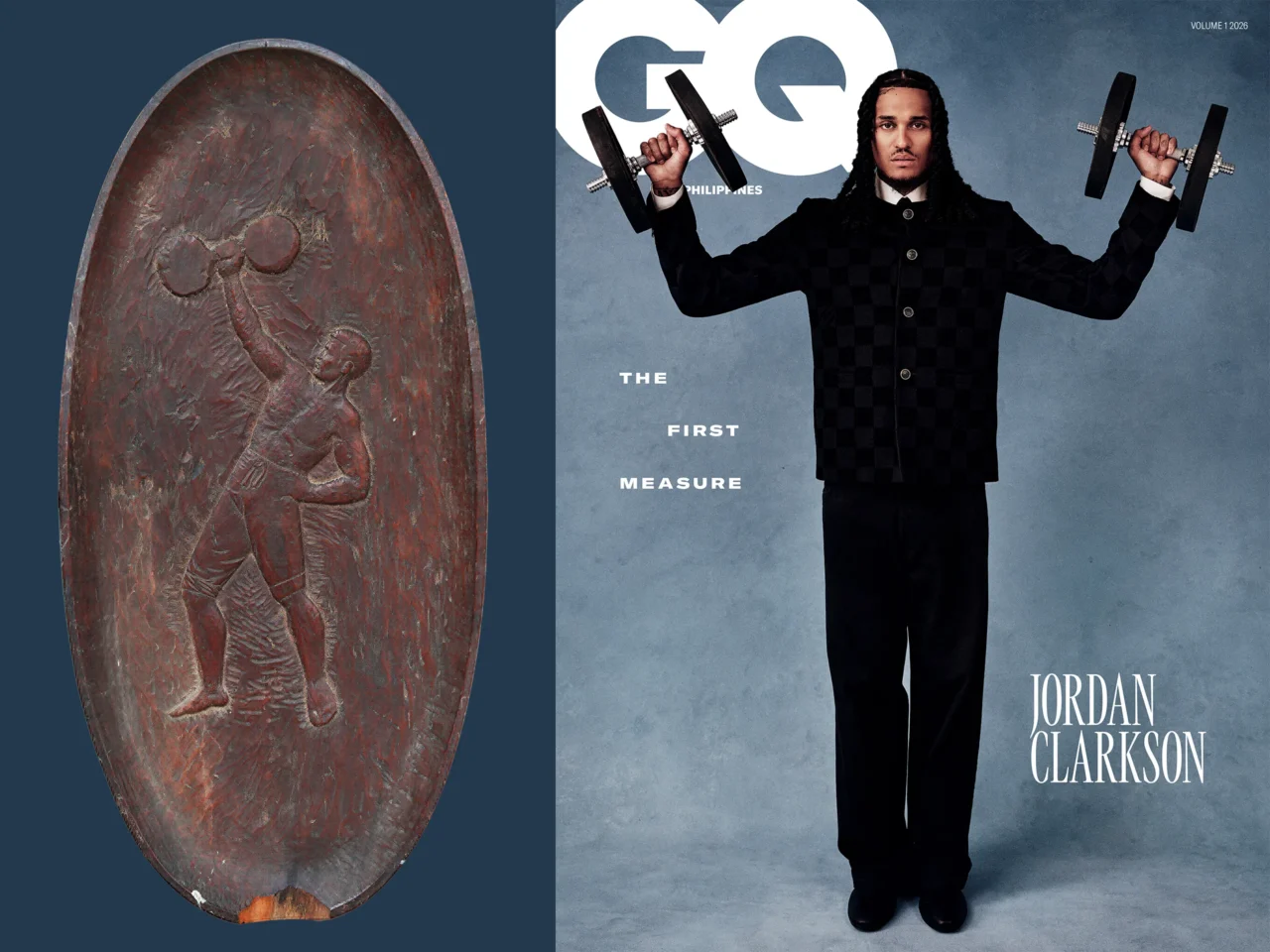
First is Jordan Clarkson, the FilipinoFilipinoThe national language of the Philippines, widely used for communication, education, media, and culture.Go to Filipino Glossary American basketball star who became an NBA champion with the New York Knicks in 2026, helping the team end a 53-year championship drought. His cover is inspired by what is often referred to as The Virile Man, Rizal’s wood sculpture depicting a man lifting a barbell. Believed by some historians to be a self-portrait, the work can be read as a powerful rejoinder to colonial-era notions of Filipino weakness: a portrait of physical strength, confidence, and self-belief.
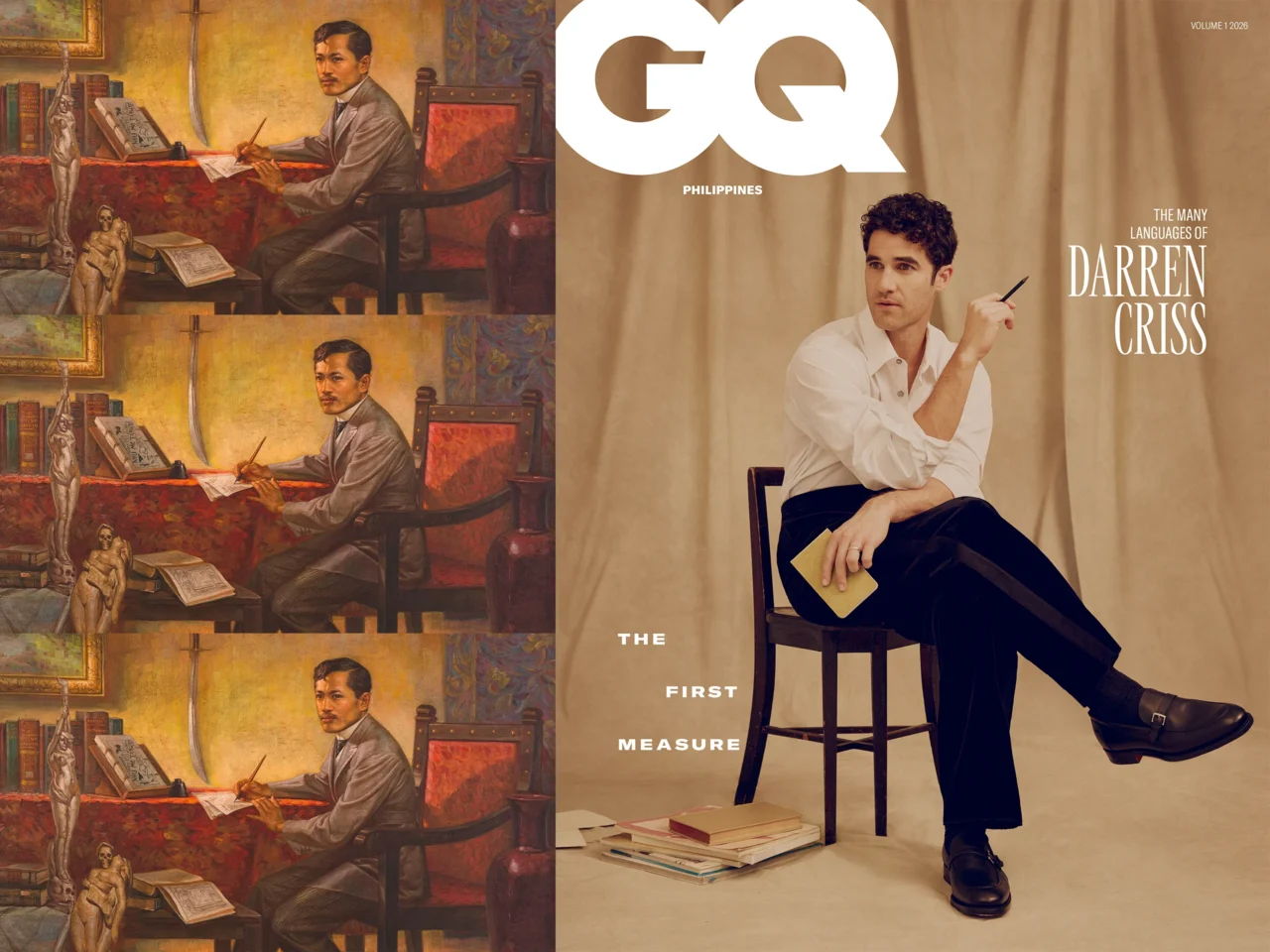
The second cover features multi-hyphenate talent Darren Criss, whose work across acting, music, producing, and live performance has made communication and connection central to his creative life. His cover draws from Rizal the Reformist, a 1960 painting by Cebuano master Martino Abellana. The painting depicts Rizal seated at a desk, deep in thought and surrounded by the tools of his intellectual life.
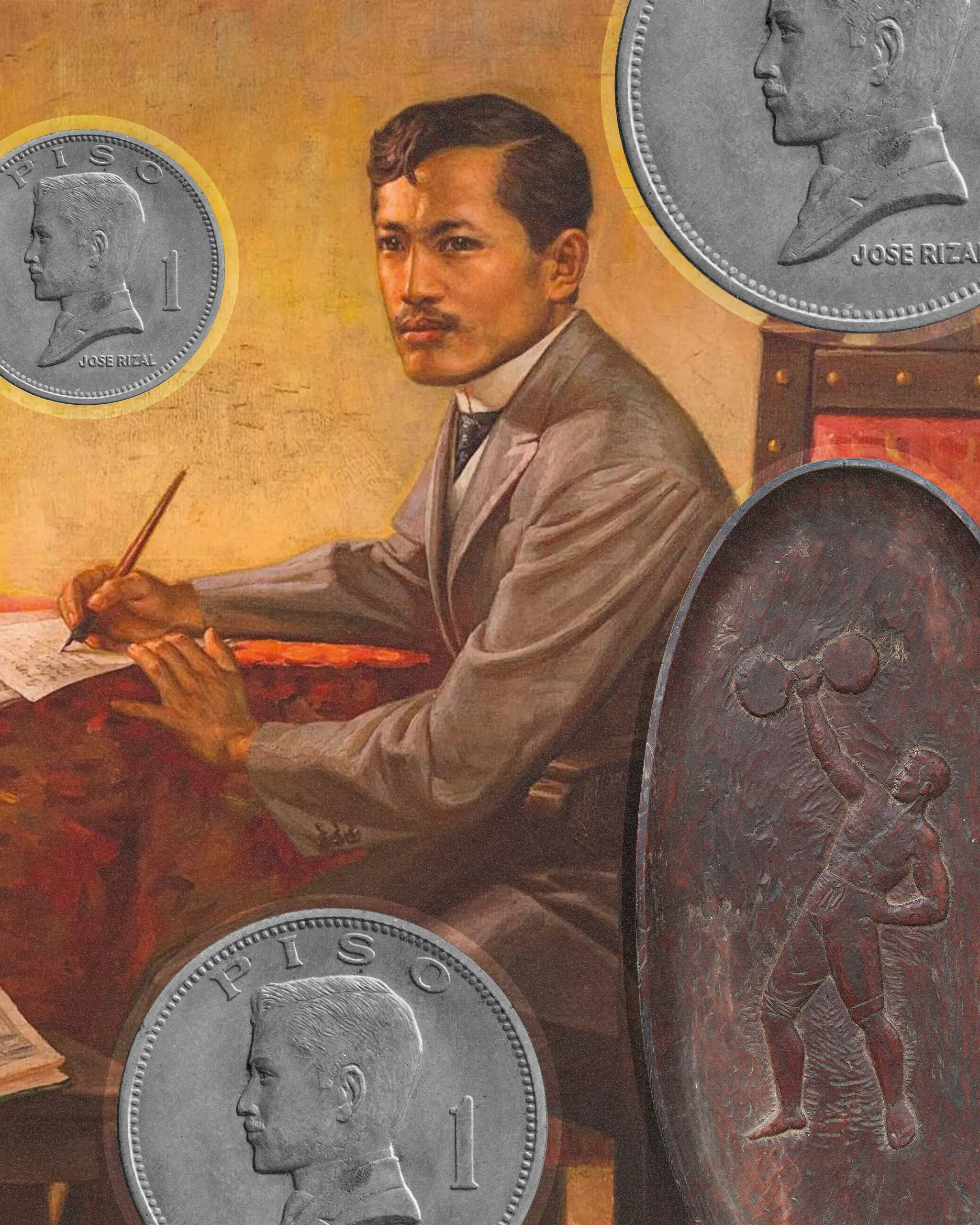
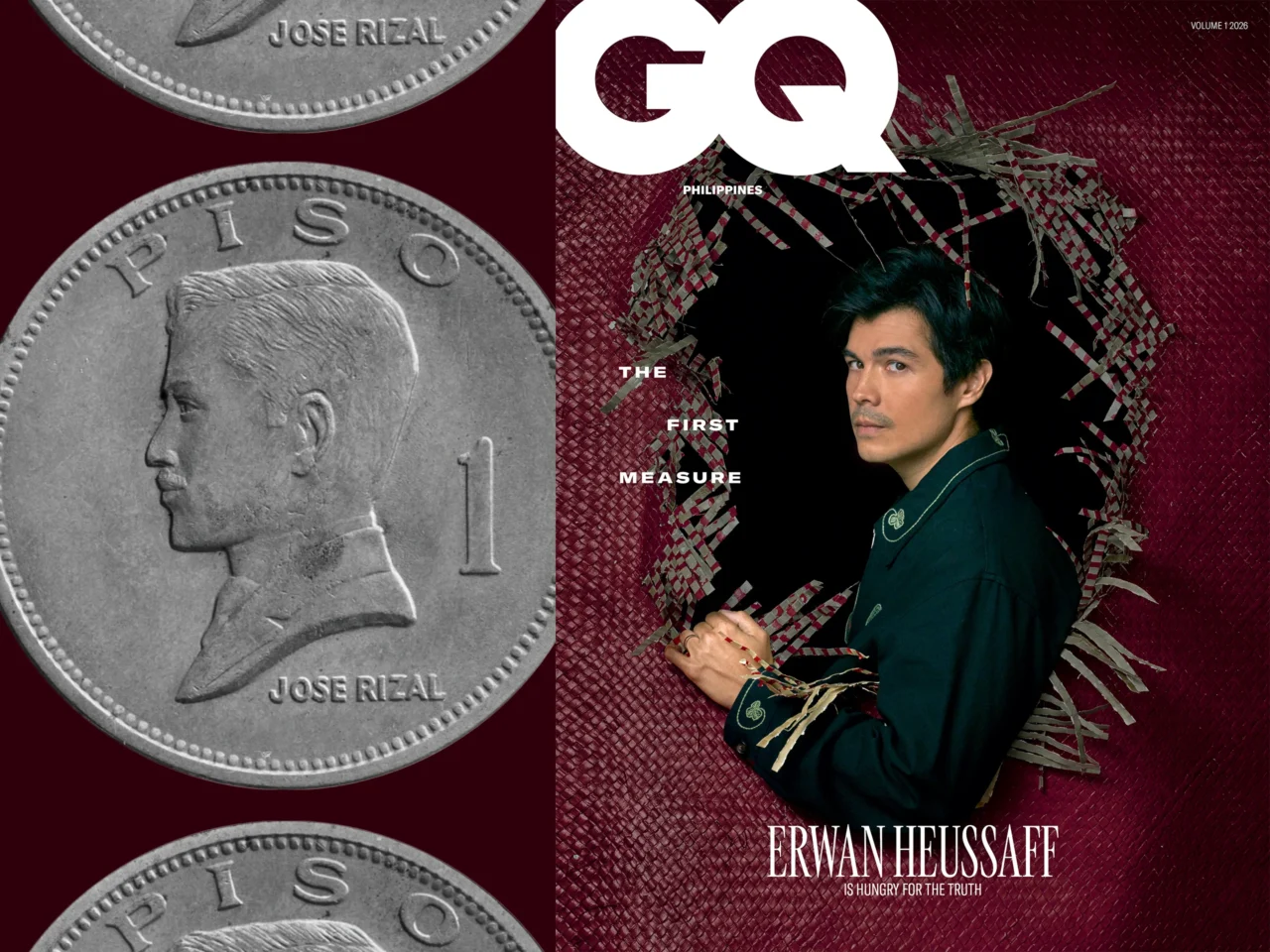
Completing the trio is Erwan Heussaff, the media personality and Filipino cultural ambassador whose media platform FEATR has advanced food storytelling through thoughtful documentaries exploring the country’s cuisine, heritage, and communities. His cover takes inspiration from the familiar portrait of Rizal on the Philippine one-peso coin, a fitting metaphor for his approach to looking at Filipino culture from multiple sides.
The intention is not to suggest that these three men are modern Rizals. It is to ask a more interesting question: Which parts of Rizal’s vision of the FilipinoFilipinoThe national language of the Philippines, widely used for communication, education, media, and culture.Go to Filipino Glossary remain relevant now?
Historian Ambeth Ocampo has spent decades urging us to reconsider the hero beneath the heavy mythology. In his seminal book Rizal Without the Overcoat, he details how Rizal became obscured by “countless myths and preconceived ideas” before arriving at a beautifully human conclusion: stripped of his overcoat, Rizal was human, like you and me.
That humanity matters because the national hero was more than a thinker; he was someone who inhabited many worlds at once. He studied medicine and the arts, wrote novels and poems, learned languages, travelled extensively, collected objects, observed foreign societies, and constantly asked what the Philippines could become. His ambition was intellectual, physical, and creative all at once.
Ocampo has also written that “history is exciting” because while facts do not change, the way we interpret them does. That idea feels particularly suited to a magazine. The point of revisiting Rizal is not to repeat an old image of FilipinoFilipinoThe national language of the Philippines, widely used for communication, education, media, and culture.Go to Filipino Glossary excellence, but to reinterpret what excellence can look like in the present.
FilipinoFilipinoThe national language of the Philippines, widely used for communication, education, media, and culture.Go to Filipino Glossary historian Xiao Chua makes a similar argument through the history of Filipino identity itself. He argues that Rizal’s historical writing helped define Filipino identity and that his contribution was not only dying for the nation, but helping imagine the nation in the first place. That idea feels urgent in a culture increasingly shaped from elsewhere.
Today, Western influence does not always arrive through a colonial government or foreign institution. It arrives through recommendation algorithms, entertainment platforms, advertising, social media, and the endless stream of images telling us who is successful, desirable, intelligent, or powerful. The colonial gaze has become more subtle, but the question remains: who gets to define what excellence looks like?
There is a reason Ocampo once observed that “many Filipinos learn to love the Philippines while abroad, not at home.” Perhaps part of our responsibility now is to make home compelling enough to look at in the first place. That is where a magazine still has a role.
In a digital landscape engineered for restless speed, print grants us the luxury of looking twice. It allows us to anchor history directly alongside contemporary culture—placing a nineteenth-century sculpture next to an NBA athlete, a national hero on a coin next to a culinary trailblazer, and a painting of Rizal next to an actor.
This first issue of GQ Philippines is ultimately about that act of looking again. Not toward a single definition of the Filipino man, but toward the possibilities within him: intellectual and physical, local and global, creative and ambitious, rooted yet restless.
Rizal gave us the vocabulary. This issue asks what that vocabulary might mean today.
SHOOT CREDITS FOR JORDAN CLARKSON:
Story by GABRIEL YAP. Photographs by RITCHIE ESPENILLA. Styling by RAÚL GUERRERO. Groomer: RYANN CARTER. Producer: JULIAN RODRIGUEZ. NYC Producer: DAKOTA GRIFFIN. Styling Assistants: AXEL GARCIA & ANGELIQUE ANGEL. Digitech: JONATHAN CARMELLI. 1st Camera Assistant: PABLO HERNANDEZ. Set Designer: ARLINGTON GARRETT III. Videographer: MYLO BUTLER. Location: DWNTWN STUDIOS.
SHOOT CREDITS FOR DARREN CRISS:
Story by CHINO HERNANDEZ. Photographs by DAVID URBANKE. Styling by JUNGLE LIN. Groomer: AMY KLEWITZ. Producer: DAKOTA GRIFFIN. On-set Producer: REA IOANNOU. Photo Assistance: SEQUOYAH WILDWYN-DECHTER. Digitech: JONATHAN CARMELLI. Set Designer: CHANCEY BRIDGES. Videographer: KEN MARTELL.
SHOOT CREDITS FOR ERWAN HEUSSAFF:
Story by PEEJO PILAR. Photographs by MARK NICDAO. Styling by GENO ESPIDOL. Makeup Artist: NOEL INOCENCIO. Hairstylist: JA FELICIANO. Videographer: LORENZO CORRO. Producer: KEVIN GONZALES. Art Director: MARK YELLOW.
Frequently Asked Questions
Jordan Clarkson, Darren Criss, and Erwan Heussaff.
The three covers are inspired by works associated with José Rizal: The Virile Man, Rizal the Reformist, and Rizal’s portrait on the Philippine one-peso coin.
José Rizal is the Philippines’ national hero, remembered as a writer, thinker, doctor, artist, and reformist who helped shape Filipino identity and imagine what the Philippines could become.
“The Virile Man” is a wood sculpture carved by José Rizal depicting a man lifting a barbell, believed by some historians to be a self-portrait challenging colonial-era notions of Filipino weakness.
The issue asks which parts of José Rizal’s vision of the Filipino remain relevant today, exploring strength as something that can look like athleticism, creativity, cultural stewardship, or intellectual curiosity.