Summaries were generated by AI. Generative AI is experimental.
Explore other styles:
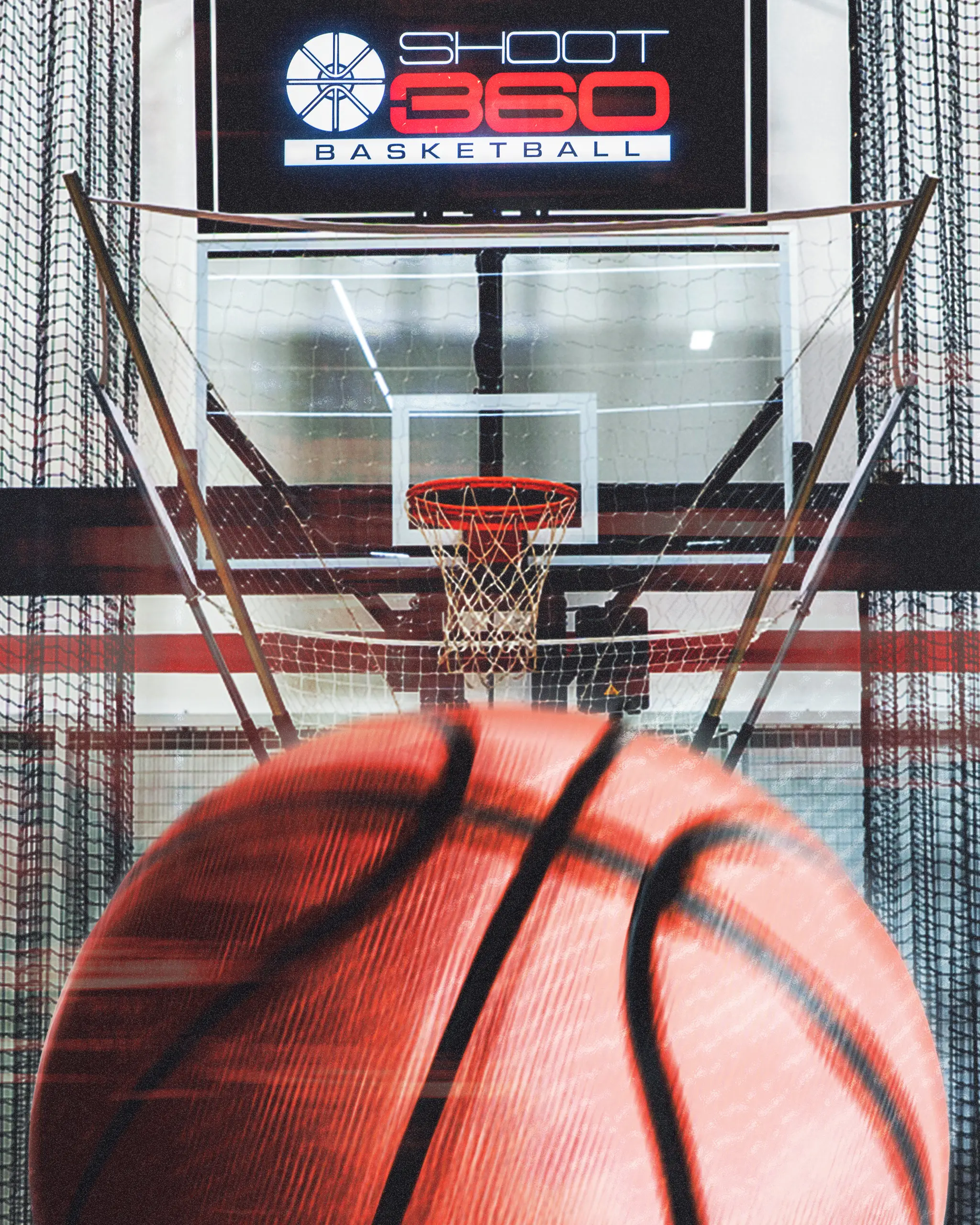
For a country that can turn a basketball court into a neighborhood landmark, the Philippines has surprisingly few places designed to turn raw talent into a refined game–that was the idea behind the Philippine launch of Shoot 360, the American basketball training facility that has opened its first local outpost at Robinsons Galleria Ortigas. To mark the occasion, the company flew in its U.S. team, including founder Craig Moody and former Detroit Pistons guard Rodney Stuckey. There was, naturally, a basketball game involved.
In a shoot-around session, Stuckey went head-to-head with brothers and professional athletes Juan and Joe Gómez de Liaño in a midrange and three-point contest, putting Shoot 360’s technology-enabled courts to an appropriately competitive test. But beneath the buckets and friendly trash talk was a more interesting proposition: what happens when a basketball country finally gets a facility designed specifically for getting better at basketball?
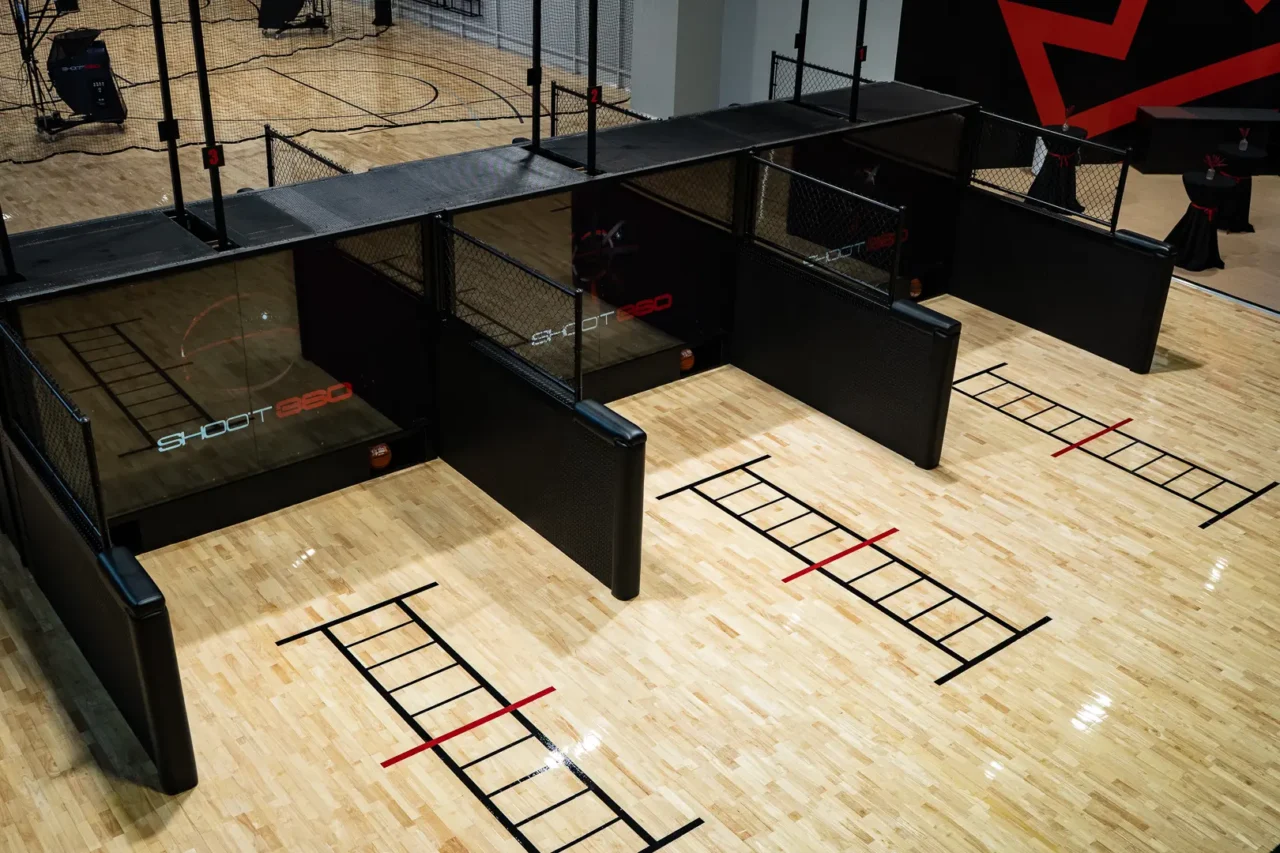
The Philippines already has no shortage of players, fans, courts, leagues, and spontaneous pickup games that can materialize wherever there is a hoop and enough concrete. What has been harder to find is formal, accessible training infrastructure for everyone outside the established varsity pipeline.
“There is a lack of formal training facilities here in the Philippines that aren’t really accessible unless you’re in varsity or you’re in a top university,” says Yael Ledesma, one of Shoot 360 Philippines’ founding partners. “So I think a space like this really does make sense for the general population to improve.”
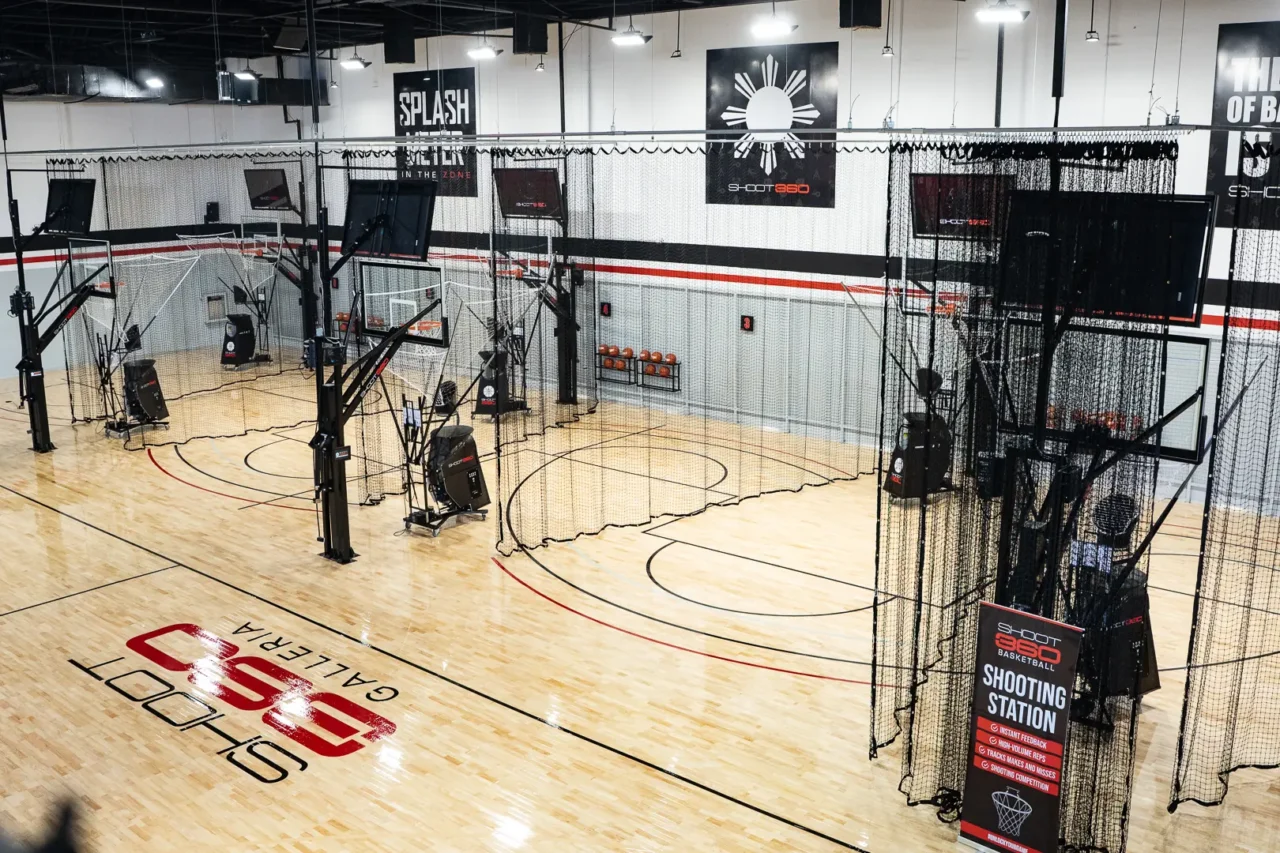
Shoot 360 isn’t simply another place to shoot around, as its training stations use high-frame-rate cameras to track movement, positioning, and ball trajectory, with shooting stations measuring arc, depth, and alignment. The idea is to make practice less of a vague ritual—“I think my shot is getting better?”—and improve it toward becoming a feedback loop, which is to shoot, measure, adjust, repeat. According to Ledesma, the system has tracked more than a billion shots and uses three shooting metrics to define what it calls the “splash zone.” The company says shots within those parameters go in 98 percent of the time, giving players an immediate target to work toward.
There are also skills stations for passing and ball handling, virtual drills, and a system that records individual statistics over time. That makes the facility useful for the serious athlete, but also for the guy who hasn’t played competitively since high school and still thinks every possession is the NBA Finals.
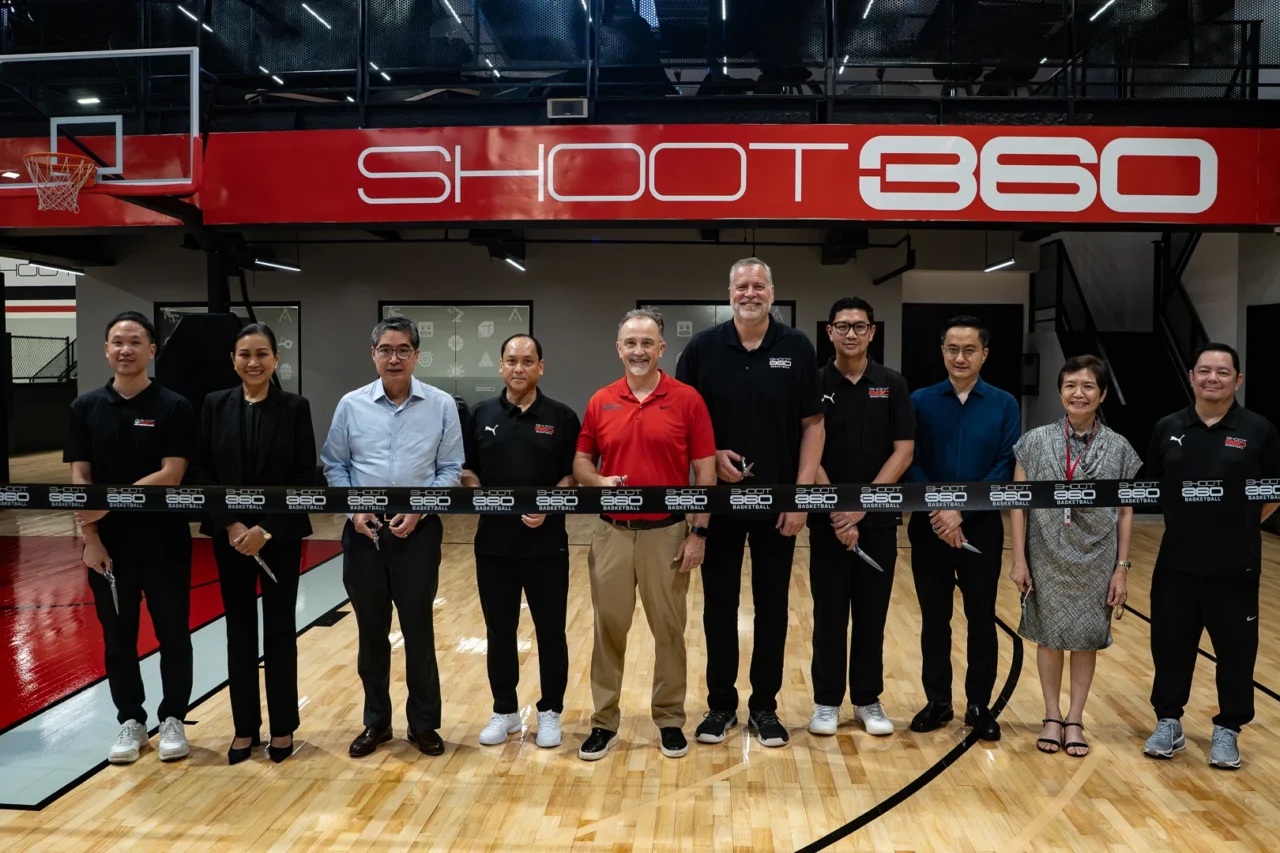
Technology, however, is only half the pitch. Coaches remain part of the equation, using the data to provide context, corrections, and the human element that a camera cannot. For Ledesma and his partners, that accessibility is central to the point of bringing Shoot 360 here in the first place. Their interest was not only in importing a piece of American basketball infrastructure, but in giving FilipinoFilipinoThe national language of the Philippines, widely used for communication, education, media, and culture.Go to Filipino Glossary players access to the kind of technology already available to athletes abroad.
It is a small but significant shift in how basketball development can happen locally. The next great player may already be somewhere in the country, putting up shots on an outdoor court. The difference may simply be whether he, or anyone else who loves the game, gets the chance to understand what those shots are actually doing.
In the Philippines, where everyone already knows how to play, maybe the next step is finally having more places that know how to make us better.
Frequently Asked Questions
An American basketball training facility using high-frame-rate cameras to track shooting mechanics, now open at Robinsons Galleria Ortigas.
A lack of accessible, formal training facilities for players outside the varsity or top university pipeline.
Cameras track movement, positioning, and shot trajectory, measuring arc, depth, and alignment to help players improve based on data.
Yes. Coaches at Shoot 360 use the data to provide context and corrections that the technology alone can’t offer.