
Summaries were generated by AI. Generative AI is experimental.
Explore other styles:
David Licauco has always possessed an insatiable appetite for excellence. Karate, basketball, acting; looking good in front of a camera certainly helps, too. So when he signed up for HYROX, it was probably only a matter of time before “getting a workout” turned into “trying to beat everyone.”
At his debut race in Taipei, Licauco crossed the finish line at 1:07:48 in the Men’s Open division, instantly branding himself as one of the fastest Filipinos in the sport. For a man who had only been training specifically for the discipline for six weeks, the result was a wake-up call. It forced him to reconsider what, exactly, he was playing at.
“After my first race in HYROX Taipei,” he says, “that was when I realized, wait, I can actually be good at this.” Almost overnight, the gym ceased to simply be a venue for fitness upkeep. “I stopped treating it as an exercise, but an actual sport. Similar to how I saw basketball.”
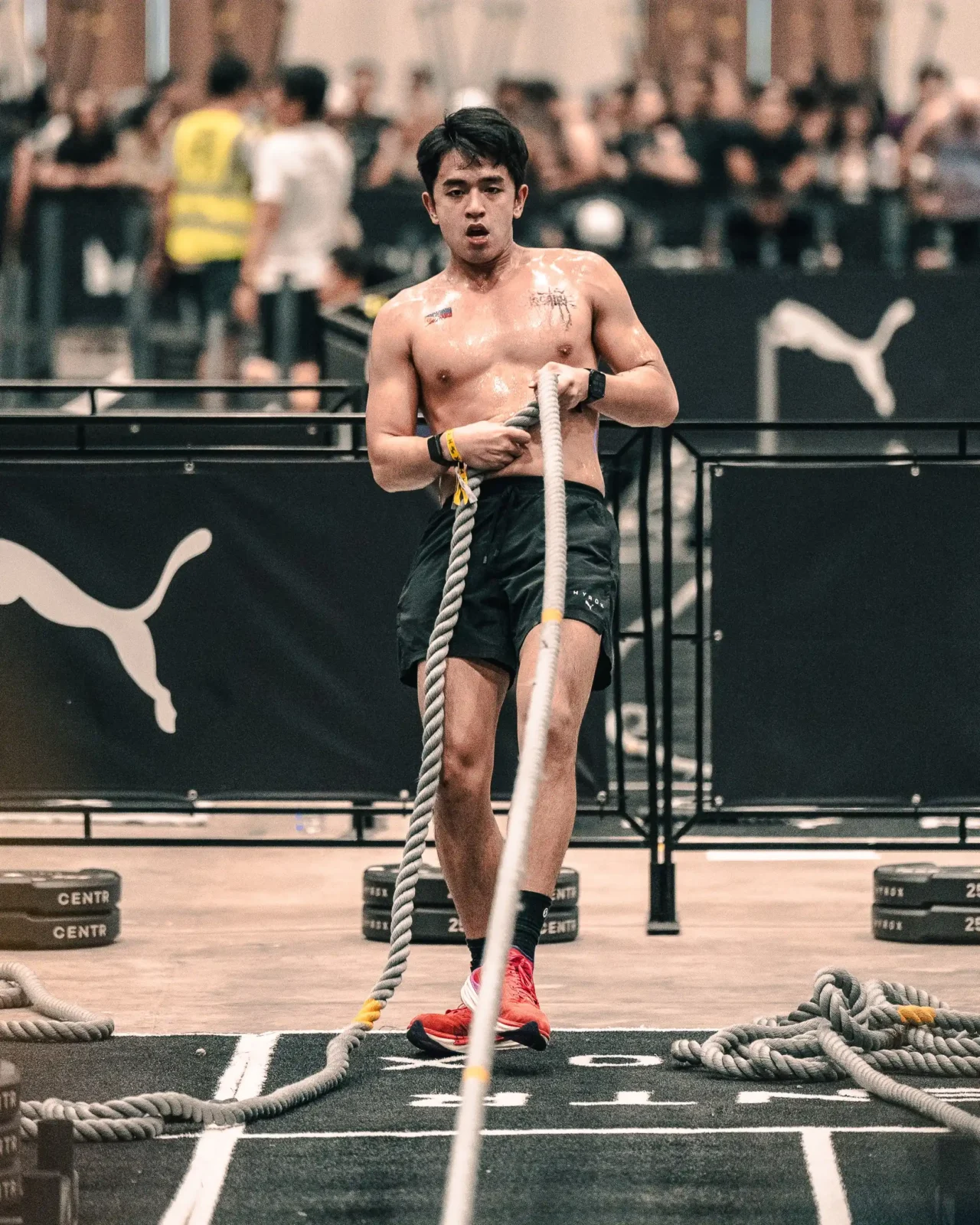
That distinction matters, because HYROX is designed to make you question several of your life choices in rapid succession: eight one-kilometer runs, eight functional workout stations, and just enough physiological suffering in between to make the next race feel like an extremely terrible idea. For Licauco, though, the discomfort came with an unexpected benefit. It reminded him that the competitive athlete he had been as a kid was still lurking around somewhere.
“What surprised me was realizing that I could still compete at a high level despite all the adulting and work I’m doing,” he says. “When you get older, you kind of assume that part of your life is behind you already. HYROX made me realize I still have that athlete in me.”
He has since kept the race calendar busy. In Hong Kong, he teamed up with fellow actor Vince Maristela for the Men’s Doubles division, finishing in 1:10:45. In Jakarta, he returned to the Open division and shaved his time down to 1:07:38, finishing ninth in his 30–34 age group and once again claiming the title of fastest FilipinoFilipinoThe national language of the Philippines, widely used for communication, education, media, and culture.Go to Filipino Glossary.
By Bangkok, however, the sport had delivered one of its less glamorous lessons, which is that fitness alone will not save you from bad decisions.

Licauco finished his latest race in 1:08:11 after going into it convinced he could break 1:02. He went out aggressively—running around 3:30 per kilometer for much of the race—before the wall balls arrived to collect their debt.
“I was gunning for 1:02, and I really thought I could do it,” he says. “Fitness-wise, I felt like I was ready. But I went out too hard, didn’t pace myself properly, and eventually it caught up with me.”
There is a certain comedy in the fact that pacing was already one of the first things his coach, Miguel Aytona, told him to work on. Licauco simply chose to discover the lesson the expensive way. “I would usually just raw-dog the race and go as hard as I could,” he says. “During Bangkok, I was running around 3:30/km for a lot of the runs, then when I got to the wall balls I was completely dead already.”
In his previous races, he didn’t even bother wearing a watch, navigating the entire grueling matrix on pure instinct and vibes. That era is over. “Next race, I’m definitely wearing one and trying to be smarter,” he laughs.

Working with Aytona has already changed the way he approaches training. Where he once focused primarily on pushing himself harder, he now thinks about recovery, nutrition, programming and, crucially, why he is doing each workout in the first place. The sport has also taught him that the person to beat is not necessarily standing in the lane beside him.
“HYROX is really you versus you,” Licauco says. “It’s kind of like life. When you’re younger, you care so much about what other people and where you are compared to them. Eventually you realize it’s really about whether you’re becoming a better version of yourself every day.”
For a naturally competitive person, that philosophy may sound suspiciously mature, but Licauco still has ambitions that are anything but modest. He does not just want to beat the Philippine record. He wants to see how far he can go against the best in the world. “I just want to make my 16-year-old self proud,” he says. “That kid wanted to be good at everything he did. I feel like I’m still trying to make him proud now.”
And maybe that is what makes HYROX such a good fit for him. The actor gets the cameras, the celebrity gets the attention, but somewhere underneath all of it is still a teenager who really, really wants to win. The difference now is that he is finally learning that winning sometimes means knowing when not to sprint.
Frequently Asked Questions
David Licauco’s fastest HYROX time is 1:07:38, achieved at the Jakarta race in the Open division, where he also finished ninth in his 30-34 age group and claimed the fastest Filipino title.
He went out too fast, running around 3:30 per kilometer early in the race, and by the time he reached the wall balls station, the pace had caught up with him, slowing his overall finish.
Coach Miguel Aytona has shifted Licauco’s focus toward pacing, recovery, and nutrition rather than simply pushing harder, changing how he approaches training and understands why he does each workout.
HYROX is a fitness competition combining eight one-kilometer runs with eight functional workout stations. Licauco signed up out of curiosity and quickly realized after his Taipei debut that he could compete seriously.
David Licauco finished his HYROX debut in Taipei at 1:07:48 in the Men’s Open division, instantly making him one of the fastest Filipinos in the sport after only six weeks of specific training.