Summaries were generated by AI. Generative AI is experimental.
Explore other styles:
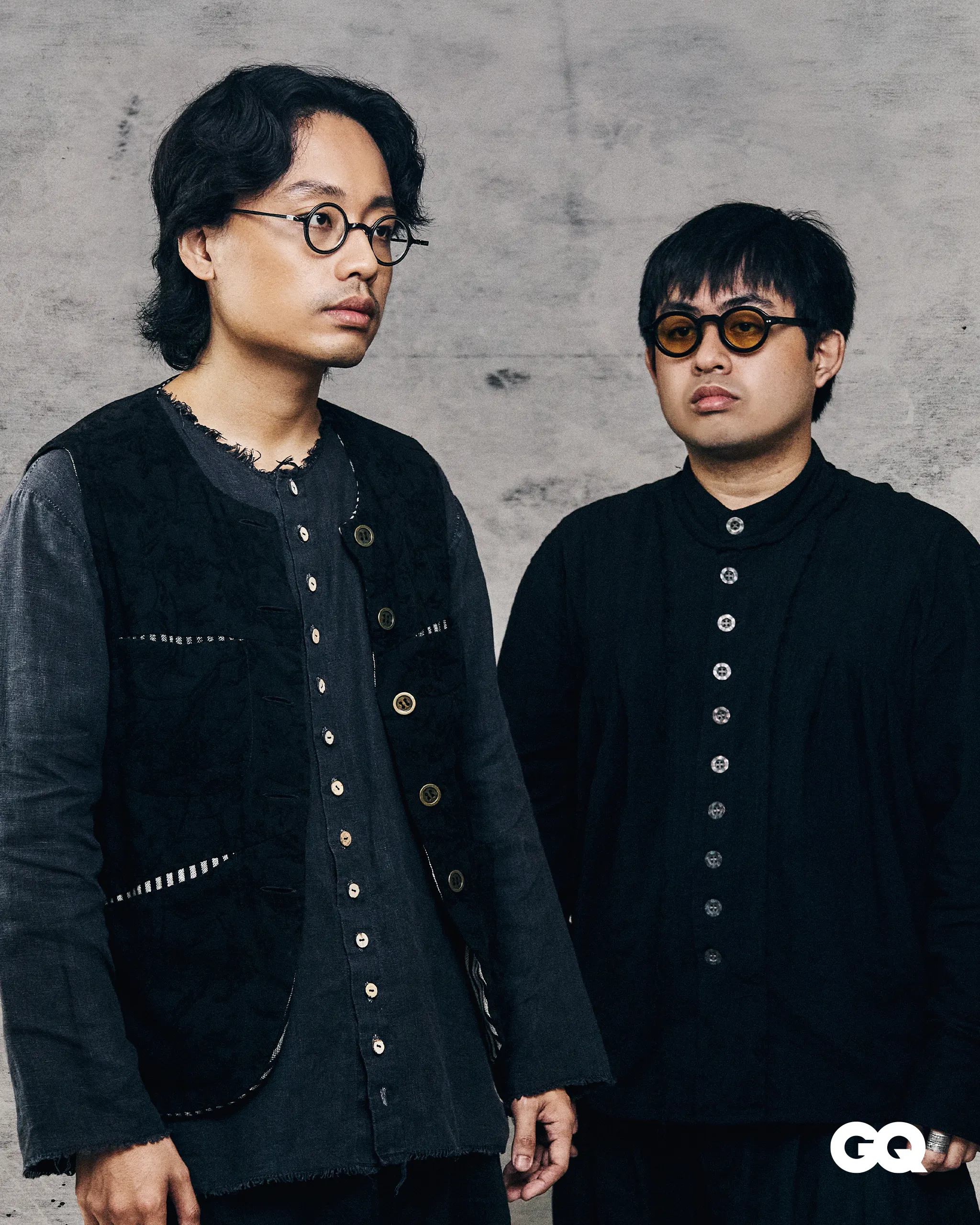
Even over Google Meet, Construction Layers founders Kendrick Cay and CP Garcia seem to operate on the same wavelength. Cay speaks about ideas as they arrive, sometimes in the middle of the night. Garcia, meanwhile, spends his days working with samples, figuring out whether those ideas can exist beyond sketches and conversations. Between them, inspiration and execution are less separate responsibilities than an ongoing exchange.
Their process unfolds at a pace that’s increasingly rare in fashion. Research and development at Construction Layers can take anywhere from a month to two years, depending on the complexity of the idea. A single textile may require a week of work before it becomes part of a garment. By the time a piece reaches a customer, it has already been worn, questioned, revised, and reworked long before it ever leaves the studio.
Before founding the brand, both studied industrial design at De La Salle-College of St. Benilde, an education that continues to shape how they think about clothing. In this discipline, an object isn’t judged solely by how it looks, but by how well it performs over time. Cay and Garcia approach garments much the same way. While most designers begin with aesthetics, they begin with function, asking how each garment should behave, how it will be worn, how it will age, and whether it deserves to remain in someone’s wardrobe years from now. Every design decision must solve a problem before making a visual statement.
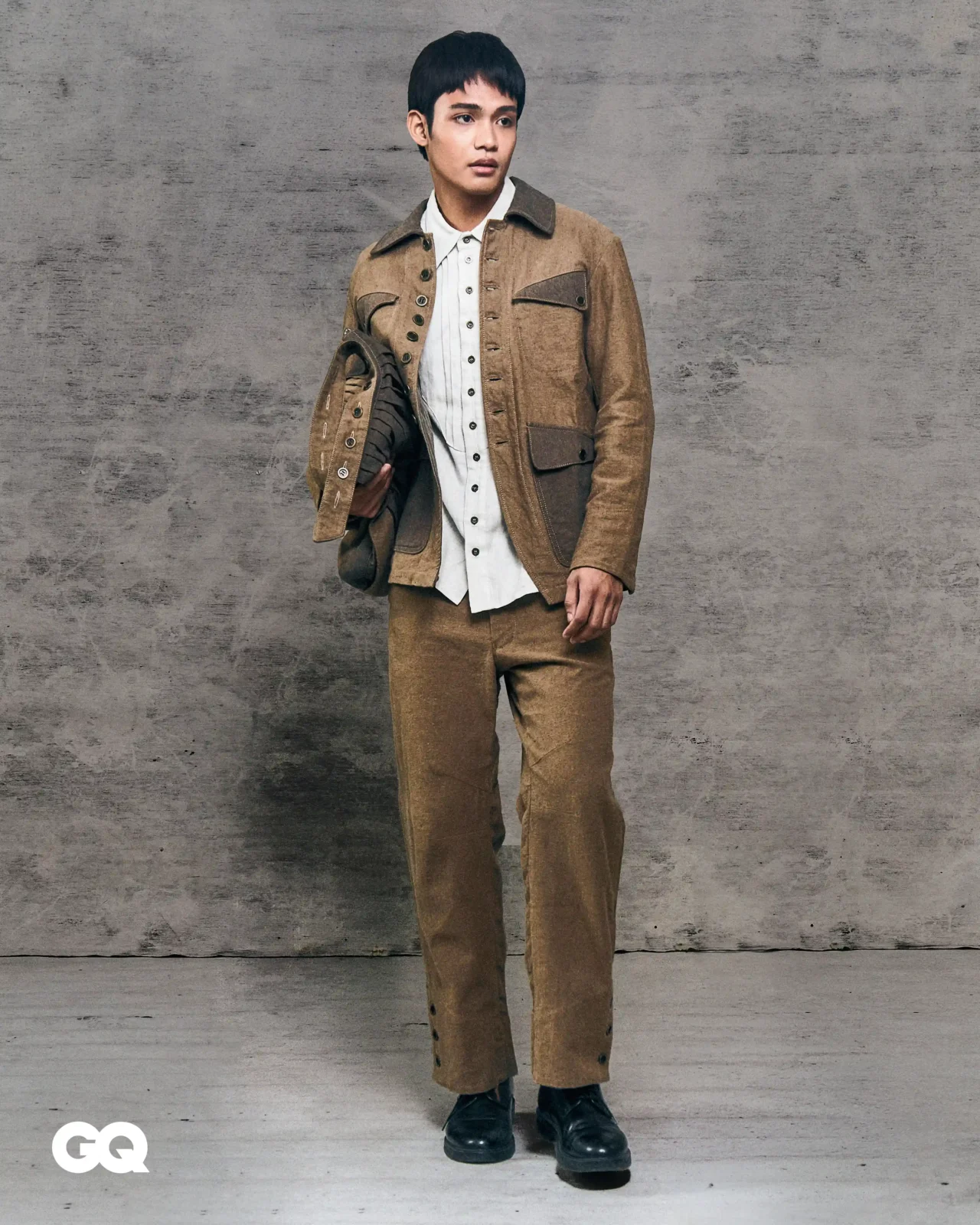
Cay says, “The rule of thumb for all designers is: How do you make this stand the test of time?” The answer rarely comes quickly for them. Some ideas remain in development until the right construction, material, or technique catches up with the original concept. Others remain unfinished not because they are abandoned, but because the solution has yet to reveal itself. They resist the urge to rush, choosing instead to give each piece the time it needs to fully realize their vision.
When construction is finished, garments are worn repeatedly before they’re released, becoming part of the founders’ own routines as they observe how they move, soften, and settle into everyday life. By wearing them every day, across different occasions and in different settings, they gain a clearer understanding of how each garment can fit into someone’s wardrobe.
Perhaps the clearest example of their meticulous process comes in their Patch Stripe jacket. “We wanted to do a striped fabric, but not really,” Garcia says. “During the collection development process, that’s when the idea of forcing the stripes to happen came up.”
Instead of sourcing an existing striped textile, they decided to construct one themselves. They layered individual strips of fabric that were cut into varying widths before being stitched onto a base fabric, creating the texture, dimension, and appearance of stripes. The textile alone takes roughly a week to complete before the garment itself can even be assembled.
The project reflects the way Cay and Garcia approach every design challenge: if the material they need doesn’t exist, they’ll try to develop it themselves. Even fabric scraps are kept rather than discarded, becoming part of an evolving archive of materials that could eventually find their way into another project. Nothing, it seems, is considered too small to revisit. “It’s really like a never-ending iteration of tweaks and improvements,” Garcia explains.
That same philosophy extends beyond a single garment. In “Collection IV: Framework,” many of the collection’s most understated details are the result of repeated refinement rather than a single design decision. The Reversible Double-Breasted Jacket, for instance, required entirely new approaches to button construction, while the Multi-Button Ruched Crossbody Bag has evolved through multiple generations of trial and error, with interior reinforcements added to improve durability, even if they’re never seen.
“It’s almost like a dialogue between the end user and us,” says Garcia. For them, that dialogue begins once the garment leaves the studio, with every wear becoming another test of the decisions made during its design. Only then do they know whether the questions they asked at the beginning have been answered.
A version of this story appears in the September 2026 issue with the title “Constructive Thinking”
Frequently Asked Questions
Construction Layers was founded by Kendrick Cay and CP Garcia, who both studied industrial design at De La Salle-College of St. Benilde. Their design process emphasizes function and durability over aesthetics alone, treating garments as objects meant to perform well over time.
Research and development at Construction Layers can take anywhere from a month to two years, depending on the complexity of the idea. A single custom textile alone can take roughly a week to complete before it’s even assembled into a garment.
The Patch Stripe jacket features a custom-built striped textile rather than sourced striped fabric. Individual fabric strips of varying widths were cut and stitched onto a base fabric to create the appearance of stripes, a process that alone took about a week to complete.
Construction Layers approaches garment design by asking how a piece should behave, wear, and age over time, rather than starting with aesthetics. Founder Kendrick Cay describes the guiding question as, “How do you make this stand the test of time?”
Collection IV: Framework is a Construction Layers collection featuring pieces refined through repeated iteration, including a Reversible Double-Breasted Jacket requiring new button construction approaches, and a Multi-Button Ruched Crossbody Bag developed through multiple generations of durability improvements.