
Summaries were generated by AI. Generative AI is experimental.
Explore other styles:
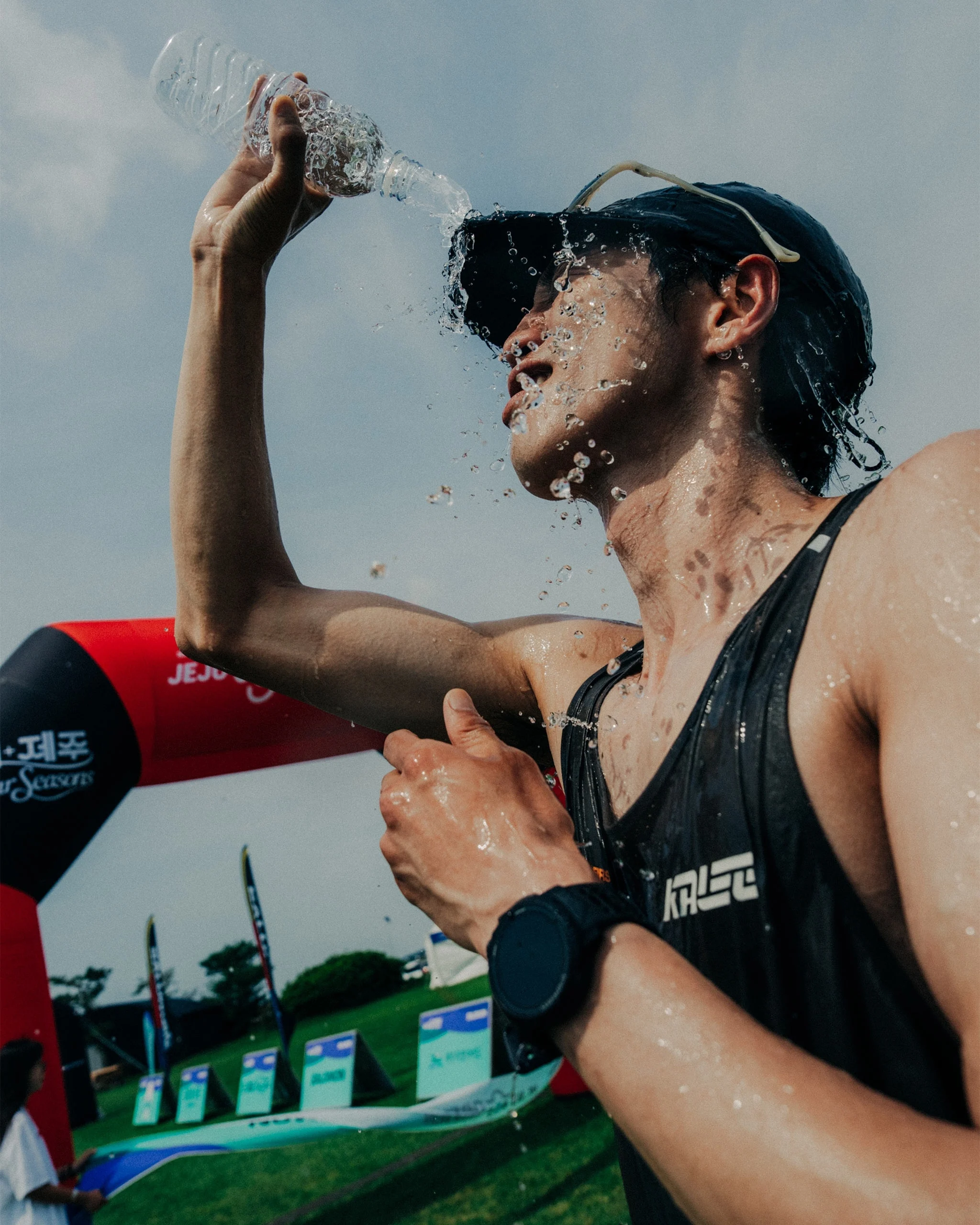
You’re doing your morning 5K. The wind on your face, beautiful weather, knees and legs doing great… when suddenly you feel a sting in your eyes as your sweat drips from your forehead like an acid Tetris piece right into the corner of your eye. Your pristine, rhythmic pace collapses into an ungraceful scramble for a towel.
So, what turns your body’s natural cooling mechanism into an aggressive chemical weapon?
It all comes down to what your pores are actually pumping out. While your sweat is 99% water, that remaining 1% is packed with sodium, minerals, and natural skin oils. When it rolls down your face, it doesn’t travel alone. It acts as a tiny, salty slip-and-slide, collecting hair products, forehead grime, and dust along the way.
While you might think it’s just the salt content doing the damage, tears actually have a similar salinity level to sweat. The real culprit is the combination of those hitchhiking facial impurities and your sweat’s slightly acidic pH, which can irritate the highly sensitive surfaces of your eyes.
Furthermore, if your training intensity or a weekend of salty meals spikes your sodium excretion, the burning sensation may intensify. Compounding the problem is your face lotion. As noted by experts at the Cleveland Clinic, everyday chemical irritants like fragrances and sunscreen ingredients can migrate into your tear film, magnifying the sting until your eyeballs feel like they’re on fire.
Thankfully, you don’t have to choose between cardiovascular fitness and your vision. A few simple adjustments can restore peace to your morning miles:
Upgrade your headgear: Cotton headbands saturate quickly and dump the excess fluid right onto your face. Switch to technical, moisture-wicking synthetic fabrics that draw moisture away and allow it to evaporate rapidly.
Try the “unibrow” barrier: For an easy workaround, apply a thin layer of petroleum jelly or a clear lip balm just above your eyebrows, angling the lines down toward your temples. This creates a water-resistant channel that can help direct sweat away from your eyes entirely and toward your cheeks.
Rethink your skincare: Swap out chemical sunscreens for water-resistant mineral formulas containing zinc oxide or titanium dioxide. These formulas are less likely to run or cause irritation when they shift.
Hydrate efficiently: Keeping your water intake up can help keep your sweat more diluted, decreasing the concentration of stinging salts.
If the defense fails and a drop breaks through, resist the urge to violently rub your eyes with a dirty shirt sleeve. Instead, gently dab the area or flush it with clean, cool water to rinse away irritants and get back to your stride.
Frequently Asked Questions
Sweat’s sting isn’t primarily caused by salt, since tears have a similar salinity level. The real cause is sweat’s slightly acidic pH combined with facial impurities like hair products, dust, and grime that sweat picks up as it travels down the face.
Yes. Chemical sunscreens and skincare products containing fragrances or certain active ingredients can migrate into the tear film when they mix with sweat, intensifying the stinging sensation, according to the Cleveland Clinic.
Technical, moisture-wicking synthetic headbands are recommended over cotton, since cotton saturates quickly and redirects excess fluid onto the face. Moisture-wicking fabrics draw sweat away and allow it to evaporate more efficiently.
Technical, moisture-wicking synthetic headbands are recommended over cotton, since cotton saturates quickly and redirects excess fluid onto the face. Moisture-wicking fabrics draw sweat away and allow it to evaporate more efficiently.
Water-resistant mineral sunscreens containing zinc oxide or titanium dioxide are recommended over chemical sunscreens, since they’re less likely to run or cause irritation when they mix with sweat during a workout.

Peejo Pilar
With nearly two decades of production and publishing experience, managing editor Peejo Pilar runs GQ Philippines' daily operations like a finely tuned Wacky Races car engine—aligning and collaborating with writers, editors, and creatives. He assists the editor-in-chief and deputy editor in overall management and editorial campaigns as well as keeping the storytelling efficient and sharp, proof that you can manage creative chaos without losing your mind. You can contact him at [email protected].